72,95 €
inkl. MwSt.
Sofort per Download lieferbar
36 °P sammeln

Andere Kunden interessierten sich auch für
") Metacognition in Science Education (eBook, PDF)72,95 €
Metacognition in Science Education (eBook, PDF)72,95 €") Imaginative Science Education (eBook, PDF)72,95 €
Imaginative Science Education (eBook, PDF)72,95 €") Socio-scientific Issues in the Classroom (eBook, PDF)160,95 €
Socio-scientific Issues in the Classroom (eBook, PDF)160,95 €") Multiple Representations in Physics Education (eBook, PDF)112,95 €
Multiple Representations in Physics Education (eBook, PDF)112,95 €") Educational Technologies in Medical and Health Sciences Education (eBook, PDF)72,95 €
Educational Technologies in Medical and Health Sciences Education (eBook, PDF)72,95 €") Sprachförderndes Experimentieren im Sachunterricht (eBook, PDF)42,99 €
Sprachförderndes Experimentieren im Sachunterricht (eBook, PDF)42,99 €") Insights from Research in Science Teaching and Learning (eBook, PDF)72,95 €
Insights from Research in Science Teaching and Learning (eBook, PDF)72,95 €

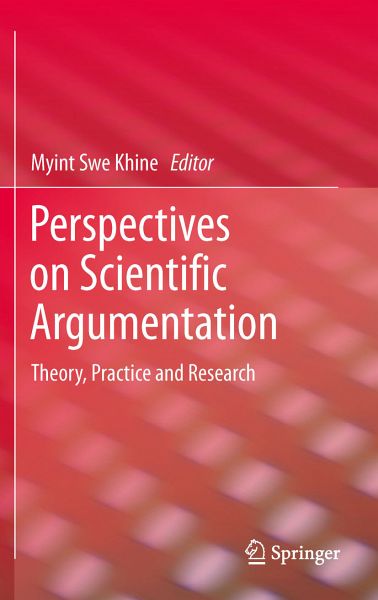
Argumentation-arriving at conclusions on a topic through a process of logical reasoning that includes debate and persuasion- has in recent years emerged as a central topic of discussion among science educators and researchers. There is now a firm and general belief that fostering argumentation in learning activities can develop students' critical thinking and reasoning skills, and that dialogic and collaborative inquiries are key precursors to an engagement in scientific argumentation. It is also reckoned that argumentation helps students assimilate knowledge and generate complex meaning. The consensus among educators is that involving students in scientific argumentation must play a critical role in the education process itself. Recent analysis of research trends in science education indicates that argumentation is now the most prevalent research topic in the literature. This book attempts to consolidate contemporary thinking and research on the role of scientific argumentation in education.
Perspectives on Scientific Argumentation brings together prominent scholars in the field to share the sum of their knowledge about the place of scientific argumentation in teaching and learning. Chapters explore scientific argumentation as a means of addressing and solving problems in conceptual change, reasoning, knowledge-building and the promotion of scientific literacy. Others interrogate topics such as the importance of language, discursive practice, social interactions and culture in the classroom. The material in this book, which features intervention studies, discourse analyses, classroom-based experiments, anthropological observations, and design-based research, will inform theoretical frameworks and changing pedagogical practices as well as encourage new avenues ofresearch.
Perspectives on Scientific Argumentation brings together prominent scholars in the field to share the sum of their knowledge about the place of scientific argumentation in teaching and learning. Chapters explore scientific argumentation as a means of addressing and solving problems in conceptual change, reasoning, knowledge-building and the promotion of scientific literacy. Others interrogate topics such as the importance of language, discursive practice, social interactions and culture in the classroom. The material in this book, which features intervention studies, discourse analyses, classroom-based experiments, anthropological observations, and design-based research, will inform theoretical frameworks and changing pedagogical practices as well as encourage new avenues ofresearch.
Dieser Download kann aus rechtlichen Gründen nur mit Rechnungsadresse in A, B, BG, CY, CZ, D, DK, EW, E, FIN, F, GR, HR, H, IRL, I, LT, L, LR, M, NL, PL, P, R, S, SLO, SK ausgeliefert werden.
"This book critically examines argumentation in science classrooms both in terms of underlying theories and practical application. It describes the most recent research into a topic that has already become one of the most important in science education this decade. I commend it to researchers, teachers and policy-makers alike."
Justin Dillon
Professor of Science and Environmental Education, King's College London
President, European Science Education Research Association (ESERA)
Justin Dillon
Professor of Science and Environmental Education, King's College London
President, European Science Education Research Association (ESERA)