37,95 €
37,95 €
inkl. MwSt.
Sofort per Download lieferbar

19 °P sammeln
37,95 €
Als Download kaufen
37,95 €
inkl. MwSt.
Sofort per Download lieferbar
19 °P sammeln
Jetzt verschenken
Alle Infos zum eBook verschenken
37,95 €
inkl. MwSt.
Sofort per Download lieferbar
Alle Infos zum eBook verschenken
19 °P sammeln

Andere Kunden interessierten sich auch für
") Pharmakon (eBook, ePUB)37,95 €
Pharmakon (eBook, ePUB)37,95 €") Disguise and Recognition in the Odyssey (eBook, PDF)69,95 €
Disguise and Recognition in the Odyssey (eBook, PDF)69,95 €") Plato's Republic as a Philosophical Drama on Doing Well (eBook, PDF)92,95 €
Plato's Republic as a Philosophical Drama on Doing Well (eBook, PDF)92,95 €") Becoming Achilles (eBook, PDF)35,95 €
Becoming Achilles (eBook, PDF)35,95 €") The Philosopher's Song (eBook, PDF)36,95 €
The Philosopher's Song (eBook, PDF)36,95 €") Philosophy, Poetry, and Power in Aristophanes's Birds (eBook, PDF)88,95 €
Philosophy, Poetry, and Power in Aristophanes's Birds (eBook, PDF)88,95 €") Apologizing for Socrates (eBook, PDF)82,95 €
Apologizing for Socrates (eBook, PDF)82,95 €


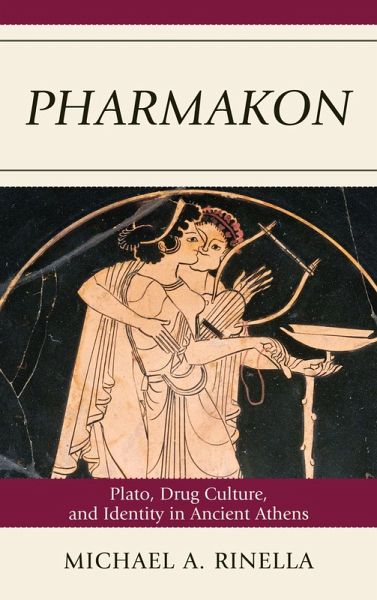
Pharmakon: Plato, Drug Culture, and Identity in Ancient Athens examines the emerging concern for controlling states of psychological ecstasy in the history of western thought, focusing on ancient Greece (c. 750 - 146 BCE), particularly the Classical Period (c. 500 - 336 BCE) and especially the dialogues of the Athenian philosopher Plato (427 - 347 BCE). Employing a diverse array of materials ranging from literature, philosophy, medicine, botany, pharmacology, religion, magic, and law, Pharmakon fundamentally reframes the conceptual context of how we read and interpret Plato's dialogues. Michael A. Rinella demonstrates how the power and truth claims of philosophy, repeatedly likened to a pharmakon, opposes itself to the cultural authority of a host of other occupations in ancient Greek society who derived their powers from, or likened their authority to, some pharmakon. These included Dionysian and Eleusinian religion, physicians and other healers, magicians and other magic workers, poets, sophists, rhetoricians, as well as others. Accessible to the general reader, yet challenging to the specialist, Pharmakon is a comprehensive examination of the place of drugs in ancient thought that will compel the reader to understand Plato in a new way.