Sie sind bereits eingeloggt. Klicken Sie auf 2. tolino select Abo, um fortzufahren.
Bitte loggen Sie sich zunächst in Ihr Kundenkonto ein oder registrieren Sie sich bei bücher.de, um das eBook-Abo tolino select nutzen zu können.
The future of public space is uncertain. Although public spaces have become increasingly shabby and crowded, novel alternatives have appeared in the form of fantastic, semi-public pleasure grounds, developed by well-heeled, crowd-pleasing entrepreneurs and devoted to profit, consumption, and self-indulgence. Philosophers and geographers have converged on the topic of public space, fascinated and in many ways alarmed by fundamental changes in the way post-industrial societies produce space for public use, and in the way citizens of these same societies perceive and constitute themselves as a…mehr
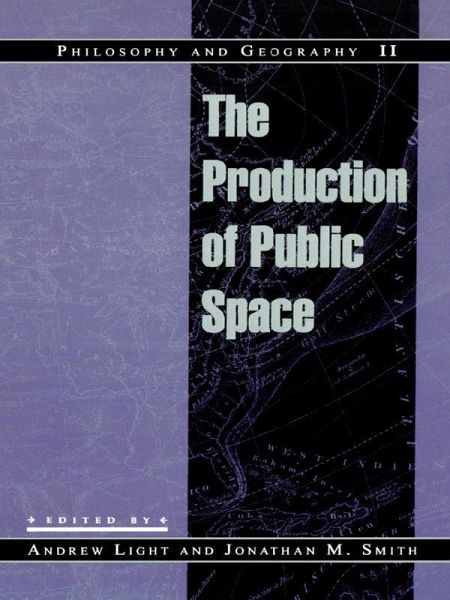
The future of public space is uncertain. Although public spaces have become increasingly shabby and crowded, novel alternatives have appeared in the form of fantastic, semi-public pleasure grounds, developed by well-heeled, crowd-pleasing entrepreneurs and devoted to profit, consumption, and self-indulgence. Philosophers and geographers have converged on the topic of public space, fascinated and in many ways alarmed by fundamental changes in the way post-industrial societies produce space for public use, and in the way citizens of these same societies perceive and constitute themselves as a public. The contributors to this volume advance this inquiry, making extensive use of political and social theory. Philosophy and Geography II: The Production of Public Space gives readers an enhanced appreciation of the intimate connections between political principles, social processes, and the commonplaces of our everyday environments.
Die Herstellerinformationen sind derzeit nicht verfügbar.
Autorenporträt
Andrew Light is assistant professor of philosophy at the University of Montana. Jonathan M. Smith is associate professor of Geography at Texas A&M University.
Inhaltsangabe
Chapter 1 List of Illustrations Chapter 2 Acknowledgements Chapter 3 Introduction: Geography, Philosophy, and Public Philosophy, and Public Space Part 4 Symposium on Henri LeFebvre's the Production of Space Chapter 5 Henri Lefebvre on Abstract Space Chapter 6 Antinomies of Space and Nature in Henri Lefebvre's The Production of Space Chapter 7 The Production of Space or The Heterogeneity of Place: A Commentary on Edward Dimendberg and Neil Smith Part 8 Beyond The Public/Private Dichotomy Chapter 9 Formal Politics, Meta-Space, and the Construction of Civil Life Chapter 10 The Stranger on the Green Chapter 11 Public and Private, Power and Space Chapter 12 The "Disappearance of Public Space": An Ecological Marxist and Lefebvrian Approach Part 13 Regional Territories Chapter 14 Contested Space: The Rural Idyll and Competing Notions of the Good Society in the U.K. Chapter 15 The Rights of Rights of Way Chapter 16 The Mediation of the Public Sphere: Ideological Origins, Practical Possibilities Chapter 17 Representation, Identity, and the Communicative Shaping of Place Chapter 18 Maps and Entitlement to Territory Chapter 19 Index
Es gelten unsere Allgemeinen Geschäftsbedingungen: www.buecher.de/agb
Impressum
www.buecher.de ist ein Internetauftritt der buecher.de internetstores GmbH
Geschäftsführung: Monica Sawhney | Roland Kölbl | Günter Hilger
Sitz der Gesellschaft: Batheyer Straße 115 - 117, 58099 Hagen
Postanschrift: Bürgermeister-Wegele-Str. 12, 86167 Augsburg
Amtsgericht Hagen HRB 13257
Steuernummer: 321/5800/1497
USt-IdNr: DE450055826