Sie sind bereits eingeloggt. Klicken Sie auf 2. tolino select Abo, um fortzufahren.
Bitte loggen Sie sich zunächst in Ihr Kundenkonto ein oder registrieren Sie sich bei bücher.de, um das eBook-Abo tolino select nutzen zu können.
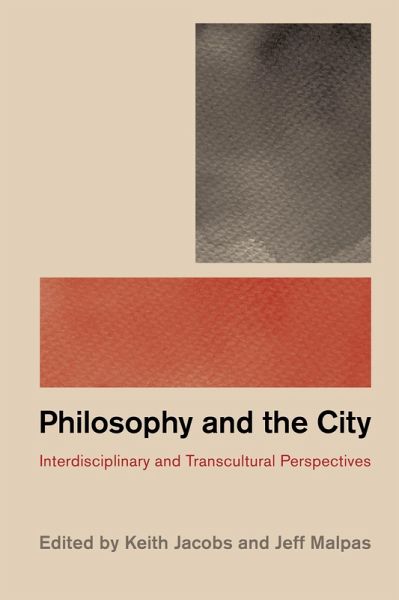
Philosophy has its origins in the city, and in the context of our own highly urbanised modes of living, the relationship between philosophy and the city is more important than ever. The city is the place in which most humans now play out their lives, and the place that determines much of the cultural, social, economic, and political life of the contemporary world. Towards a Philosophy of the City explores a wide range of approaches and perspectives in a way that is true to the city's complex and dynamic character. The volume begins with a comprehensive introduction that identifies the key…mehr
Philosophy has its origins in the city, and in the context of our own highly urbanised modes of living, the relationship between philosophy and the city is more important than ever. The city is the place in which most humans now play out their lives, and the place that determines much of the cultural, social, economic, and political life of the contemporary world. Towards a Philosophy of the City explores a wide range of approaches and perspectives in a way that is true to the city's complex and dynamic character. The volume begins with a comprehensive introduction that identifies the key themes and then moves through four parts, examining the concept of the city itself, its varying histories and experiences, the character of the landscapes that belong to the city, and finally the impact of new technologies for the future of city spaces. Each section takes up aspects of the thinking of the city as it develops in relation to particular problems, contexts, and sometimes as exemplified in particular cities. This volume provides an invaluable resource for students and scholars in Philosophy, Geography, Sociology and Urban Studies.
Die Herstellerinformationen sind derzeit nicht verfügbar.
Autorenporträt
Keith Jacobs is Professor of Sociology at the University of Tasmania. His publications include: The Dynamics of Local Housing Policy (1999); Experience and Representation: Contemporary Perspectives on Migration in Australia (2011); and House, Home and Society (2016), co-authored with Rowland Atkinson. Jeff Malpas is Distinguished Professor at the University of Tasmania and Visiting Distinguished Professor at Latrobe University. He was founder, and until 2005, Director, of the University of Tasmania's Centre for Applied Philosophy and Ethics. His many publications include Heidegger and the Thinking of Place (2012), Heidegger's Topology (2006) and Place and Experience (2007).
Inhaltsangabe
On the Philosophy of the City - Keith Jacobs and Jeff Malpas Further Reading Part 1: City Concepts: Places, Processes, Structures 1. Capitalism, Form and the Philosophy of the Urban - David Cunningham 2. Discourses of the City - Kathleen Flanagan 3. The City as Wild - Wendy Steele 4. Urban Time and the City as Event - Tony Fry 5. The Immanent City - Simon Sadler Part 2: City Landscapes: Experience, History, Identity 6. Solar Le Corbusier - Alan Stoekl 7. Escaping Modernity: Renaissance Florence and the Rejection of the City - Katie Campbell 8. Justice as the Urban Everyday - Wendy Pullan 9. Gardens, Cities, and Timescapes in South Asia - Smriti Srinivas 10. A Vertical Melbourne - Meg Nethercote 11. The City's Other Face: Modern Ruins and Urban Endings - Emma Fraser Part 3: City Futures: Power, Risk, and Value 12. Beyond Differences of Race, Class: Making Urban Subjects - Saskia Sassen 13. Cities Remade: On Deciding the Fate of Building in the City - Janet Donohoe 14. The City as a Construct of Risk and Security - Yosef Jabereen and Efrat Eizenberg 15. Philosophies of Commensuration, Value, Worth in the Future City: Rethinking the Interdisciplinary - Michael Keith 16. Multiplying Resistance: The Power of the Urban in the Age of National Revanchism - Asma Mehan and Ugo Rossi 17. Urban Futures and the Dark Enlightenment - Roger Burrows Bibliography Index About the Contributors
On the Philosophy of the City - Keith Jacobs and Jeff Malpas Further Reading Part 1: City Concepts: Places, Processes, Structures 1. Capitalism, Form and the Philosophy of the Urban - David Cunningham 2. Discourses of the City - Kathleen Flanagan 3. The City as Wild - Wendy Steele 4. Urban Time and the City as Event - Tony Fry 5. The Immanent City - Simon Sadler Part 2: City Landscapes: Experience, History, Identity 6. Solar Le Corbusier - Alan Stoekl 7. Escaping Modernity: Renaissance Florence and the Rejection of the City - Katie Campbell 8. Justice as the Urban Everyday - Wendy Pullan 9. Gardens, Cities, and Timescapes in South Asia - Smriti Srinivas 10. A Vertical Melbourne - Meg Nethercote 11. The City's Other Face: Modern Ruins and Urban Endings - Emma Fraser Part 3: City Futures: Power, Risk, and Value 12. Beyond Differences of Race, Class: Making Urban Subjects - Saskia Sassen 13. Cities Remade: On Deciding the Fate of Building in the City - Janet Donohoe 14. The City as a Construct of Risk and Security - Yosef Jabereen and Efrat Eizenberg 15. Philosophies of Commensuration, Value, Worth in the Future City: Rethinking the Interdisciplinary - Michael Keith 16. Multiplying Resistance: The Power of the Urban in the Age of National Revanchism - Asma Mehan and Ugo Rossi 17. Urban Futures and the Dark Enlightenment - Roger Burrows Bibliography Index About the Contributors
Es gelten unsere Allgemeinen Geschäftsbedingungen: www.buecher.de/agb
Impressum
www.buecher.de ist ein Internetauftritt der buecher.de internetstores GmbH
Geschäftsführung: Monica Sawhney | Roland Kölbl | Günter Hilger
Sitz der Gesellschaft: Batheyer Straße 115 - 117, 58099 Hagen
Postanschrift: Bürgermeister-Wegele-Str. 12, 86167 Augsburg
Amtsgericht Hagen HRB 13257
Steuernummer: 321/5800/1497
USt-IdNr: DE450055826