52,95 €
inkl. MwSt.
Sofort per Download lieferbar
26 °P sammeln

Andere Kunden interessierten sich auch für
") Explanation and Understanding (eBook, PDF)41,95 €
Explanation and Understanding (eBook, PDF)41,95 €") Modeling the Possible (eBook, PDF)0,00 €
Modeling the Possible (eBook, PDF)0,00 €") The Routledge Handbook of Philosophy of Scientific Modeling (eBook, PDF)169,95 €
The Routledge Handbook of Philosophy of Scientific Modeling (eBook, PDF)169,95 €") The Non-Fundamentality of Spacetime (eBook, PDF)41,95 €
The Non-Fundamentality of Spacetime (eBook, PDF)41,95 €") Einstein, Relativity and Absolute Simultaneity (eBook, PDF)48,95 €
Einstein, Relativity and Absolute Simultaneity (eBook, PDF)48,95 €") Understanding Philosophy of Science (eBook, PDF)38,95 €
Understanding Philosophy of Science (eBook, PDF)38,95 €") Translating Science in the 18th and 19th Centuries (eBook, PDF)0,00 €
Translating Science in the 18th and 19th Centuries (eBook, PDF)0,00 €




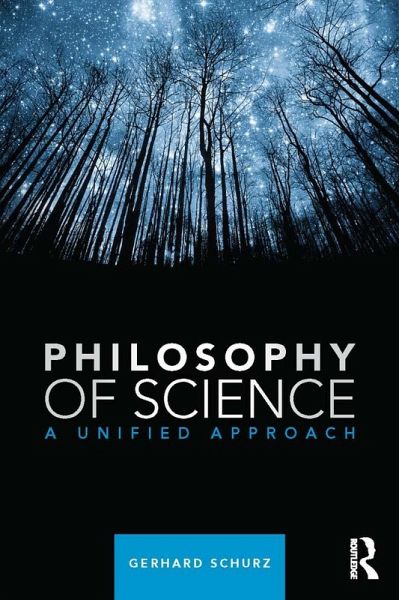
Philosophy of Science: A Unified Approach combines a general introduction to philosophy of science with an integrated survey of all its important subfields. As the book's subtitle suggests, this excellent overview is guided methodologically by "a unified approach" to philosophy of science: behind the diversity of scientific fields one can recognize a methodological unity of the sciences. This unity is worked out in this book, revealing all the while important differences between subject areas.
Structurally, this comprehensive book offers a two-part approach, which makes it an excellent introduction for students new to the field and a useful resource for more advanced students. Each chapter is divided into two sections. The first section assumes no foreknowledge of the subject introduced, and the second section builds upon the first by bringing into the conversation more advanced, complementary topics.
Definitions, key propositions, examples and figures overview all of the core material. At the end of every chapter there are selected readings and exercises (with solutions at the end of the book). The book also includes a comprehensive bibliography and an index.
Structurally, this comprehensive book offers a two-part approach, which makes it an excellent introduction for students new to the field and a useful resource for more advanced students. Each chapter is divided into two sections. The first section assumes no foreknowledge of the subject introduced, and the second section builds upon the first by bringing into the conversation more advanced, complementary topics.
Definitions, key propositions, examples and figures overview all of the core material. At the end of every chapter there are selected readings and exercises (with solutions at the end of the book). The book also includes a comprehensive bibliography and an index.
Dieser Download kann aus rechtlichen Gründen nur mit Rechnungsadresse in A, B, BG, CY, CZ, D, DK, EW, E, FIN, F, GR, HR, H, IRL, I, LT, L, LR, M, NL, PL, P, R, S, SLO, SK ausgeliefert werden.
I consider this book to be a unique work both with regard to the sheer amount of material it covers but also with regard to the clarity, depth and insight with which these matters are dealt with by one of Europe's foremost analytic philosophers. I would not hesitate to use it in an advanced course on the subject, and I believe it would work well also for an introductory course given the careful way in which the book is structured into introductory and advanced material.
Erik J. Olsson, Lund University
Philosophy of Science: a Unified Approach revamps and bolsters the logical empiricist way to think about and to practice philosophy of science. It combines technical precision and rigour with philosophical breadth and depth. It delves into all major philosophical problems and issues in general philosophy of science. It elegantly presents the received positions and approaches, but it also articulates novel views and arguments. It systematically explains the necessary technical concepts and makes them do deep philosophical work. Philosophy of Science: a Unified Approach lives up to its promise to highlight and defend the methodological unity of the sciences. Gerhard Schurz has written a superb introduction to philosophy of science; novices and experts alike have a lot to learn from it.
Stathis Psillos, University of Western Ontario & University of Athens
This is an excellent introduction to the general philosophy of science. It is lucidly written and very well structured in elementary and advanced subsections. Inspired by the classic authors of the 20th century, such as Carnap and Popper, and guided by the methodological version of the idea of the unity of the sciences and the humanities, Gerhard Schurz shows how it stands with the main topics in the first decades of the 21th century.
Theo Kuipers, University of Groningen
Erik J. Olsson, Lund University
Philosophy of Science: a Unified Approach revamps and bolsters the logical empiricist way to think about and to practice philosophy of science. It combines technical precision and rigour with philosophical breadth and depth. It delves into all major philosophical problems and issues in general philosophy of science. It elegantly presents the received positions and approaches, but it also articulates novel views and arguments. It systematically explains the necessary technical concepts and makes them do deep philosophical work. Philosophy of Science: a Unified Approach lives up to its promise to highlight and defend the methodological unity of the sciences. Gerhard Schurz has written a superb introduction to philosophy of science; novices and experts alike have a lot to learn from it.
Stathis Psillos, University of Western Ontario & University of Athens
This is an excellent introduction to the general philosophy of science. It is lucidly written and very well structured in elementary and advanced subsections. Inspired by the classic authors of the 20th century, such as Carnap and Popper, and guided by the methodological version of the idea of the unity of the sciences and the humanities, Gerhard Schurz shows how it stands with the main topics in the first decades of the 21th century.
Theo Kuipers, University of Groningen