P. R. Sundararajan
Physical Aspects of Polymer Self-Assembly (eBook, PDF)
171,99 €
171,99 €
inkl. MwSt.
Sofort per Download lieferbar
0 °P sammeln
171,99 €
Als Download kaufen
171,99 €
inkl. MwSt.
Sofort per Download lieferbar
0 °P sammeln
Jetzt verschenken
Alle Infos zum eBook verschenken
171,99 €
inkl. MwSt.
Sofort per Download lieferbar
Alle Infos zum eBook verschenken
0 °P sammeln
P. R. Sundararajan
Physical Aspects of Polymer Self-Assembly (eBook, PDF)
- Format: PDF
- Merkliste
- Auf die Merkliste
- Bewerten Bewerten
- Teilen
- Produkt teilen
- Produkterinnerung
- Produkterinnerung

Bitte loggen Sie sich zunächst in Ihr Kundenkonto ein oder registrieren Sie sich bei
bücher.de, um das eBook-Abo tolino select nutzen zu können.
Hier können Sie sich einloggen
Sie sind bereits eingeloggt. Klicken Sie auf 2. tolino select Abo, um fortzufahren.

Bitte loggen Sie sich zunächst in Ihr Kundenkonto ein oder registrieren Sie sich bei bücher.de, um das eBook-Abo tolino select nutzen zu können.
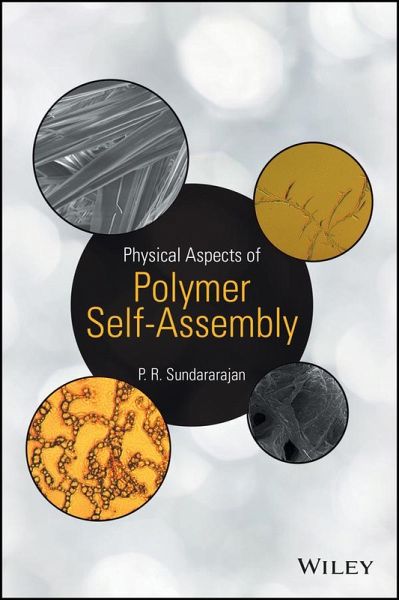
Offering an overview of principles and techniques, this book covers all major categories of self-assembled polymers - properties, processes, and design. Each chapter focuses on morphology, applications, and advanced concepts to illustrate the advantages of polymer self-assembly across industrial and academic research. * Provides an organized, comprehensive overview of polymer self-assembly, its fundamentals, principles, and applications * Includes chapters on block copolymers, amphiphilic polymers, supramolecular polymers, rotaxenes, polymer gels, dendrimers, and small molecules in polymer…mehr
- Geräte: PC
- mit Kopierschutz
- eBook Hilfe
- Größe: 47.19MB
Andere Kunden interessierten sich auch für
Wayne F. ReedMonitoring Polymerization Reactions (eBook, PDF)141,99 €
Polymer and Biopolymer Brushes (eBook, PDF)347,99 €
Handbook of Polymer Crystallization (eBook, PDF)181,99 €
Dendrimer Chemistry (eBook, PDF)171,95 €
Covalent Materials and Hybrids (eBook, PDF)183,95 €
Shi-Qing WangNonlinear Polymer Rheology (eBook, PDF)160,99 €
Biopolymer Nanocomposites (eBook, PDF)173,99 €-
-
-
Offering an overview of principles and techniques, this book covers all major categories of self-assembled polymers - properties, processes, and design. Each chapter focuses on morphology, applications, and advanced concepts to illustrate the advantages of polymer self-assembly across industrial and academic research. * Provides an organized, comprehensive overview of polymer self-assembly, its fundamentals, principles, and applications * Includes chapters on block copolymers, amphiphilic polymers, supramolecular polymers, rotaxenes, polymer gels, dendrimers, and small molecules in polymer matrices * Focuses on novel applications, block copolymer assembly to nanotechnology, photonics and metamaterials, molecular machines and artificial muscle, gels that can be applied to polymer science, materials science, and nanotechnology * Examines state-of-the-art concepts, like lithographic patterning and foldaxane * Discusses challenges and future outlook of a popular and emerging field of study
Dieser Download kann aus rechtlichen Gründen nur mit Rechnungsadresse in D ausgeliefert werden.
Produktdetails
- Produktdetails
- Verlag: John Wiley & Sons
- Erscheinungstermin: 15. November 2016
- Englisch
- ISBN-13: 9781118994337
- Artikelnr.: 47140203
- Verlag: John Wiley & Sons
- Erscheinungstermin: 15. November 2016
- Englisch
- ISBN-13: 9781118994337
- Artikelnr.: 47140203
- Herstellerkennzeichnung Die Herstellerinformationen sind derzeit nicht verfügbar.
P. R. Sundararajan, PhD, DSc, is a Professor in the Department of Chemistry at Carleton University in Ontario, Canada and has over 40 years of academic and industry experience in polymer chemistry. He has held positions as the NSERC-Xerox Industrial Research Chair Professor, Director of the Ottawa Carleton Chemistry Institute, Associate Chair of Graduate Affairs at the university, and Principal Scientist, Manager, and Project Leader at the Xerox Research Center of Canada. His current research focuses on the morphology of self-assembly systems, macromolecular nanotechnology, organo- and polymer gels and the morphology of polymer composites in confined systems. He is a winner of the Macromolecular Science and Engineering Award of the Chemical Institute of Canada, Materials Chemistry Award of the Canadian Materials Society and is a Fellow of the Chemical Institute of Canada. He was the President of the Canadian Society for Chemistry and the Chair of the Chemical Institute of Canada.
Preface xi 1 Introduction 1 1.1 Polymer Tacticity 1 1.2 Big versus Small 5 1.3 Entanglement 5 1.4 Excluded Volume 8 1.5 Free Volume 10 1.6 Self
Assembly 10 1.7 Polymer Self
Assembly 12 References 13 2 Molecular Forces 17 2.1 Van der Waals Interaction 17 2.2 Hydrogen Bond 21 2.3 C
H...
Interaction 27 2.4 Halogen Bond 29 2.5 Other Hydrogen Bonds 30 2.6 Coulombic Interaction 31 References 33 3 Features of Self
Assembly 37 3.1 Self
Sorting-Small Molecules 37 3.2 Polymer Self
Sorting 43 3.3 Concentration
Dependent Association 48 3.4 Polymer-Guest Molecule Recognition 49 3.5 Sergeant-Soldier Phenomenon 55 3.6 Majority Rules 61 3.7 Chain Folding 65 3.8 Foldamers 79 3.9 Single Chain Polymer Crystals and Nanoparticles 91 References 99 Further Reading 104 4 Supramolecular Macromolecules and Polymers 105 4.1 Supramolecular Macromolecules 105 4.2 Supramolecular Polymers 110 4.3 Modular Supramolecules 123 4.4 Solvent Influence 127 4.5 Comb Polymers 140 References 149 Further Reading 152 5 Block Copolymers 153 5.1 Theoretical Aspects 153 5.2 Diblock Copolymers 158 5.3 Organic/Inorganic Diblocks 165 5.4 Blends of Diblock Copolymers 170 5.5 Diblock/Homopolymer Blends 172 5.6 BCP/Small
Molecular Supramolecular Association 175 5.7 Triblock Copolymers 177 5.8 Some Applications of Gyroid Morphology 190 5.9 Graphoepitaxy 201 5.10 Porous Structures 211 5.11 Crystalline Block Copolymers 223 5.12 Nanotechnology 223 References 225 Further Reading 230 6 Rotaxanes and Polyrotaxanes 231 6.1 Definitions and Early Work 231 6.2 Cyclodextrins for Inclusion 237 6.3 Selective Threading 244 6.4 Micelles of Double
Hydrophilic Block Copolymers via Rotaxane Formation 249 6.5 Homopolymer Micelles 252 6.6 Linear and Cyclic PDMS 253 6.7 Abrasion Resistance 254 6.8 Beyond Linear Polymers and
, ß
, and
CDs 256 6.9 Insulated Molecular Wires 258 6.10 Molecular Switches and Machines 260 6.11 Supramolecular Oligomeric and Polymeric Rotaxanes 268 6.12 Rotaxane and Polyrotaxane
Based Muscles 270 References 277 Further Reading 280 7 Polymer Gels 281 7.1 One
Dimensional Growth 281 7.2 Definitions and Classifications 283 7.3 Gels with Noncrystallizable Polymers 285 7.4 Gels with Crystallizable Polymers 295 7.5 Add a Sergeant to the Soldiers to Cause Gelation 300 7.6
Interaction
Mediated Gelation 308 7.7 Polymer Compatibilized Small Molecule/Polymer Gels 316 7.8 Monomer Self
Assembly and Polymer Gels 318 7.9 Poor Man's Rheology 321 References 324 8 Small
Molecule Self
Assembly in Polymer Matrices 329 8.1 Phase Separation in Charge Transport Polymer Layers 329 8.2 Glass Transition and Diffusion of Small Molecules 331 8.3 Subsurface Self
Assembly of Small Molecules in Polymer Matrices 333 8.4 Solvent Effect on Self
Assembly of Small Molecules in Polymer Matrices 338 8.5 Polymer
Compatibilized Small
Molecule Assembly in Polymer Matrices 343 8.6 Polymerization
Induced Phase Separation and Reaction
Induced Phase Separation 344 8.7 PIPS for LC Displays 345 8.8 PIPS with Supramolecular Assembly 347 8.9 PIPS for Porous Structures 347 8.10 Surfactant/Polymer Assembly 350 References 356 Index 359
Assembly 10 1.7 Polymer Self
Assembly 12 References 13 2 Molecular Forces 17 2.1 Van der Waals Interaction 17 2.2 Hydrogen Bond 21 2.3 C
H...
Interaction 27 2.4 Halogen Bond 29 2.5 Other Hydrogen Bonds 30 2.6 Coulombic Interaction 31 References 33 3 Features of Self
Assembly 37 3.1 Self
Sorting-Small Molecules 37 3.2 Polymer Self
Sorting 43 3.3 Concentration
Dependent Association 48 3.4 Polymer-Guest Molecule Recognition 49 3.5 Sergeant-Soldier Phenomenon 55 3.6 Majority Rules 61 3.7 Chain Folding 65 3.8 Foldamers 79 3.9 Single Chain Polymer Crystals and Nanoparticles 91 References 99 Further Reading 104 4 Supramolecular Macromolecules and Polymers 105 4.1 Supramolecular Macromolecules 105 4.2 Supramolecular Polymers 110 4.3 Modular Supramolecules 123 4.4 Solvent Influence 127 4.5 Comb Polymers 140 References 149 Further Reading 152 5 Block Copolymers 153 5.1 Theoretical Aspects 153 5.2 Diblock Copolymers 158 5.3 Organic/Inorganic Diblocks 165 5.4 Blends of Diblock Copolymers 170 5.5 Diblock/Homopolymer Blends 172 5.6 BCP/Small
Molecular Supramolecular Association 175 5.7 Triblock Copolymers 177 5.8 Some Applications of Gyroid Morphology 190 5.9 Graphoepitaxy 201 5.10 Porous Structures 211 5.11 Crystalline Block Copolymers 223 5.12 Nanotechnology 223 References 225 Further Reading 230 6 Rotaxanes and Polyrotaxanes 231 6.1 Definitions and Early Work 231 6.2 Cyclodextrins for Inclusion 237 6.3 Selective Threading 244 6.4 Micelles of Double
Hydrophilic Block Copolymers via Rotaxane Formation 249 6.5 Homopolymer Micelles 252 6.6 Linear and Cyclic PDMS 253 6.7 Abrasion Resistance 254 6.8 Beyond Linear Polymers and
, ß
, and
CDs 256 6.9 Insulated Molecular Wires 258 6.10 Molecular Switches and Machines 260 6.11 Supramolecular Oligomeric and Polymeric Rotaxanes 268 6.12 Rotaxane and Polyrotaxane
Based Muscles 270 References 277 Further Reading 280 7 Polymer Gels 281 7.1 One
Dimensional Growth 281 7.2 Definitions and Classifications 283 7.3 Gels with Noncrystallizable Polymers 285 7.4 Gels with Crystallizable Polymers 295 7.5 Add a Sergeant to the Soldiers to Cause Gelation 300 7.6
Interaction
Mediated Gelation 308 7.7 Polymer Compatibilized Small Molecule/Polymer Gels 316 7.8 Monomer Self
Assembly and Polymer Gels 318 7.9 Poor Man's Rheology 321 References 324 8 Small
Molecule Self
Assembly in Polymer Matrices 329 8.1 Phase Separation in Charge Transport Polymer Layers 329 8.2 Glass Transition and Diffusion of Small Molecules 331 8.3 Subsurface Self
Assembly of Small Molecules in Polymer Matrices 333 8.4 Solvent Effect on Self
Assembly of Small Molecules in Polymer Matrices 338 8.5 Polymer
Compatibilized Small
Molecule Assembly in Polymer Matrices 343 8.6 Polymerization
Induced Phase Separation and Reaction
Induced Phase Separation 344 8.7 PIPS for LC Displays 345 8.8 PIPS with Supramolecular Assembly 347 8.9 PIPS for Porous Structures 347 8.10 Surfactant/Polymer Assembly 350 References 356 Index 359
Preface xi 1 Introduction 1 1.1 Polymer Tacticity 1 1.2 Big versus Small 5 1.3 Entanglement 5 1.4 Excluded Volume 8 1.5 Free Volume 10 1.6 Self
Assembly 10 1.7 Polymer Self
Assembly 12 References 13 2 Molecular Forces 17 2.1 Van der Waals Interaction 17 2.2 Hydrogen Bond 21 2.3 C
H...
Interaction 27 2.4 Halogen Bond 29 2.5 Other Hydrogen Bonds 30 2.6 Coulombic Interaction 31 References 33 3 Features of Self
Assembly 37 3.1 Self
Sorting-Small Molecules 37 3.2 Polymer Self
Sorting 43 3.3 Concentration
Dependent Association 48 3.4 Polymer-Guest Molecule Recognition 49 3.5 Sergeant-Soldier Phenomenon 55 3.6 Majority Rules 61 3.7 Chain Folding 65 3.8 Foldamers 79 3.9 Single Chain Polymer Crystals and Nanoparticles 91 References 99 Further Reading 104 4 Supramolecular Macromolecules and Polymers 105 4.1 Supramolecular Macromolecules 105 4.2 Supramolecular Polymers 110 4.3 Modular Supramolecules 123 4.4 Solvent Influence 127 4.5 Comb Polymers 140 References 149 Further Reading 152 5 Block Copolymers 153 5.1 Theoretical Aspects 153 5.2 Diblock Copolymers 158 5.3 Organic/Inorganic Diblocks 165 5.4 Blends of Diblock Copolymers 170 5.5 Diblock/Homopolymer Blends 172 5.6 BCP/Small
Molecular Supramolecular Association 175 5.7 Triblock Copolymers 177 5.8 Some Applications of Gyroid Morphology 190 5.9 Graphoepitaxy 201 5.10 Porous Structures 211 5.11 Crystalline Block Copolymers 223 5.12 Nanotechnology 223 References 225 Further Reading 230 6 Rotaxanes and Polyrotaxanes 231 6.1 Definitions and Early Work 231 6.2 Cyclodextrins for Inclusion 237 6.3 Selective Threading 244 6.4 Micelles of Double
Hydrophilic Block Copolymers via Rotaxane Formation 249 6.5 Homopolymer Micelles 252 6.6 Linear and Cyclic PDMS 253 6.7 Abrasion Resistance 254 6.8 Beyond Linear Polymers and
, ß
, and
CDs 256 6.9 Insulated Molecular Wires 258 6.10 Molecular Switches and Machines 260 6.11 Supramolecular Oligomeric and Polymeric Rotaxanes 268 6.12 Rotaxane and Polyrotaxane
Based Muscles 270 References 277 Further Reading 280 7 Polymer Gels 281 7.1 One
Dimensional Growth 281 7.2 Definitions and Classifications 283 7.3 Gels with Noncrystallizable Polymers 285 7.4 Gels with Crystallizable Polymers 295 7.5 Add a Sergeant to the Soldiers to Cause Gelation 300 7.6
Interaction
Mediated Gelation 308 7.7 Polymer Compatibilized Small Molecule/Polymer Gels 316 7.8 Monomer Self
Assembly and Polymer Gels 318 7.9 Poor Man's Rheology 321 References 324 8 Small
Molecule Self
Assembly in Polymer Matrices 329 8.1 Phase Separation in Charge Transport Polymer Layers 329 8.2 Glass Transition and Diffusion of Small Molecules 331 8.3 Subsurface Self
Assembly of Small Molecules in Polymer Matrices 333 8.4 Solvent Effect on Self
Assembly of Small Molecules in Polymer Matrices 338 8.5 Polymer
Compatibilized Small
Molecule Assembly in Polymer Matrices 343 8.6 Polymerization
Induced Phase Separation and Reaction
Induced Phase Separation 344 8.7 PIPS for LC Displays 345 8.8 PIPS with Supramolecular Assembly 347 8.9 PIPS for Porous Structures 347 8.10 Surfactant/Polymer Assembly 350 References 356 Index 359
Assembly 10 1.7 Polymer Self
Assembly 12 References 13 2 Molecular Forces 17 2.1 Van der Waals Interaction 17 2.2 Hydrogen Bond 21 2.3 C
H...
Interaction 27 2.4 Halogen Bond 29 2.5 Other Hydrogen Bonds 30 2.6 Coulombic Interaction 31 References 33 3 Features of Self
Assembly 37 3.1 Self
Sorting-Small Molecules 37 3.2 Polymer Self
Sorting 43 3.3 Concentration
Dependent Association 48 3.4 Polymer-Guest Molecule Recognition 49 3.5 Sergeant-Soldier Phenomenon 55 3.6 Majority Rules 61 3.7 Chain Folding 65 3.8 Foldamers 79 3.9 Single Chain Polymer Crystals and Nanoparticles 91 References 99 Further Reading 104 4 Supramolecular Macromolecules and Polymers 105 4.1 Supramolecular Macromolecules 105 4.2 Supramolecular Polymers 110 4.3 Modular Supramolecules 123 4.4 Solvent Influence 127 4.5 Comb Polymers 140 References 149 Further Reading 152 5 Block Copolymers 153 5.1 Theoretical Aspects 153 5.2 Diblock Copolymers 158 5.3 Organic/Inorganic Diblocks 165 5.4 Blends of Diblock Copolymers 170 5.5 Diblock/Homopolymer Blends 172 5.6 BCP/Small
Molecular Supramolecular Association 175 5.7 Triblock Copolymers 177 5.8 Some Applications of Gyroid Morphology 190 5.9 Graphoepitaxy 201 5.10 Porous Structures 211 5.11 Crystalline Block Copolymers 223 5.12 Nanotechnology 223 References 225 Further Reading 230 6 Rotaxanes and Polyrotaxanes 231 6.1 Definitions and Early Work 231 6.2 Cyclodextrins for Inclusion 237 6.3 Selective Threading 244 6.4 Micelles of Double
Hydrophilic Block Copolymers via Rotaxane Formation 249 6.5 Homopolymer Micelles 252 6.6 Linear and Cyclic PDMS 253 6.7 Abrasion Resistance 254 6.8 Beyond Linear Polymers and
, ß
, and
CDs 256 6.9 Insulated Molecular Wires 258 6.10 Molecular Switches and Machines 260 6.11 Supramolecular Oligomeric and Polymeric Rotaxanes 268 6.12 Rotaxane and Polyrotaxane
Based Muscles 270 References 277 Further Reading 280 7 Polymer Gels 281 7.1 One
Dimensional Growth 281 7.2 Definitions and Classifications 283 7.3 Gels with Noncrystallizable Polymers 285 7.4 Gels with Crystallizable Polymers 295 7.5 Add a Sergeant to the Soldiers to Cause Gelation 300 7.6
Interaction
Mediated Gelation 308 7.7 Polymer Compatibilized Small Molecule/Polymer Gels 316 7.8 Monomer Self
Assembly and Polymer Gels 318 7.9 Poor Man's Rheology 321 References 324 8 Small
Molecule Self
Assembly in Polymer Matrices 329 8.1 Phase Separation in Charge Transport Polymer Layers 329 8.2 Glass Transition and Diffusion of Small Molecules 331 8.3 Subsurface Self
Assembly of Small Molecules in Polymer Matrices 333 8.4 Solvent Effect on Self
Assembly of Small Molecules in Polymer Matrices 338 8.5 Polymer
Compatibilized Small
Molecule Assembly in Polymer Matrices 343 8.6 Polymerization
Induced Phase Separation and Reaction
Induced Phase Separation 344 8.7 PIPS for LC Displays 345 8.8 PIPS with Supramolecular Assembly 347 8.9 PIPS for Porous Structures 347 8.10 Surfactant/Polymer Assembly 350 References 356 Index 359