80,95 €
80,95 €
inkl. MwSt.
Sofort per Download lieferbar
40 °P sammeln
80,95 €
Als Download kaufen
80,95 €
inkl. MwSt.
Sofort per Download lieferbar
40 °P sammeln
Jetzt verschenken
Alle Infos zum eBook verschenken
80,95 €
inkl. MwSt.
Sofort per Download lieferbar
Alle Infos zum eBook verschenken
40 °P sammeln
- Format: PDF
- Merkliste
- Auf die Merkliste
- Bewerten Bewerten
- Teilen
- Produkt teilen
- Produkterinnerung
- Produkterinnerung

Bitte loggen Sie sich zunächst in Ihr Kundenkonto ein oder registrieren Sie sich bei
bücher.de, um das eBook-Abo tolino select nutzen zu können.
Hier können Sie sich einloggen
Sie sind bereits eingeloggt. Klicken Sie auf 2. tolino select Abo, um fortzufahren.

Bitte loggen Sie sich zunächst in Ihr Kundenkonto ein oder registrieren Sie sich bei bücher.de, um das eBook-Abo tolino select nutzen zu können.
Zur Zeit liegt uns keine Inhaltsangabe vor.
- Geräte: PC
- ohne Kopierschutz
- eBook Hilfe
- Größe: 28MB
Andere Kunden interessierten sich auch für
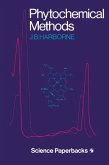
Jeffrey B. HarbornePhytochemical Methods (eBook, PDF)40,95 €
Virus Receptors (eBook, PDF)40,95 €
Coffee (eBook, PDF)104,95 €
Frank LeeBasic Food Chemistry (eBook, PDF)40,95 €
D. A. BakerTransport Phenomena in Plants (eBook, PDF)40,95 €
T. J. FranklinBiochemistry of Antimicrobial Action (eBook, PDF)40,95 €
Herman S. BachelardBrain Biochemistry (eBook, PDF)40,95 €-
-
-
Zur Zeit liegt uns keine Inhaltsangabe vor.
Dieser Download kann aus rechtlichen Gründen nur mit Rechnungsadresse in A, B, BG, CY, CZ, D, DK, EW, E, FIN, F, GR, HR, H, IRL, I, LT, L, LR, M, NL, PL, P, R, S, SLO, SK ausgeliefert werden.
Produktdetails
- Produktdetails
- Verlag: Springer Netherlands
- Seitenzahl: 288
- Erscheinungstermin: 6. Dezember 2012
- Englisch
- ISBN-13: 9789400955707
- Artikelnr.: 44054960
- Verlag: Springer Netherlands
- Seitenzahl: 288
- Erscheinungstermin: 6. Dezember 2012
- Englisch
- ISBN-13: 9789400955707
- Artikelnr.: 44054960
- Herstellerkennzeichnung Die Herstellerinformationen sind derzeit nicht verfügbar.
Jeffrey B. Harborne, Professor für Botanik, Universität Reading, UK.
1 Methods of Plant Analysis.- 1.1 Introduction.- 1.2 Methods of extraction and isolation.- 1.3 Methods of separation.- 1.4 Methods of identification.- 1.5 Analysis of results.- 1.6 Applications.- 2 Phenolic Compounds.- 2.1 Introduction.- 2.2 Phenols and phenolic acids.- 2.3 Phenylpropanoids.- 2.4 Flavonoid pigments.- 2.5 Anthocyanins.- 2.6 Flavonols and flavones.- 2.7 Minor flavonoids, xanthones and stilbenes.- 2.8 Tannins.- 2.9 Quinone pigments.- 3 The Terpenoids.- 3.1 Introduction.- 3.2 Essential oils.- 3.3 Diterpenoids and gibberellins.- 3.4 Triterpenoids and steroids.- 3.5 Carotenoids.- 4 Organic Acids, Lipids and Related Compounds.- 4.1 Plant acids.- 4.2 Fatty acids and lipids.- 4.3 Alkanes and related hydrocarbons.- 4.4 Polyacetylenes.- 4.5 Sulphur compounds.- 5 Nitrogen Compounds.- 5.1 Introduction.- 5.2 Amino acids.- 5.3 Amines.- 5.4 Alkaloids.- 5.5 Cyanogenic glycosides.- 5.6 Indoles.- 5.7 Purines, pyrimidines and cytokinins.- 5.8 Chlorophylls.- 6 Sugars and their Derivatives.- 6.1 Introduction.- 6.2 Monosaccharides.- 6.3 Oligosaccharides.- 6.4 Sugar alcohols and cyclitols.- 7 Macromolecules.- 7.1 Introduction.- 7.2 Nucleic acids.- 7.3 Proteins.- 7.4 Polysaccharides.