29,95 €
inkl. MwSt.
Sofort per Download lieferbar
15 °P sammeln

Andere Kunden interessierten sich auch für
") Inventing Future Cities (eBook, ePUB)15,95 €
Inventing Future Cities (eBook, ePUB)15,95 €") Youth Politics in Urban Asia (eBook, ePUB)41,95 €
Youth Politics in Urban Asia (eBook, ePUB)41,95 €") The Beach Beneath the Streets (eBook, ePUB)24,95 €
The Beach Beneath the Streets (eBook, ePUB)24,95 €") Smart Cities (eBook, ePUB)11,95 €
Smart Cities (eBook, ePUB)11,95 €") Turf War (eBook, ePUB)2,99 €
Turf War (eBook, ePUB)2,99 €") Urban Resettlements in the Global South (eBook, ePUB)36,95 €
Urban Resettlements in the Global South (eBook, ePUB)36,95 €") Inclusive Cities (eBook, ePUB)3,99 €
Inclusive Cities (eBook, ePUB)3,99 €




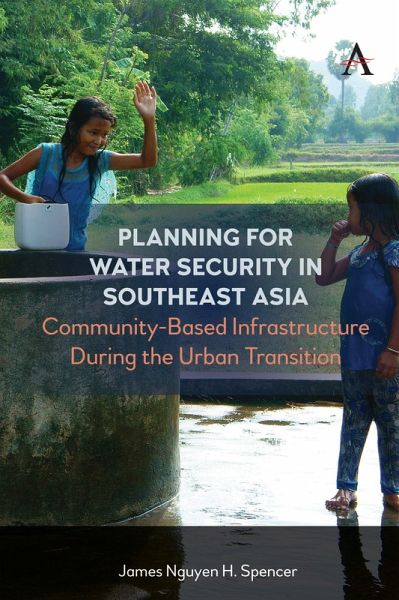
This project centers on one of the material drivers of local democratic processes. Too often in public, scholarly, and policy debates, conversations about participatory democracy devolve into voting rights, formal governance procedures, and other relatively abstract processes. While important, this point of view can often obscure the very immediate and material concerns of citizens, urban residents, and others that are simultaneously "citizens" of communities of varying geographic scales when it comes to - for example - the roads they travel, the electricity they consume, the schools they attend, and the water they use. The intention of this book is to examine the daily urban infrastructure needs of citizens, especially under rapid growth contexts, as a window into the broader concern with participation in governance, development, and visioning the future.
The central premise of the book, as well as the key lesson for readers, is that public works and infrastructure are the backbone of democratic processes, and that democratic processes begin at the very local level. Without it, the process of collective governance fades beyond the immediacy of daily life. The process of imagining, financing, building, using and demolishing large, material projects such as bridges, sanitation systems and water systems in particular places are, on the one hand, an important technological and design problem. On the other hand, they are the physical manifestations of social, political, and economic relationships reflected in society, as the famous urbanist Lewis Mumford once noted (1937). The extent to which communities build physical infrastructure and which types of it says a lot about how those communities organize themselves. At the same time, the formal and informal loyalties and relationships among a community influence the types of built environment and infrastructure they get.
Using this premise, the book describes several case studies from Southeast Asia that illustrate the embeddedness of governance structures in the built infrastructure as a way to encourage readers to consider the material, built environment stakes involved with participatory democracy as well as the importance of democratic participation in the visioning, building, and management of large-scale urban projects.
The central premise of the book, as well as the key lesson for readers, is that public works and infrastructure are the backbone of democratic processes, and that democratic processes begin at the very local level. Without it, the process of collective governance fades beyond the immediacy of daily life. The process of imagining, financing, building, using and demolishing large, material projects such as bridges, sanitation systems and water systems in particular places are, on the one hand, an important technological and design problem. On the other hand, they are the physical manifestations of social, political, and economic relationships reflected in society, as the famous urbanist Lewis Mumford once noted (1937). The extent to which communities build physical infrastructure and which types of it says a lot about how those communities organize themselves. At the same time, the formal and informal loyalties and relationships among a community influence the types of built environment and infrastructure they get.
Using this premise, the book describes several case studies from Southeast Asia that illustrate the embeddedness of governance structures in the built infrastructure as a way to encourage readers to consider the material, built environment stakes involved with participatory democracy as well as the importance of democratic participation in the visioning, building, and management of large-scale urban projects.
Dieser Download kann aus rechtlichen Gründen nur mit Rechnungsadresse in A, D ausgeliefert werden.