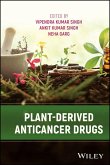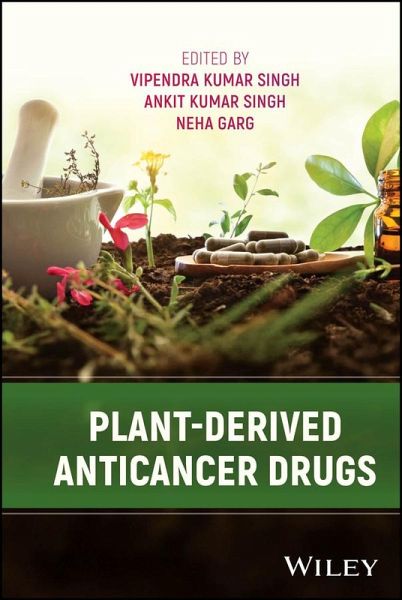
Plant-derived Anticancer Drugs (eBook, ePUB)
Redaktion: Singh, Vipendra Kumar; Garg, Neha; Singh, Ankit Kumar
216,99 €
216,99 €
inkl. MwSt.
Sofort per Download lieferbar

0 °P sammeln
216,99 €
Als Download kaufen
216,99 €
inkl. MwSt.
Sofort per Download lieferbar
0 °P sammeln
Jetzt verschenken
Alle Infos zum eBook verschenken
216,99 €
inkl. MwSt.
Sofort per Download lieferbar
Alle Infos zum eBook verschenken
0 °P sammeln

Plant-derived Anticancer Drugs (eBook, ePUB)
Redaktion: Singh, Vipendra Kumar; Garg, Neha; Singh, Ankit Kumar
- Format: ePub
- Merkliste
- Auf die Merkliste
- Bewerten Bewerten
- Teilen
- Produkt teilen
- Produkterinnerung
- Produkterinnerung

Bitte loggen Sie sich zunächst in Ihr Kundenkonto ein oder registrieren Sie sich bei
bücher.de, um das eBook-Abo tolino select nutzen zu können.
Hier können Sie sich einloggen
Sie sind bereits eingeloggt. Klicken Sie auf 2. tolino select Abo, um fortzufahren.

Bitte loggen Sie sich zunächst in Ihr Kundenkonto ein oder registrieren Sie sich bei bücher.de, um das eBook-Abo tolino select nutzen zu können.
Enhanced approaches for using plant-derived molecules as a more promising cancer treatment alternative, with lower costs and fewer side effects
Plant-derived Anticancer Drugs discusses the current scenario of cancer, the limitations of synthetic drugs, and the potential of plant-derived molecules in cancer treatment, highlighting a variety of approaches, such as biodegradable nano and quantum dot-based materials, that enhance the therapeutic efficacy of plant-derived molecules to improve solubility, applicability, target-specific delivery, and overall efficacy.
The book begins by…mehr
- Geräte: eReader
- mit Kopierschutz
- eBook Hilfe
- Größe: 8.24MB
Andere Kunden interessierten sich auch für
Plant Biomass Derived Materials (eBook, ePUB)169,99 €
Biomass-Derived Materials for Environmental Applications (eBook, ePUB)116,95 €
Plant-derived Anticancer Drugs (eBook, PDF)216,99 €
Metallo-Drugs: Development and Action of Anticancer Agents (eBook, ePUB)223,95 €
Lichen-Derived Products (eBook, ePUB)164,99 €
Adam ToddAnticancer Therapeutics (eBook, ePUB)157,99 €
Amit PatelAnti HIV Drugs. Non-Nucleoside Reverse Transcriptase Inhibitors (eBook, ePUB)29,99 €-
-
-
Enhanced approaches for using plant-derived molecules as a more promising cancer treatment alternative, with lower costs and fewer side effects
Plant-derived Anticancer Drugs discusses the current scenario of cancer, the limitations of synthetic drugs, and the potential of plant-derived molecules in cancer treatment, highlighting a variety of approaches, such as biodegradable nano and quantum dot-based materials, that enhance the therapeutic efficacy of plant-derived molecules to improve solubility, applicability, target-specific delivery, and overall efficacy.
The book begins by discussing the preclinical and clinical utilization of synthetic drugs in cancer therapy, highlighting their mechanisms of action, therapeutic outcomes, limitations, and future perspectives. The book then provides a snapshot of the major drugs approved by the FDA which have historically served as the cornerstone of center treatment, and provides a clinical evidence-based analysis of their survival outcomes. Next, the current role, acceptance, advancements, and challenges of using plant-derived molecules in cancer therapy are reviewed.
Contributed to by international experts in the field, Plant-derived Anticancer Drugs continues to cover sample topics including:
Plant-derived Anticancer Drugs is a completely comprehensive and up-to-date reference on the subject, ideal for natural products chemists, medicinal chemists, biochemists, and cancer researchers in academia and industry. The book is also valuable reading for graduates and undergraduates studying nanotechnology, phytochemistry, pharmacology, oncology, and toxicology.
Plant-derived Anticancer Drugs discusses the current scenario of cancer, the limitations of synthetic drugs, and the potential of plant-derived molecules in cancer treatment, highlighting a variety of approaches, such as biodegradable nano and quantum dot-based materials, that enhance the therapeutic efficacy of plant-derived molecules to improve solubility, applicability, target-specific delivery, and overall efficacy.
The book begins by discussing the preclinical and clinical utilization of synthetic drugs in cancer therapy, highlighting their mechanisms of action, therapeutic outcomes, limitations, and future perspectives. The book then provides a snapshot of the major drugs approved by the FDA which have historically served as the cornerstone of center treatment, and provides a clinical evidence-based analysis of their survival outcomes. Next, the current role, acceptance, advancements, and challenges of using plant-derived molecules in cancer therapy are reviewed.
Contributed to by international experts in the field, Plant-derived Anticancer Drugs continues to cover sample topics including:
- Advancements in anti-cancer drug development due to genomics, biotechnology, and systems biology
- Integrative approaches which leverage the cytotoxic precision of synthetic drugs alongside the multitargeted and often less toxic nature of phytochemicals
- Optimization of phytochemicals with high anticancer potential to reduce drug discovery timelines and associated costs
- Integration of Artificial Intelligence (AI) and plant-derived bioactive compounds
- Ability of plant-derived molecules and herbal formulations to target multiple pathways involved in cancer progression, such as cell proliferation, apoptosis, angiogenesis, and metastasis
Plant-derived Anticancer Drugs is a completely comprehensive and up-to-date reference on the subject, ideal for natural products chemists, medicinal chemists, biochemists, and cancer researchers in academia and industry. The book is also valuable reading for graduates and undergraduates studying nanotechnology, phytochemistry, pharmacology, oncology, and toxicology.
Dieser Download kann aus rechtlichen Gründen nur mit Rechnungsadresse in D ausgeliefert werden.
Produktdetails
- Produktdetails
- Verlag: John Wiley & Sons
- Seitenzahl: 757
- Erscheinungstermin: 12. November 2025
- Englisch
- ISBN-13: 9781394300570
- Artikelnr.: 75898543
- Verlag: John Wiley & Sons
- Seitenzahl: 757
- Erscheinungstermin: 12. November 2025
- Englisch
- ISBN-13: 9781394300570
- Artikelnr.: 75898543
- Herstellerkennzeichnung Die Herstellerinformationen sind derzeit nicht verfügbar.
Vipendra Kumar Singh, PhD is a senior postdoctoral fellow in the School of Biosciences and Bioengineering at the Indian Institute of Technology Mandi, Himachal Pradesh, India. Ankit Kumar Singh, PhD works as an Assistant Professor at the University Department of Botany Lalit Narayan Mithila University, Darbhanga, Bihar, India. Neha Garg, PhD is an Assistant Professor at the Institute of Medical Sciences, Department of Medicinal Chemistry, Banaras Hindu University in India.
List of Contributors xvii
Preface xxi
1 Utilization of Synthetic Drugs in Cancer: Preclinical and Clinical-based
Evidence 1
Sandeep Vaidya, Avadh Biharee, Arpita Yadav, Arun Kumar Sharma, Akhlesh
Kumar Jain, Suresh Thareja, and Mayank Kumar Singh
1.1 Introduction 1
1.2 Synthetic Pharmaceutical Anticancer Drugs 8
1.3 Challenges Faced in Early Drug Development 17
1.4 Conclusion 20
2 United States and European Union Regulations: Approved Treatment
Modalities for Managing Cancer 29
Avadh Biharee, Khushi Gupta, Arpita Yadav, Shivam Kumar kori, Sudha
Bhartiya, Kashif sheikh, Sandeep Vaidya, Sushil K. Kashaw, Suresh Thareja,
and Mayank Kumar Singh
2.1 Introduction 29
2.2 FDA Strategies for Drug Approval in the United States 31
2.3 EMA Approach for Drug Approval in the EU 35
2.4 Approved Treatment Modalities for Cancer Care 38
2.5 Quality Control in Cancer Treatment 43
2.6 Regulatory Frameworks Involved in Drug Approval Process 44
2.7 Challenges Associated in Drug and Devices Regulation and Approval 52
2.8 Conclusion 53
3 Survival Rate and Associated Side Effects of Synthetic Drugs in Cancer
Patients: A Shred of Clinical Evidence 63
Arpita Yadav, Arun Kumar Sharma, Kishan Kumar Pandey, Anu Chaudhary, Avadh
Biharee, Sandeep Vaidya, Suresh Thareja, and Mayank Kumar Singh
3.1 Introduction 63
3.2 Synthetic Drugs in Cancer Treatment 65
3.3 The Evolution of Chemotherapeutic Agents from Alkylators to Modern
Drugs 66
3.4 Cancer Survival Rates: Challenges and Emerging Trends in Treatment and
Diagnosis 68
3.5 Deleterious Effects of Chemotherapeutic Agents and Their Management
Strategies 72
3.6 Side Effects of Synthetic Drugs 74
3.7 Clinical Evidence of Side Effects 76
3.8 Resistance and Recurrence 76
3.9 Future Directions of Synthetic Drugs Against Various Types of Cancer 77
3.10 Conclusion 78
4 Global Perspectives on Plant-derived Cancer Therapies 91
Sayanta Sarkar and Poorwa Awasthi
4.1 Introduction 91
4.2 Phytochemicals in Cancer Therapies 92
4.3 Phytochemicals in Drug-resistant Cancers 103
4.4 Plant-based Nanomedicines in Cancer Therapies 103
4.5 Conclusion and Future Perspectives 104
5 Integrative Approaches: Combining Conventional and Plant-derived Cancer
Therapies 119
Poorwa Awasthi, Shweta Goyal, and Sayanta Sarkar
5.1 Introduction 119
5.2 Conventional Cancer Therapies: Achievements and Limitations 120
5.3 Plant-derived Compounds in Cancer Therapy 124
5.4 Advantages of Natural Products 125
5.5 Synergistic Potential of Combination Therapies 128
5.6 Challenges and Future Perspectives 140
5.7 Conclusion 142
6 Phytochemical Drugs in Cancer: Therapeutic Interventions and
Opportunities 159
Archana Kumari, Shankar Suman, and Shivam Priya
6.1 Introduction 159
6.2 Plant-derived Compounds in Cancer Therapy 160
6.3 Mechanisms of Action of Plant-derived Compounds 162
6.4 Nanotechnology in Enhancing Plant-derived Compounds 164
6.5 Clinical Trials and Research on Plant-derived Anticancer Compounds 165
6.6 Challenges and Future Directions in Plant-derived Cancer Therapies 166
6.7 Advanced Applications of Bioinformatics in Plant-based Drug Discovery
168
6.8 Case Studies of Successful Plant-derived Cancer Therapies 169
6.9 Future Perspectives and Integration into Clinical Oncology 171
6.10 Conclusion and Future Directions 172
7 Plant-derived Anticancer Molecules as Novel Outlook in the Management of
Cancers: An In silico and Pharmacophore-based Approaches 183
Surya Venkateswara Prabhu Ratnam Kesanapalli, Babli K. Jha, and Laxmi Devi
7.1 Introduction 183
7.2 Historical Perspective 184
7.3 Key Discoveries of Plant-derived Anticancer Compounds 184
7.4 Phytochemicals with Anticancer Properties 185
7.5 Computational Approaches in Phytochemical Research 188
7.6 Novel Therapeutic Approaches 193
7.7 Challenges and Future Directions 196
7.8 Bioavailability Issues 196
7.9 Regulatory Hurdles 196
7.10 Advancements in Computational Power and Algorithms 197
7.11 Conclusion 200
8 Plant-derived Molecules and Herbal Formulation for Cancer Treatment: in
vitro and in vivo Evidence 209
Surya Venkateswara Prabhu Ratnam Kesanapalli, Babli K. Jha, and Laxmi Devi
8.1 Introduction 209
8.2 Historical Use of Herbal Remedies in Cancer 210
8.3 Natural Compounds with Anticancer Properties 211
8.4 Mechanism of Action 215
8.5 Natural Remedies in Cancer Treatment 216
8.6 Phototherapeutic Approaches in Oncology Care 218
8.7 Methodological Approaches 220
8.8 In vivo Studies (Animal Models) 222
8.9 Ex Vivo and 3D Models 224
8.10 Clinical Trials and Translational Research 224
8.11 Nanotechnology-based Delivery Systems 224
8.12 Experimental Validation of Computational Predictions 224
8.13 Key Findings 228
8.14 Challenges and Future Directions 228
8.15 Future Studies and Clinical Trials 229
8.16 Conclusion 229
9 Globalization of Plant-derived Molecules Against Progression and
Metastasis of Cancer in the Last Few Decades 239
Kavita, Praveen Kumar, Shikha Singh, and Neha Garg
9.1 Introduction 239
9.2 Plant-derived Molecules in Cancer 240
9.3 Conclusion and Future Perspectives 263
10 Quantum Dots for Targeted Delivery of Plant-derived Anticancer
Biomolecules 279
Rashmi P. Sharma
10.1 Introduction 279
10.2 Quantum Dots: A Promising Nanomaterial 283
10.3 Cellular Delivery of Cancer-targeting QDs 286
10.4 Recent Developments in Using QD-based Targeted Drug Delivery 288
10.5 Challenges and Future Perspectives 297
10.6 Conclusions 299
11 Future of Artificial Intelligence and Plant-derived Molecules in Cancer
Therapy 313
Jyotika Rajawat, Shreya Prakash, and Poorwa Awasthi
11.1 Introduction 313
11.2 Plant-derived Molecules in Cancer Therapy 315
11.3 Natural Plant Extracts with Potential as Anticancer Agents 319
11.4 AI in Cancer Diagnosis and Treatment 323
11.5 Role of AI in Advancing Plant-derived Molecules for Cancer Therapy 327
11.6 Future Perspectives 332
12 Scientific Basis of Plant-derived Quantum Dots for Enhancing the
Therapeutic Efficacy in Cancer 341
Lucky Kumari, Shashi Kumar, Chandramani Batsh, Shachi Mishra, and Akanksha
Upadhyay
12.1 Introduction 341
12.2 Classification of QDs 344
12.3 Synthesis of Plant-derived QDs 346
12.4 Plant-derived QDs in Cancer Diagnosis and Therapy 352
12.5 Therapeutic Efficacy 354
12.6 Conclusion and Future Perspectives 359
13 Clinical Trials of Plant-derived Molecules and Herbal Formulations for
the Treatment of Cancers 367
Ankur Kumar
13.1 Introduction 367
13.2 Clinical Trials of Curcumin 368
13.3 Clinical Trials of Catechin and Tea 373
13.4 Clinical Trials of Quercetin 379
13.5 Clinical Trials of Ginseng Extract 380
13.6 Clinical Trials of Genistein 381
13.7 Clinical Trial of Resveratrol 382
13.8 Clinical Trials of Sulforaphane 383
13.9 Clinical Trials of Berberine 384
13.10 Clinical Trials of Lycopene 385
13.11 Clinical Trials of Chinese Herbal Formulation 386
13.12 Clinical Trials of Other Herbal Formulation 393
13.13 Clinical Trials of Rutin 395
13.14 Clinical Trials of Betulinic Acid 395
14 Preclinical and Clinical Trials of Plant-derived Nanoparticles in
Different Cancers 401
Vivek Kumar Pandey and Shailja Tripathi
14.1 Introduction 401
14.2 Synthesis of Plant-derived Nanoparticles 402
14.3 PDNPs in Cancers 405
14.4 PDNPs in Other Metabolic Diseases 411
14.5 Challenges and Future Directions 413
References 414
Index 427
Preface xxi
1 Utilization of Synthetic Drugs in Cancer: Preclinical and Clinical-based
Evidence 1
Sandeep Vaidya, Avadh Biharee, Arpita Yadav, Arun Kumar Sharma, Akhlesh
Kumar Jain, Suresh Thareja, and Mayank Kumar Singh
1.1 Introduction 1
1.2 Synthetic Pharmaceutical Anticancer Drugs 8
1.3 Challenges Faced in Early Drug Development 17
1.4 Conclusion 20
2 United States and European Union Regulations: Approved Treatment
Modalities for Managing Cancer 29
Avadh Biharee, Khushi Gupta, Arpita Yadav, Shivam Kumar kori, Sudha
Bhartiya, Kashif sheikh, Sandeep Vaidya, Sushil K. Kashaw, Suresh Thareja,
and Mayank Kumar Singh
2.1 Introduction 29
2.2 FDA Strategies for Drug Approval in the United States 31
2.3 EMA Approach for Drug Approval in the EU 35
2.4 Approved Treatment Modalities for Cancer Care 38
2.5 Quality Control in Cancer Treatment 43
2.6 Regulatory Frameworks Involved in Drug Approval Process 44
2.7 Challenges Associated in Drug and Devices Regulation and Approval 52
2.8 Conclusion 53
3 Survival Rate and Associated Side Effects of Synthetic Drugs in Cancer
Patients: A Shred of Clinical Evidence 63
Arpita Yadav, Arun Kumar Sharma, Kishan Kumar Pandey, Anu Chaudhary, Avadh
Biharee, Sandeep Vaidya, Suresh Thareja, and Mayank Kumar Singh
3.1 Introduction 63
3.2 Synthetic Drugs in Cancer Treatment 65
3.3 The Evolution of Chemotherapeutic Agents from Alkylators to Modern
Drugs 66
3.4 Cancer Survival Rates: Challenges and Emerging Trends in Treatment and
Diagnosis 68
3.5 Deleterious Effects of Chemotherapeutic Agents and Their Management
Strategies 72
3.6 Side Effects of Synthetic Drugs 74
3.7 Clinical Evidence of Side Effects 76
3.8 Resistance and Recurrence 76
3.9 Future Directions of Synthetic Drugs Against Various Types of Cancer 77
3.10 Conclusion 78
4 Global Perspectives on Plant-derived Cancer Therapies 91
Sayanta Sarkar and Poorwa Awasthi
4.1 Introduction 91
4.2 Phytochemicals in Cancer Therapies 92
4.3 Phytochemicals in Drug-resistant Cancers 103
4.4 Plant-based Nanomedicines in Cancer Therapies 103
4.5 Conclusion and Future Perspectives 104
5 Integrative Approaches: Combining Conventional and Plant-derived Cancer
Therapies 119
Poorwa Awasthi, Shweta Goyal, and Sayanta Sarkar
5.1 Introduction 119
5.2 Conventional Cancer Therapies: Achievements and Limitations 120
5.3 Plant-derived Compounds in Cancer Therapy 124
5.4 Advantages of Natural Products 125
5.5 Synergistic Potential of Combination Therapies 128
5.6 Challenges and Future Perspectives 140
5.7 Conclusion 142
6 Phytochemical Drugs in Cancer: Therapeutic Interventions and
Opportunities 159
Archana Kumari, Shankar Suman, and Shivam Priya
6.1 Introduction 159
6.2 Plant-derived Compounds in Cancer Therapy 160
6.3 Mechanisms of Action of Plant-derived Compounds 162
6.4 Nanotechnology in Enhancing Plant-derived Compounds 164
6.5 Clinical Trials and Research on Plant-derived Anticancer Compounds 165
6.6 Challenges and Future Directions in Plant-derived Cancer Therapies 166
6.7 Advanced Applications of Bioinformatics in Plant-based Drug Discovery
168
6.8 Case Studies of Successful Plant-derived Cancer Therapies 169
6.9 Future Perspectives and Integration into Clinical Oncology 171
6.10 Conclusion and Future Directions 172
7 Plant-derived Anticancer Molecules as Novel Outlook in the Management of
Cancers: An In silico and Pharmacophore-based Approaches 183
Surya Venkateswara Prabhu Ratnam Kesanapalli, Babli K. Jha, and Laxmi Devi
7.1 Introduction 183
7.2 Historical Perspective 184
7.3 Key Discoveries of Plant-derived Anticancer Compounds 184
7.4 Phytochemicals with Anticancer Properties 185
7.5 Computational Approaches in Phytochemical Research 188
7.6 Novel Therapeutic Approaches 193
7.7 Challenges and Future Directions 196
7.8 Bioavailability Issues 196
7.9 Regulatory Hurdles 196
7.10 Advancements in Computational Power and Algorithms 197
7.11 Conclusion 200
8 Plant-derived Molecules and Herbal Formulation for Cancer Treatment: in
vitro and in vivo Evidence 209
Surya Venkateswara Prabhu Ratnam Kesanapalli, Babli K. Jha, and Laxmi Devi
8.1 Introduction 209
8.2 Historical Use of Herbal Remedies in Cancer 210
8.3 Natural Compounds with Anticancer Properties 211
8.4 Mechanism of Action 215
8.5 Natural Remedies in Cancer Treatment 216
8.6 Phototherapeutic Approaches in Oncology Care 218
8.7 Methodological Approaches 220
8.8 In vivo Studies (Animal Models) 222
8.9 Ex Vivo and 3D Models 224
8.10 Clinical Trials and Translational Research 224
8.11 Nanotechnology-based Delivery Systems 224
8.12 Experimental Validation of Computational Predictions 224
8.13 Key Findings 228
8.14 Challenges and Future Directions 228
8.15 Future Studies and Clinical Trials 229
8.16 Conclusion 229
9 Globalization of Plant-derived Molecules Against Progression and
Metastasis of Cancer in the Last Few Decades 239
Kavita, Praveen Kumar, Shikha Singh, and Neha Garg
9.1 Introduction 239
9.2 Plant-derived Molecules in Cancer 240
9.3 Conclusion and Future Perspectives 263
10 Quantum Dots for Targeted Delivery of Plant-derived Anticancer
Biomolecules 279
Rashmi P. Sharma
10.1 Introduction 279
10.2 Quantum Dots: A Promising Nanomaterial 283
10.3 Cellular Delivery of Cancer-targeting QDs 286
10.4 Recent Developments in Using QD-based Targeted Drug Delivery 288
10.5 Challenges and Future Perspectives 297
10.6 Conclusions 299
11 Future of Artificial Intelligence and Plant-derived Molecules in Cancer
Therapy 313
Jyotika Rajawat, Shreya Prakash, and Poorwa Awasthi
11.1 Introduction 313
11.2 Plant-derived Molecules in Cancer Therapy 315
11.3 Natural Plant Extracts with Potential as Anticancer Agents 319
11.4 AI in Cancer Diagnosis and Treatment 323
11.5 Role of AI in Advancing Plant-derived Molecules for Cancer Therapy 327
11.6 Future Perspectives 332
12 Scientific Basis of Plant-derived Quantum Dots for Enhancing the
Therapeutic Efficacy in Cancer 341
Lucky Kumari, Shashi Kumar, Chandramani Batsh, Shachi Mishra, and Akanksha
Upadhyay
12.1 Introduction 341
12.2 Classification of QDs 344
12.3 Synthesis of Plant-derived QDs 346
12.4 Plant-derived QDs in Cancer Diagnosis and Therapy 352
12.5 Therapeutic Efficacy 354
12.6 Conclusion and Future Perspectives 359
13 Clinical Trials of Plant-derived Molecules and Herbal Formulations for
the Treatment of Cancers 367
Ankur Kumar
13.1 Introduction 367
13.2 Clinical Trials of Curcumin 368
13.3 Clinical Trials of Catechin and Tea 373
13.4 Clinical Trials of Quercetin 379
13.5 Clinical Trials of Ginseng Extract 380
13.6 Clinical Trials of Genistein 381
13.7 Clinical Trial of Resveratrol 382
13.8 Clinical Trials of Sulforaphane 383
13.9 Clinical Trials of Berberine 384
13.10 Clinical Trials of Lycopene 385
13.11 Clinical Trials of Chinese Herbal Formulation 386
13.12 Clinical Trials of Other Herbal Formulation 393
13.13 Clinical Trials of Rutin 395
13.14 Clinical Trials of Betulinic Acid 395
14 Preclinical and Clinical Trials of Plant-derived Nanoparticles in
Different Cancers 401
Vivek Kumar Pandey and Shailja Tripathi
14.1 Introduction 401
14.2 Synthesis of Plant-derived Nanoparticles 402
14.3 PDNPs in Cancers 405
14.4 PDNPs in Other Metabolic Diseases 411
14.5 Challenges and Future Directions 413
References 414
Index 427
List of Contributors xvii
Preface xxi
1 Utilization of Synthetic Drugs in Cancer: Preclinical and Clinical-based
Evidence 1
Sandeep Vaidya, Avadh Biharee, Arpita Yadav, Arun Kumar Sharma, Akhlesh
Kumar Jain, Suresh Thareja, and Mayank Kumar Singh
1.1 Introduction 1
1.2 Synthetic Pharmaceutical Anticancer Drugs 8
1.3 Challenges Faced in Early Drug Development 17
1.4 Conclusion 20
2 United States and European Union Regulations: Approved Treatment
Modalities for Managing Cancer 29
Avadh Biharee, Khushi Gupta, Arpita Yadav, Shivam Kumar kori, Sudha
Bhartiya, Kashif sheikh, Sandeep Vaidya, Sushil K. Kashaw, Suresh Thareja,
and Mayank Kumar Singh
2.1 Introduction 29
2.2 FDA Strategies for Drug Approval in the United States 31
2.3 EMA Approach for Drug Approval in the EU 35
2.4 Approved Treatment Modalities for Cancer Care 38
2.5 Quality Control in Cancer Treatment 43
2.6 Regulatory Frameworks Involved in Drug Approval Process 44
2.7 Challenges Associated in Drug and Devices Regulation and Approval 52
2.8 Conclusion 53
3 Survival Rate and Associated Side Effects of Synthetic Drugs in Cancer
Patients: A Shred of Clinical Evidence 63
Arpita Yadav, Arun Kumar Sharma, Kishan Kumar Pandey, Anu Chaudhary, Avadh
Biharee, Sandeep Vaidya, Suresh Thareja, and Mayank Kumar Singh
3.1 Introduction 63
3.2 Synthetic Drugs in Cancer Treatment 65
3.3 The Evolution of Chemotherapeutic Agents from Alkylators to Modern
Drugs 66
3.4 Cancer Survival Rates: Challenges and Emerging Trends in Treatment and
Diagnosis 68
3.5 Deleterious Effects of Chemotherapeutic Agents and Their Management
Strategies 72
3.6 Side Effects of Synthetic Drugs 74
3.7 Clinical Evidence of Side Effects 76
3.8 Resistance and Recurrence 76
3.9 Future Directions of Synthetic Drugs Against Various Types of Cancer 77
3.10 Conclusion 78
4 Global Perspectives on Plant-derived Cancer Therapies 91
Sayanta Sarkar and Poorwa Awasthi
4.1 Introduction 91
4.2 Phytochemicals in Cancer Therapies 92
4.3 Phytochemicals in Drug-resistant Cancers 103
4.4 Plant-based Nanomedicines in Cancer Therapies 103
4.5 Conclusion and Future Perspectives 104
5 Integrative Approaches: Combining Conventional and Plant-derived Cancer
Therapies 119
Poorwa Awasthi, Shweta Goyal, and Sayanta Sarkar
5.1 Introduction 119
5.2 Conventional Cancer Therapies: Achievements and Limitations 120
5.3 Plant-derived Compounds in Cancer Therapy 124
5.4 Advantages of Natural Products 125
5.5 Synergistic Potential of Combination Therapies 128
5.6 Challenges and Future Perspectives 140
5.7 Conclusion 142
6 Phytochemical Drugs in Cancer: Therapeutic Interventions and
Opportunities 159
Archana Kumari, Shankar Suman, and Shivam Priya
6.1 Introduction 159
6.2 Plant-derived Compounds in Cancer Therapy 160
6.3 Mechanisms of Action of Plant-derived Compounds 162
6.4 Nanotechnology in Enhancing Plant-derived Compounds 164
6.5 Clinical Trials and Research on Plant-derived Anticancer Compounds 165
6.6 Challenges and Future Directions in Plant-derived Cancer Therapies 166
6.7 Advanced Applications of Bioinformatics in Plant-based Drug Discovery
168
6.8 Case Studies of Successful Plant-derived Cancer Therapies 169
6.9 Future Perspectives and Integration into Clinical Oncology 171
6.10 Conclusion and Future Directions 172
7 Plant-derived Anticancer Molecules as Novel Outlook in the Management of
Cancers: An In silico and Pharmacophore-based Approaches 183
Surya Venkateswara Prabhu Ratnam Kesanapalli, Babli K. Jha, and Laxmi Devi
7.1 Introduction 183
7.2 Historical Perspective 184
7.3 Key Discoveries of Plant-derived Anticancer Compounds 184
7.4 Phytochemicals with Anticancer Properties 185
7.5 Computational Approaches in Phytochemical Research 188
7.6 Novel Therapeutic Approaches 193
7.7 Challenges and Future Directions 196
7.8 Bioavailability Issues 196
7.9 Regulatory Hurdles 196
7.10 Advancements in Computational Power and Algorithms 197
7.11 Conclusion 200
8 Plant-derived Molecules and Herbal Formulation for Cancer Treatment: in
vitro and in vivo Evidence 209
Surya Venkateswara Prabhu Ratnam Kesanapalli, Babli K. Jha, and Laxmi Devi
8.1 Introduction 209
8.2 Historical Use of Herbal Remedies in Cancer 210
8.3 Natural Compounds with Anticancer Properties 211
8.4 Mechanism of Action 215
8.5 Natural Remedies in Cancer Treatment 216
8.6 Phototherapeutic Approaches in Oncology Care 218
8.7 Methodological Approaches 220
8.8 In vivo Studies (Animal Models) 222
8.9 Ex Vivo and 3D Models 224
8.10 Clinical Trials and Translational Research 224
8.11 Nanotechnology-based Delivery Systems 224
8.12 Experimental Validation of Computational Predictions 224
8.13 Key Findings 228
8.14 Challenges and Future Directions 228
8.15 Future Studies and Clinical Trials 229
8.16 Conclusion 229
9 Globalization of Plant-derived Molecules Against Progression and
Metastasis of Cancer in the Last Few Decades 239
Kavita, Praveen Kumar, Shikha Singh, and Neha Garg
9.1 Introduction 239
9.2 Plant-derived Molecules in Cancer 240
9.3 Conclusion and Future Perspectives 263
10 Quantum Dots for Targeted Delivery of Plant-derived Anticancer
Biomolecules 279
Rashmi P. Sharma
10.1 Introduction 279
10.2 Quantum Dots: A Promising Nanomaterial 283
10.3 Cellular Delivery of Cancer-targeting QDs 286
10.4 Recent Developments in Using QD-based Targeted Drug Delivery 288
10.5 Challenges and Future Perspectives 297
10.6 Conclusions 299
11 Future of Artificial Intelligence and Plant-derived Molecules in Cancer
Therapy 313
Jyotika Rajawat, Shreya Prakash, and Poorwa Awasthi
11.1 Introduction 313
11.2 Plant-derived Molecules in Cancer Therapy 315
11.3 Natural Plant Extracts with Potential as Anticancer Agents 319
11.4 AI in Cancer Diagnosis and Treatment 323
11.5 Role of AI in Advancing Plant-derived Molecules for Cancer Therapy 327
11.6 Future Perspectives 332
12 Scientific Basis of Plant-derived Quantum Dots for Enhancing the
Therapeutic Efficacy in Cancer 341
Lucky Kumari, Shashi Kumar, Chandramani Batsh, Shachi Mishra, and Akanksha
Upadhyay
12.1 Introduction 341
12.2 Classification of QDs 344
12.3 Synthesis of Plant-derived QDs 346
12.4 Plant-derived QDs in Cancer Diagnosis and Therapy 352
12.5 Therapeutic Efficacy 354
12.6 Conclusion and Future Perspectives 359
13 Clinical Trials of Plant-derived Molecules and Herbal Formulations for
the Treatment of Cancers 367
Ankur Kumar
13.1 Introduction 367
13.2 Clinical Trials of Curcumin 368
13.3 Clinical Trials of Catechin and Tea 373
13.4 Clinical Trials of Quercetin 379
13.5 Clinical Trials of Ginseng Extract 380
13.6 Clinical Trials of Genistein 381
13.7 Clinical Trial of Resveratrol 382
13.8 Clinical Trials of Sulforaphane 383
13.9 Clinical Trials of Berberine 384
13.10 Clinical Trials of Lycopene 385
13.11 Clinical Trials of Chinese Herbal Formulation 386
13.12 Clinical Trials of Other Herbal Formulation 393
13.13 Clinical Trials of Rutin 395
13.14 Clinical Trials of Betulinic Acid 395
14 Preclinical and Clinical Trials of Plant-derived Nanoparticles in
Different Cancers 401
Vivek Kumar Pandey and Shailja Tripathi
14.1 Introduction 401
14.2 Synthesis of Plant-derived Nanoparticles 402
14.3 PDNPs in Cancers 405
14.4 PDNPs in Other Metabolic Diseases 411
14.5 Challenges and Future Directions 413
References 414
Index 427
Preface xxi
1 Utilization of Synthetic Drugs in Cancer: Preclinical and Clinical-based
Evidence 1
Sandeep Vaidya, Avadh Biharee, Arpita Yadav, Arun Kumar Sharma, Akhlesh
Kumar Jain, Suresh Thareja, and Mayank Kumar Singh
1.1 Introduction 1
1.2 Synthetic Pharmaceutical Anticancer Drugs 8
1.3 Challenges Faced in Early Drug Development 17
1.4 Conclusion 20
2 United States and European Union Regulations: Approved Treatment
Modalities for Managing Cancer 29
Avadh Biharee, Khushi Gupta, Arpita Yadav, Shivam Kumar kori, Sudha
Bhartiya, Kashif sheikh, Sandeep Vaidya, Sushil K. Kashaw, Suresh Thareja,
and Mayank Kumar Singh
2.1 Introduction 29
2.2 FDA Strategies for Drug Approval in the United States 31
2.3 EMA Approach for Drug Approval in the EU 35
2.4 Approved Treatment Modalities for Cancer Care 38
2.5 Quality Control in Cancer Treatment 43
2.6 Regulatory Frameworks Involved in Drug Approval Process 44
2.7 Challenges Associated in Drug and Devices Regulation and Approval 52
2.8 Conclusion 53
3 Survival Rate and Associated Side Effects of Synthetic Drugs in Cancer
Patients: A Shred of Clinical Evidence 63
Arpita Yadav, Arun Kumar Sharma, Kishan Kumar Pandey, Anu Chaudhary, Avadh
Biharee, Sandeep Vaidya, Suresh Thareja, and Mayank Kumar Singh
3.1 Introduction 63
3.2 Synthetic Drugs in Cancer Treatment 65
3.3 The Evolution of Chemotherapeutic Agents from Alkylators to Modern
Drugs 66
3.4 Cancer Survival Rates: Challenges and Emerging Trends in Treatment and
Diagnosis 68
3.5 Deleterious Effects of Chemotherapeutic Agents and Their Management
Strategies 72
3.6 Side Effects of Synthetic Drugs 74
3.7 Clinical Evidence of Side Effects 76
3.8 Resistance and Recurrence 76
3.9 Future Directions of Synthetic Drugs Against Various Types of Cancer 77
3.10 Conclusion 78
4 Global Perspectives on Plant-derived Cancer Therapies 91
Sayanta Sarkar and Poorwa Awasthi
4.1 Introduction 91
4.2 Phytochemicals in Cancer Therapies 92
4.3 Phytochemicals in Drug-resistant Cancers 103
4.4 Plant-based Nanomedicines in Cancer Therapies 103
4.5 Conclusion and Future Perspectives 104
5 Integrative Approaches: Combining Conventional and Plant-derived Cancer
Therapies 119
Poorwa Awasthi, Shweta Goyal, and Sayanta Sarkar
5.1 Introduction 119
5.2 Conventional Cancer Therapies: Achievements and Limitations 120
5.3 Plant-derived Compounds in Cancer Therapy 124
5.4 Advantages of Natural Products 125
5.5 Synergistic Potential of Combination Therapies 128
5.6 Challenges and Future Perspectives 140
5.7 Conclusion 142
6 Phytochemical Drugs in Cancer: Therapeutic Interventions and
Opportunities 159
Archana Kumari, Shankar Suman, and Shivam Priya
6.1 Introduction 159
6.2 Plant-derived Compounds in Cancer Therapy 160
6.3 Mechanisms of Action of Plant-derived Compounds 162
6.4 Nanotechnology in Enhancing Plant-derived Compounds 164
6.5 Clinical Trials and Research on Plant-derived Anticancer Compounds 165
6.6 Challenges and Future Directions in Plant-derived Cancer Therapies 166
6.7 Advanced Applications of Bioinformatics in Plant-based Drug Discovery
168
6.8 Case Studies of Successful Plant-derived Cancer Therapies 169
6.9 Future Perspectives and Integration into Clinical Oncology 171
6.10 Conclusion and Future Directions 172
7 Plant-derived Anticancer Molecules as Novel Outlook in the Management of
Cancers: An In silico and Pharmacophore-based Approaches 183
Surya Venkateswara Prabhu Ratnam Kesanapalli, Babli K. Jha, and Laxmi Devi
7.1 Introduction 183
7.2 Historical Perspective 184
7.3 Key Discoveries of Plant-derived Anticancer Compounds 184
7.4 Phytochemicals with Anticancer Properties 185
7.5 Computational Approaches in Phytochemical Research 188
7.6 Novel Therapeutic Approaches 193
7.7 Challenges and Future Directions 196
7.8 Bioavailability Issues 196
7.9 Regulatory Hurdles 196
7.10 Advancements in Computational Power and Algorithms 197
7.11 Conclusion 200
8 Plant-derived Molecules and Herbal Formulation for Cancer Treatment: in
vitro and in vivo Evidence 209
Surya Venkateswara Prabhu Ratnam Kesanapalli, Babli K. Jha, and Laxmi Devi
8.1 Introduction 209
8.2 Historical Use of Herbal Remedies in Cancer 210
8.3 Natural Compounds with Anticancer Properties 211
8.4 Mechanism of Action 215
8.5 Natural Remedies in Cancer Treatment 216
8.6 Phototherapeutic Approaches in Oncology Care 218
8.7 Methodological Approaches 220
8.8 In vivo Studies (Animal Models) 222
8.9 Ex Vivo and 3D Models 224
8.10 Clinical Trials and Translational Research 224
8.11 Nanotechnology-based Delivery Systems 224
8.12 Experimental Validation of Computational Predictions 224
8.13 Key Findings 228
8.14 Challenges and Future Directions 228
8.15 Future Studies and Clinical Trials 229
8.16 Conclusion 229
9 Globalization of Plant-derived Molecules Against Progression and
Metastasis of Cancer in the Last Few Decades 239
Kavita, Praveen Kumar, Shikha Singh, and Neha Garg
9.1 Introduction 239
9.2 Plant-derived Molecules in Cancer 240
9.3 Conclusion and Future Perspectives 263
10 Quantum Dots for Targeted Delivery of Plant-derived Anticancer
Biomolecules 279
Rashmi P. Sharma
10.1 Introduction 279
10.2 Quantum Dots: A Promising Nanomaterial 283
10.3 Cellular Delivery of Cancer-targeting QDs 286
10.4 Recent Developments in Using QD-based Targeted Drug Delivery 288
10.5 Challenges and Future Perspectives 297
10.6 Conclusions 299
11 Future of Artificial Intelligence and Plant-derived Molecules in Cancer
Therapy 313
Jyotika Rajawat, Shreya Prakash, and Poorwa Awasthi
11.1 Introduction 313
11.2 Plant-derived Molecules in Cancer Therapy 315
11.3 Natural Plant Extracts with Potential as Anticancer Agents 319
11.4 AI in Cancer Diagnosis and Treatment 323
11.5 Role of AI in Advancing Plant-derived Molecules for Cancer Therapy 327
11.6 Future Perspectives 332
12 Scientific Basis of Plant-derived Quantum Dots for Enhancing the
Therapeutic Efficacy in Cancer 341
Lucky Kumari, Shashi Kumar, Chandramani Batsh, Shachi Mishra, and Akanksha
Upadhyay
12.1 Introduction 341
12.2 Classification of QDs 344
12.3 Synthesis of Plant-derived QDs 346
12.4 Plant-derived QDs in Cancer Diagnosis and Therapy 352
12.5 Therapeutic Efficacy 354
12.6 Conclusion and Future Perspectives 359
13 Clinical Trials of Plant-derived Molecules and Herbal Formulations for
the Treatment of Cancers 367
Ankur Kumar
13.1 Introduction 367
13.2 Clinical Trials of Curcumin 368
13.3 Clinical Trials of Catechin and Tea 373
13.4 Clinical Trials of Quercetin 379
13.5 Clinical Trials of Ginseng Extract 380
13.6 Clinical Trials of Genistein 381
13.7 Clinical Trial of Resveratrol 382
13.8 Clinical Trials of Sulforaphane 383
13.9 Clinical Trials of Berberine 384
13.10 Clinical Trials of Lycopene 385
13.11 Clinical Trials of Chinese Herbal Formulation 386
13.12 Clinical Trials of Other Herbal Formulation 393
13.13 Clinical Trials of Rutin 395
13.14 Clinical Trials of Betulinic Acid 395
14 Preclinical and Clinical Trials of Plant-derived Nanoparticles in
Different Cancers 401
Vivek Kumar Pandey and Shailja Tripathi
14.1 Introduction 401
14.2 Synthesis of Plant-derived Nanoparticles 402
14.3 PDNPs in Cancers 405
14.4 PDNPs in Other Metabolic Diseases 411
14.5 Challenges and Future Directions 413
References 414
Index 427