49,95 €
inkl. MwSt.
Sofort per Download lieferbar
25 °P sammeln

Andere Kunden interessierten sich auch für
") Plantation Crops, Plunder and Power (eBook, PDF)49,95 €
Plantation Crops, Plunder and Power (eBook, PDF)49,95 €") African Food Systems in Crisis (eBook, ePUB)32,95 €
African Food Systems in Crisis (eBook, ePUB)32,95 €") The Fight for Food (eBook, ePUB)32,95 €
The Fight for Food (eBook, ePUB)32,95 €") African Food Systems in Crisis (eBook, ePUB)22,95 €
African Food Systems in Crisis (eBook, ePUB)22,95 €") The Soybean Through World History (eBook, ePUB)0,00 €
The Soybean Through World History (eBook, ePUB)0,00 €") The Meat Business (eBook, ePUB)32,95 €
The Meat Business (eBook, ePUB)32,95 €") Agriculture and Rural Development in a Globalizing World (eBook, ePUB)56,95 €
Agriculture and Rural Development in a Globalizing World (eBook, ePUB)56,95 €


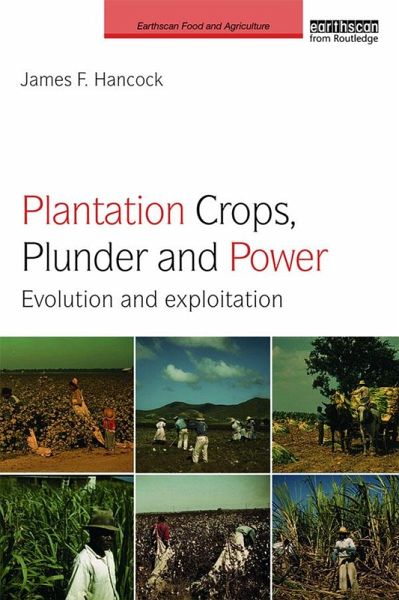
Over the last five centuries, plantation crops have represented the best and worst of industrialized agriculture - "best" through their agronomic productivity and global commercial success, and "worst" as examples of exploitative colonialism, conflict and ill-treatment of workers. This book traces the social, political and evolutionary history of seven major plantation crops - sugarcane, banana, cotton, tea, tobacco, coffee and rubber.
It describes how all of these were domesticated in antiquity and grown by small landowners for thousands of years before European traders and colonists sought to make a profit out of them. The author relates how their development and spread were closely associated with government expansionist policies. They stimulated the exploration of far off lands, were the focus of major conflicts and led to the enslavement of both native and displaced peoples.
From the southern United States, Latin America and the Caribbean, to Asia and Africa, plantation crops turned social structures upside down leading to revolution and government change. The economies of whole countries became tied to the profits of these plantations, leading to internal power struggles to control the burgeoning wealth. Open warfare routinely broke out between the more powerful countries and factions for trade dominance. This book shows that from the early 1500s to today, at least one of the plantation crops was always at the center of world politics, and that this still continues today, for example with the development of oil palm plantations in Southeast Asia. Written in an accessible style, it is fascinating supplementary reading for students of agricultural, environmental and colonial history.
It describes how all of these were domesticated in antiquity and grown by small landowners for thousands of years before European traders and colonists sought to make a profit out of them. The author relates how their development and spread were closely associated with government expansionist policies. They stimulated the exploration of far off lands, were the focus of major conflicts and led to the enslavement of both native and displaced peoples.
From the southern United States, Latin America and the Caribbean, to Asia and Africa, plantation crops turned social structures upside down leading to revolution and government change. The economies of whole countries became tied to the profits of these plantations, leading to internal power struggles to control the burgeoning wealth. Open warfare routinely broke out between the more powerful countries and factions for trade dominance. This book shows that from the early 1500s to today, at least one of the plantation crops was always at the center of world politics, and that this still continues today, for example with the development of oil palm plantations in Southeast Asia. Written in an accessible style, it is fascinating supplementary reading for students of agricultural, environmental and colonial history.
Dieser Download kann aus rechtlichen Gründen nur mit Rechnungsadresse in A, B, BG, CY, CZ, D, DK, EW, E, FIN, F, GR, HR, H, IRL, I, LT, L, LR, M, NL, PL, P, R, S, SLO, SK ausgeliefert werden.