
52,95 €
52,95 €
inkl. MwSt.
Sofort per Download lieferbar

26 °P sammeln
52,95 €
Als Download kaufen
52,95 €
inkl. MwSt.
Sofort per Download lieferbar
26 °P sammeln
Jetzt verschenken
Alle Infos zum eBook verschenken
52,95 €
inkl. MwSt.
Sofort per Download lieferbar
Alle Infos zum eBook verschenken
26 °P sammeln

Andere Kunden interessierten sich auch für
") Playing and Exploring (eBook, ePUB)52,95 €
Playing and Exploring (eBook, ePUB)52,95 €") The PEERS Curriculum for School-Based Professionals (eBook, PDF)54,95 €
The PEERS Curriculum for School-Based Professionals (eBook, PDF)54,95 €") Teaching & Learning Illuminated (eBook, PDF)25,95 €
Teaching & Learning Illuminated (eBook, PDF)25,95 €") Globalization and Japanese Exceptionalism in Education (eBook, PDF)44,95 €
Globalization and Japanese Exceptionalism in Education (eBook, PDF)44,95 €") Playing It Straight (eBook, PDF)41,95 €
Playing It Straight (eBook, PDF)41,95 €") Essential Motivation in the Classroom (eBook, PDF)19,95 €
Essential Motivation in the Classroom (eBook, PDF)19,95 €") Playing Hide and Seek (eBook, PDF)8,95 €
Playing Hide and Seek (eBook, PDF)8,95 €
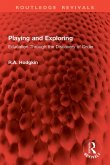
First published in 1985, Playing and Exploring draws on many disciplines in order to formulate a new way of thinking about the nature and power of education. As so often with creative thinkers, Robin Hodgkin's work is at once subversive and conservative. He is radical in insisting on the overriding need to question and subvert the external examination systems that now cripple education (and to raise standards by other means), conservative in asserting with Polanyi that an individual's or a group's enterprise draws on a living tradition. The book's most important contribution is to our understanding of the educational needs of young adults, of the need for adventure and commitment.
The author develops a theoretical model that begins with the infant exploring its play space. He argues that the learner is an active, frontier-exploring agent; so too must be any effective teacher. Robin Hodgkin brings forward important new evidence from neuropsychology to show why doing is so important in teaching and learning. His argument that both visual and linguistic competence must cooperate actively in the learning process raises a fundamental question about the part television plays in our culture. In this as in his earlier books, his work is concerned with the real priorities in education, with demonstrating that first-hand feelings of friendship, of wonder, and of danger should be part of the education of all people, especially adolescents, and that our greatest and certainly most expensive failure is to deny the experience of educational success to so many children.
The author develops a theoretical model that begins with the infant exploring its play space. He argues that the learner is an active, frontier-exploring agent; so too must be any effective teacher. Robin Hodgkin brings forward important new evidence from neuropsychology to show why doing is so important in teaching and learning. His argument that both visual and linguistic competence must cooperate actively in the learning process raises a fundamental question about the part television plays in our culture. In this as in his earlier books, his work is concerned with the real priorities in education, with demonstrating that first-hand feelings of friendship, of wonder, and of danger should be part of the education of all people, especially adolescents, and that our greatest and certainly most expensive failure is to deny the experience of educational success to so many children.
Dieser Download kann aus rechtlichen Gründen nur mit Rechnungsadresse in A, B, BG, CY, CZ, D, DK, EW, E, FIN, F, GR, HR, H, IRL, I, LT, L, LR, M, NL, PL, P, R, S, SLO, SK ausgeliefert werden.