33,95 €
33,95 €
inkl. MwSt.
Sofort per Download lieferbar

17 °P sammeln
33,95 €
Als Download kaufen
33,95 €
inkl. MwSt.
Sofort per Download lieferbar
17 °P sammeln
Jetzt verschenken
Alle Infos zum eBook verschenken
33,95 €
inkl. MwSt.
Sofort per Download lieferbar
Alle Infos zum eBook verschenken
17 °P sammeln

Andere Kunden interessierten sich auch für
") Handbook of Oral History (eBook, ePUB)56,95 €
Handbook of Oral History (eBook, ePUB)56,95 €") Playing with Fire (eBook, ePUB)8,99 €
Playing with Fire (eBook, ePUB)8,99 €") The Historian's Toolbox (eBook, ePUB)38,95 €
The Historian's Toolbox (eBook, ePUB)38,95 €") The Principal as School Manager (eBook, ePUB)51,95 €
The Principal as School Manager (eBook, ePUB)51,95 €") The Presenter's Fieldbook (eBook, ePUB)26,95 €
The Presenter's Fieldbook (eBook, ePUB)26,95 €") Build It Once (eBook, ePUB)47,95 €
Build It Once (eBook, ePUB)47,95 €") The Presenter's Fieldbook (eBook, ePUB)33,95 €
The Presenter's Fieldbook (eBook, ePUB)33,95 €







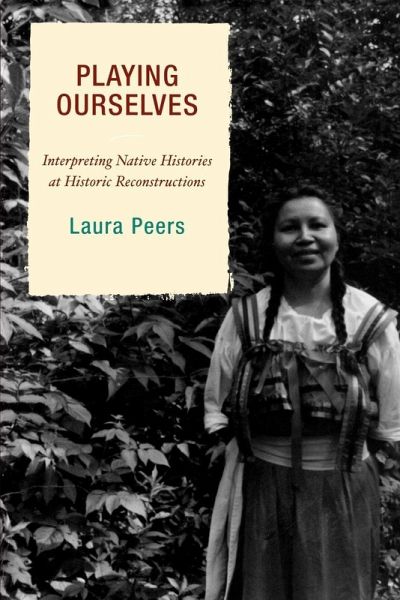
Across North America, hundreds of reconstructed "living history" sites, which traditionally presented history from a primarily European perspective, have hired Native staff in an attempt to communicate a broader view of the past. Playing Ourselves explores this major shift in representation, using detailed observations of five historic sites in the U.S. and Canada to both discuss the theoretical aspects of Native cultural performance and advise interpreters and their managers on how to more effectively present an inclusive history. Drawing on anthropology, history, cultural performance, cross-cultural encounters, material culture theory, and public history, author Laura Peers examines "living history" sites as locations of cultural performance where core beliefs about society, cross-cultural relationships, and history are performed. In the process, she emphasizes how choices made in the communication of history can both challenge these core beliefs about the past and improve cross-cultural relations in the present.