
39,95 €
39,95 €
inkl. MwSt.
Sofort per Download lieferbar

20 °P sammeln
39,95 €
Als Download kaufen
39,95 €
inkl. MwSt.
Sofort per Download lieferbar
20 °P sammeln
Jetzt verschenken
Alle Infos zum eBook verschenken
39,95 €
inkl. MwSt.
Sofort per Download lieferbar
Alle Infos zum eBook verschenken
20 °P sammeln

Andere Kunden interessierten sich auch für
") Policing Ethically (eBook, PDF)39,95 €
Policing Ethically (eBook, PDF)39,95 €") Protest Policing and Human Rights (eBook, ePUB)37,95 €
Protest Policing and Human Rights (eBook, ePUB)37,95 €") Introduction to Professional Policing (eBook, ePUB)39,95 €
Introduction to Professional Policing (eBook, ePUB)39,95 €") Policing Rape (eBook, ePUB)36,95 €
Policing Rape (eBook, ePUB)36,95 €") Violence Against Women in the US (eBook, ePUB)37,95 €
Violence Against Women in the US (eBook, ePUB)37,95 €") Challenges of Contemporary Policing (eBook, ePUB)46,95 €
Challenges of Contemporary Policing (eBook, ePUB)46,95 €") Drug Law Enforcement, Policing and Harm Reduction (eBook, ePUB)37,95 €
Drug Law Enforcement, Policing and Harm Reduction (eBook, ePUB)37,95 €
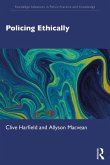


At a time when much in UK policing is the subject of intense public and media scrutiny, there prevails a practitioner discourse about policing ethically that is ongoing formally in police ethics committee discussions, and probably informally in station offices, canteens, classrooms, and police vehicles. Since January 2024, these conversations have added emphasis with the publication of the College of Policing's revised Code of Ethics with which policing practitioners in England and Wales are coming to grips. This book explores thinking about policing ethically for those who have to use and implement the ideas - to those who, when law and policy is silent on the matter before them, nevertheless have to make a justifiable decision and act upon it.
Applicable to policing generally, not just to the UK, Part 1 of this book presents conceptual contextualization for thinking about policing ethically. Following which, Part 2 considers practical implications of policing ethically.
Some of the key topics that the book covers are as follows:
. Discussions of managing power and vulnerability
. Implementing frontline ethics in practice
. The process of making ethically informed decisions
. Considerations around ethics and the use of artificial intelligence by policing practitioners
. Prerequisites to ethical leadership
. Considering "public interest" in relation to policing ethically
. Risk management as a moral obligation
Drawing upon the policing practitioner and policymaking experience of the authors, this book will be of interest and use to all those involved in delivering policing: constables of all ranks (student, probationary, and experienced), policing community support officers, professional support staff, policing ethics committee members, and policymakers. The book is also a contribution to the wider academic literature on policing and ethics, and will be of interest not only to policing ethicists and ethnographers but also to students and policymakers in the fields of criminology, sociology, and governance.
Applicable to policing generally, not just to the UK, Part 1 of this book presents conceptual contextualization for thinking about policing ethically. Following which, Part 2 considers practical implications of policing ethically.
Some of the key topics that the book covers are as follows:
. Discussions of managing power and vulnerability
. Implementing frontline ethics in practice
. The process of making ethically informed decisions
. Considerations around ethics and the use of artificial intelligence by policing practitioners
. Prerequisites to ethical leadership
. Considering "public interest" in relation to policing ethically
. Risk management as a moral obligation
Drawing upon the policing practitioner and policymaking experience of the authors, this book will be of interest and use to all those involved in delivering policing: constables of all ranks (student, probationary, and experienced), policing community support officers, professional support staff, policing ethics committee members, and policymakers. The book is also a contribution to the wider academic literature on policing and ethics, and will be of interest not only to policing ethicists and ethnographers but also to students and policymakers in the fields of criminology, sociology, and governance.
Dieser Download kann aus rechtlichen Gründen nur mit Rechnungsadresse in A, B, BG, CY, CZ, D, DK, EW, E, FIN, F, GR, HR, H, IRL, I, LT, L, LR, M, NL, PL, P, R, S, SLO, SK ausgeliefert werden.