42,95 €
42,95 €
inkl. MwSt.
Sofort per Download lieferbar

21 °P sammeln
42,95 €
Als Download kaufen
42,95 €
inkl. MwSt.
Sofort per Download lieferbar
21 °P sammeln
Jetzt verschenken
Alle Infos zum eBook verschenken
42,95 €
inkl. MwSt.
Sofort per Download lieferbar
Alle Infos zum eBook verschenken
21 °P sammeln

Andere Kunden interessierten sich auch für
") Critical Reflections on Evidence-Based Policing (eBook, PDF)41,95 €
Critical Reflections on Evidence-Based Policing (eBook, PDF)41,95 €") Restorative Policing (eBook, PDF)47,95 €
Restorative Policing (eBook, PDF)47,95 €") Plural Policing (eBook, PDF)45,95 €
Plural Policing (eBook, PDF)45,95 €") The Development of Transnational Policing (eBook, PDF)41,95 €
The Development of Transnational Policing (eBook, PDF)41,95 €") Integrated Offender Management and the Policing of Prolific Offenders (eBook, PDF)39,95 €
Integrated Offender Management and the Policing of Prolific Offenders (eBook, PDF)39,95 €") The Globalization of Evidence-Based Policing (eBook, PDF)38,95 €
The Globalization of Evidence-Based Policing (eBook, PDF)38,95 €") Policing European Metropolises (eBook, PDF)45,95 €
Policing European Metropolises (eBook, PDF)45,95 €






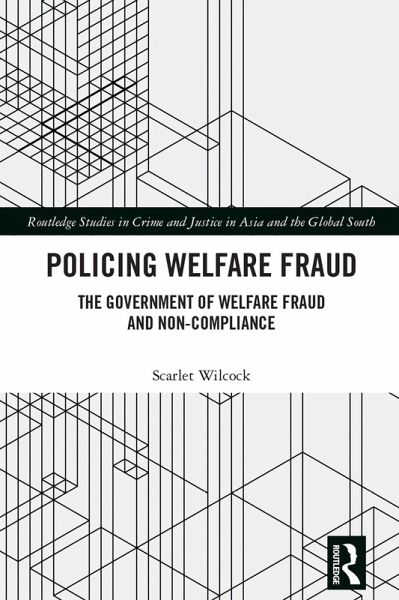
Policing Welfare Fraud charts and interrogates the suite of measures ostensibly designed to combat welfare fraud and non-compliance. In Australia, which serves as the empirical focus of this book, these strategies include stringent ID checks, pre-emptive data surveillance technologies including the infamous and illegal 'robodebt' programme, a dedicated fraud hotline and an 'intelligence-led' fraud investigation framework. Drawing on original documentary and interview data, including interviews with fraud investigators, this book unpacks the logics that underpin these anti-fraud initiatives with a focus on how these initiatives are imbued with logics and practices more readily associated with the criminal justice system.
The central argument of the book is that the emergence of contemporary welfare compliance regimes represents a form of 'governing through fraud' in which the threat of welfare fraud has effectively necessitated a regime of criminalisation within the welfare state. This has been enabled by a broader process of neoliberal welfare reform, which has cast suspicion over all welfare use. The overall effect of this regime is to restrict access to social security, punish welfare recipients and stigmatise welfare use. Policing Welfare Fraud also highlights points of contradiction and multiplicity in the enactment of specific welfare compliance initiatives, including attempts by welfare officials to moderate or reformulate these strategies 'on the ground'. These findings demonstrate that the criminalisation of welfare is neither uniform nor inexorable, and that more progressive welfare reform is possible.
An accessible and compelling read, this book will appeal to students and scholars of criminology, sociology, politics and those interested in the policing of welfare recipients.
The central argument of the book is that the emergence of contemporary welfare compliance regimes represents a form of 'governing through fraud' in which the threat of welfare fraud has effectively necessitated a regime of criminalisation within the welfare state. This has been enabled by a broader process of neoliberal welfare reform, which has cast suspicion over all welfare use. The overall effect of this regime is to restrict access to social security, punish welfare recipients and stigmatise welfare use. Policing Welfare Fraud also highlights points of contradiction and multiplicity in the enactment of specific welfare compliance initiatives, including attempts by welfare officials to moderate or reformulate these strategies 'on the ground'. These findings demonstrate that the criminalisation of welfare is neither uniform nor inexorable, and that more progressive welfare reform is possible.
An accessible and compelling read, this book will appeal to students and scholars of criminology, sociology, politics and those interested in the policing of welfare recipients.
Dieser Download kann aus rechtlichen Gründen nur mit Rechnungsadresse in A, B, BG, CY, CZ, D, DK, EW, E, FIN, F, GR, HR, H, IRL, I, LT, L, LR, M, NL, PL, P, R, S, SLO, SK ausgeliefert werden.