7,99 €
7,99 €
inkl. MwSt.
Sofort per Download lieferbar

4 °P sammeln
7,99 €
Als Download kaufen
7,99 €
inkl. MwSt.
Sofort per Download lieferbar
4 °P sammeln
Jetzt verschenken
Alle Infos zum eBook verschenken
7,99 €
inkl. MwSt.
Sofort per Download lieferbar
Alle Infos zum eBook verschenken
4 °P sammeln

Andere Kunden interessierten sich auch für
") La Barbarie represiva de la Narcodictadura de Nicolás Maduro (eBook, ePUB)6,99 €
La Barbarie represiva de la Narcodictadura de Nicolás Maduro (eBook, ePUB)6,99 €") Los Presos del narcodictador Nicolás Maduro (eBook, ePUB)7,99 €
Los Presos del narcodictador Nicolás Maduro (eBook, ePUB)7,99 €") La Barbarie represiva de la Narcodictadura de Nicolás Maduro (eBook, ePUB)6,99 €
La Barbarie represiva de la Narcodictadura de Nicolás Maduro (eBook, ePUB)6,99 €") La Barbarie Represiva de la Narcodictadura de Nicolás Maduro (eBook, ePUB)6,99 €
La Barbarie Represiva de la Narcodictadura de Nicolás Maduro (eBook, ePUB)6,99 €") La Barbarie Represiva de la Narcodictadura de Nicolás Maduro (eBook, ePUB)6,99 €
La Barbarie Represiva de la Narcodictadura de Nicolás Maduro (eBook, ePUB)6,99 €") La Barbarie Represiva de la Narcodictadura de Nicolás Maduro (eBook, ePUB)6,99 €
La Barbarie Represiva de la Narcodictadura de Nicolás Maduro (eBook, ePUB)6,99 €") Morir en el Socialismo del Siglo XXI (eBook, ePUB)3,99 €
Morir en el Socialismo del Siglo XXI (eBook, ePUB)3,99 €






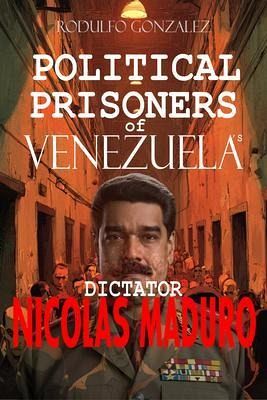
Political Prisoners of Venezuela's dictator Nicolas Maduro is much more than a book: it is a harrowing and essential testimony about contemporary Venezuela, written with the precision and courage of journalist Rodulfo González. Its pages intertwine the stark reality with the power of denunciation, offering the reader a journey through the regime's prisons, the imposed silences, and the voices that refuse to be silenced.
This book reveals how systematic repression has become a mechanism of political control, where imprisonment is not only physical punishment but also an instrument of psychological and social terror. With journalistic rigor and human sensitivity, González exposes the stories of men and women who, for thinking differently, for raising their voices, or simply for being in the wrong place, were transformed into symbols of resistance and suffering. Each chapter is a mirror reflecting the magnitude of the Venezuelan tragedy, but also the dignity of those who confront the machinery of power.
The book is structured like a map of repression: from the preamble that contextualizes the phenomenon of the "narco-dictator" and his web of corruption, to the table of contents that organizes the different dimensions of captivity. It addresses the most feared prisons, the methods of torture, the strategies of silencing, and the international complicity that allows the regime to perpetuate itself. But it also recovers stories of solidarity, support networks, and the hope that beats in every political prisoner, in every family that resists, and in every citizen who dreams of freedom.
Rodulfo González does not write from a distance: his writing is intimate, incisive, and committed. With a style that combines research, chronicle, and denunciation, he makes the reader feel part of the story, experience the pain and indignation, but also be inspired by the strength of those who refuse to surrender. The book not only informs: it challenges, shakes, and mobilizes. It is impossible to read it without feeling the urgency to act, to spread the word, to show solidarity.
In a world where dictatorships attempt to normalize repression, *The Prisoners of Narco-Dictator Nicolás Maduro* becomes an essential document for understanding the magnitude of the Venezuelan tragedy and the responsibility of the international community. It is a call to memory, justice, and action. A work that transcends borders and speaks to Venezuelans as well as any citizen of the world who values ¿¿freedom and human rights.
This book is ideal for those seeking to understand contemporary Venezuela, for academics, journalists, activists, and readers committed to the truth. But it is also accessible to the general public, because its narrative captivates from the first page and transforms the denunciation into an intense and transformative literary experience.
With more than 400 pages of research and testimony, this work stands as a benchmark in Latin American investigative literature. It is a book to be read with an open heart and remembered long after the final page.
This book reveals how systematic repression has become a mechanism of political control, where imprisonment is not only physical punishment but also an instrument of psychological and social terror. With journalistic rigor and human sensitivity, González exposes the stories of men and women who, for thinking differently, for raising their voices, or simply for being in the wrong place, were transformed into symbols of resistance and suffering. Each chapter is a mirror reflecting the magnitude of the Venezuelan tragedy, but also the dignity of those who confront the machinery of power.
The book is structured like a map of repression: from the preamble that contextualizes the phenomenon of the "narco-dictator" and his web of corruption, to the table of contents that organizes the different dimensions of captivity. It addresses the most feared prisons, the methods of torture, the strategies of silencing, and the international complicity that allows the regime to perpetuate itself. But it also recovers stories of solidarity, support networks, and the hope that beats in every political prisoner, in every family that resists, and in every citizen who dreams of freedom.
Rodulfo González does not write from a distance: his writing is intimate, incisive, and committed. With a style that combines research, chronicle, and denunciation, he makes the reader feel part of the story, experience the pain and indignation, but also be inspired by the strength of those who refuse to surrender. The book not only informs: it challenges, shakes, and mobilizes. It is impossible to read it without feeling the urgency to act, to spread the word, to show solidarity.
In a world where dictatorships attempt to normalize repression, *The Prisoners of Narco-Dictator Nicolás Maduro* becomes an essential document for understanding the magnitude of the Venezuelan tragedy and the responsibility of the international community. It is a call to memory, justice, and action. A work that transcends borders and speaks to Venezuelans as well as any citizen of the world who values ¿¿freedom and human rights.
This book is ideal for those seeking to understand contemporary Venezuela, for academics, journalists, activists, and readers committed to the truth. But it is also accessible to the general public, because its narrative captivates from the first page and transforms the denunciation into an intense and transformative literary experience.
With more than 400 pages of research and testimony, this work stands as a benchmark in Latin American investigative literature. It is a book to be read with an open heart and remembered long after the final page.
Dieser Download kann aus rechtlichen Gründen nur mit Rechnungsadresse in A, D ausgeliefert werden.