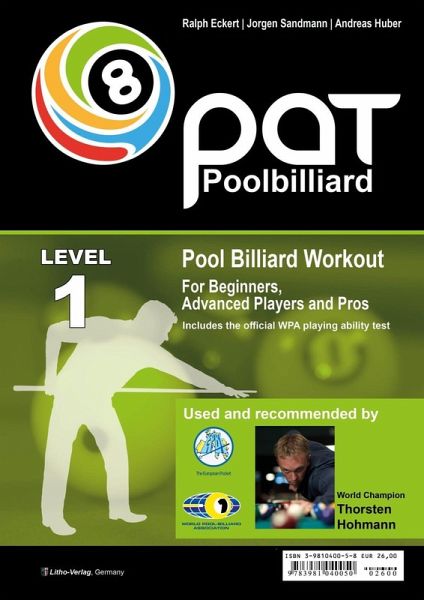
Statt 26,00 €**
19,99 €
**Preis der gedruckten Ausgabe (Broschiertes Buch)
inkl. MwSt. und vom Verlag festgesetzt.

0 °P sammeln

Andere Kunden interessierten sich auch für
") Pool Billiard Workout PAT Level 2 (eBook, PDF)19,99 €
Pool Billiard Workout PAT Level 2 (eBook, PDF)19,99 €") PAT Pool Billard Trainingsheft Stufe 1 (eBook, PDF)19,99 €
PAT Pool Billard Trainingsheft Stufe 1 (eBook, PDF)19,99 €") PAT Pool Billard Trainingsheft Level 2 (eBook, PDF)19,99 €
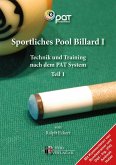
PAT Pool Billard Trainingsheft Level 2 (eBook, PDF)19,99 €") Sportliches Pool Billard I (eBook, PDF)9,99 €
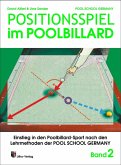
Sportliches Pool Billard I (eBook, PDF)9,99 €") Trainingsmethoden der Pool School Germany / Positionsspiel im Poolbillard (eBook, PDF)14,99 €
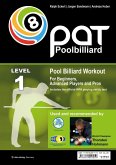
Trainingsmethoden der Pool School Germany / Positionsspiel im Poolbillard (eBook, PDF)14,99 €") Pool Billiard Workout PAT Level 1 (eBook, ePUB)19,99 €
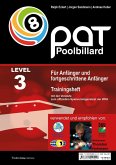
Pool Billiard Workout PAT Level 1 (eBook, ePUB)19,99 €") PAT Pool Billard Trainingsheft Level 3 (eBook, PDF)19,99 €
PAT Pool Billard Trainingsheft Level 3 (eBook, PDF)19,99 €
About PATPAT stands for playing ability test. What exactly does that mean? The answer can be found in another form of sports - martial arts. In martial arts the combatants measure their abilities in special tests. Successful combatants are allowed to wear a certain coloured belt, showing his technical level to all others. The PAT system works in a similar way. If you are successful in the playing ability test, the billiard player may wear a certain coloured emblem. Playing ability test - There are 4 different tests for different technical levels, ranging from amateurs to top players in the world elite. Each PAT is made up of 10 single exercises which document and evaluate special billiard skills. For example stroke quality, aiming and position play.Each exercise results in a numerical value correlating to the result as a percentage (0 to 100 points or percent). Because you can achieve more than 100 points in each exercise you don't have to achieve 100 points in each exercise to get 1000 points for a complete test. You might have 80 points in exercise one and 130 in exercise two. This makes it possible to get more than 1000 points in your result. The emblem system Emblems rewarding achievement stand out as shining examples and can be very motivating - as we know from school sports or martial arts.The World Pool Association (WPA - officially recognised by the IOC) has therefore developed a special colour emblem system. PAT world ranking list - Playing ability tests can be officially conducted by licensed PAT instructors. The test results are published (if the player wants) in the official world wide ranking list on the PAT company website. The online publication of a world ranking list allows every sportsman and woman to view the results achieved by fellow players. Thanks to PAT a world-wide comparison is possible, based on different selection criteria (continental, national, ladies only, men only, youth only, etc.).One world - One test! A world-wide net of PAT instructors is needed. Join the PAT community!PAT and motivation. The motivating effect of rewarding achievement has already been mentioned, but there are other reasons to test your playing ability. Everyone wants to know the answer to the question: 'How good am I really?' The strive for perfection is one of the driving forces in technical sports such as billiard. The motivation to do a PAT will always be intrinsic and not extrinsic. It's not just about the prize money. You do it because you love to play. You want to make progress. And you want to measure yourself against others. You are aiming for perfection. Every sports psychologist will confirm that intrinsically motivated sportsmen perform better than extrinsically motivated.
Dieser Download kann aus rechtlichen Gründen nur mit Rechnungsadresse in A, B, BG, CY, CZ, D, DK, EW, E, FIN, F, GR, HR, H, IRL, I, LT, L, LR, M, NL, PL, P, R, S, SLO, SK ausgeliefert werden.