49,95 €
inkl. MwSt.
Sofort per Download lieferbar
25 °P sammeln

Andere Kunden interessierten sich auch für
") Post-Industrial Urban Greenspace (eBook, ePUB)49,95 €
Post-Industrial Urban Greenspace (eBook, ePUB)49,95 €") Making Waves (eBook, PDF)45,95 €
Making Waves (eBook, PDF)45,95 €") Positive Development (eBook, PDF)52,95 €
Positive Development (eBook, PDF)52,95 €") Climate Adaptation and Flood Risk in Coastal Cities (eBook, PDF)154,95 €
Climate Adaptation and Flood Risk in Coastal Cities (eBook, PDF)154,95 €") Children and their Urban Environment (eBook, PDF)31,95 €
Children and their Urban Environment (eBook, PDF)31,95 €") Nature-Based Solutions in Cities of the Global South (eBook, PDF)30,95 €
Nature-Based Solutions in Cities of the Global South (eBook, PDF)30,95 €") Beach Management (eBook, PDF)56,95 €
Beach Management (eBook, PDF)56,95 €





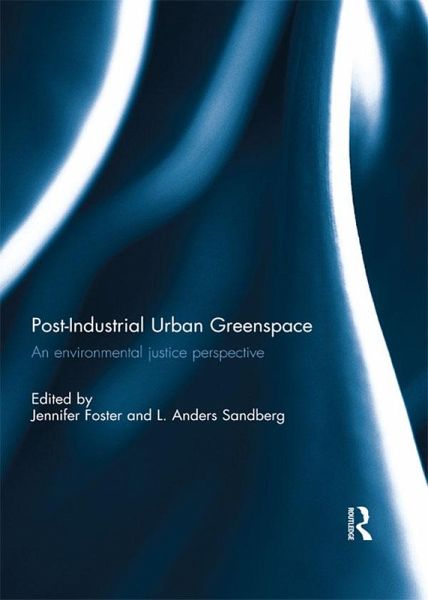
Post-industrial urban spaces typically include abandoned factories, disused rail lines, old pits and quarries, and de-commissioned landfills. In these places, different visions compete for dominance with respect to current and future land uses. Neighbours often view such urban greenspace as polluted, unkempt and weedy, harbouring undesirable biophysical features and people. These are spaces that often become the focus of some form of revitalization, reinvestment and restoration. From the perspective of civic authorities and urban planners, transforming post-industrial landscapes into disciplined and tended greenspace creates the urban conditions and signals of popular contemporary taste that attract investors, gentrifiers, and tourists. But post-industrial spaces are also places where unique and unpredictable human and ecological associations can emerge spontaneously. Such places may contain considerable ecological integrity and biodiversity and host human populations who find a home and respite in such ecologies. They also tell stories of an industrial and urban past that should be acknowledged, understood and (if suitable) celebrated. This volume explores the environmental justice and injustice dimensions of emerging urban post-industrial landscapes, including the ecological politics, cultural representations and aesthetics of these spaces.
This bookw as published as a special issue of Local Environment.
This bookw as published as a special issue of Local Environment.
Dieser Download kann aus rechtlichen Gründen nur mit Rechnungsadresse in A, B, BG, CY, CZ, D, DK, EW, E, FIN, F, GR, HR, H, IRL, I, LT, L, LR, M, NL, PL, P, R, S, SLO, SK ausgeliefert werden.