74,95 €
74,95 €
inkl. MwSt.
Sofort per Download lieferbar

37 °P sammeln
74,95 €
Als Download kaufen
74,95 €
inkl. MwSt.
Sofort per Download lieferbar
37 °P sammeln
Jetzt verschenken
Alle Infos zum eBook verschenken
74,95 €
inkl. MwSt.
Sofort per Download lieferbar
Alle Infos zum eBook verschenken
37 °P sammeln

Andere Kunden interessierten sich auch für
") Postcolonial Education and National Identity (eBook, ePUB)74,95 €
Postcolonial Education and National Identity (eBook, ePUB)74,95 €") Producing Religion, Gender and National Identities in Sri Lankan Elite Girls' Schools (eBook, PDF)70,95 €
Producing Religion, Gender and National Identities in Sri Lankan Elite Girls' Schools (eBook, PDF)70,95 €") Decolonizing the Social Sciences and the Humanities (eBook, PDF)38,95 €
Decolonizing the Social Sciences and the Humanities (eBook, PDF)38,95 €") Gilles Deleuze, Postcolonial Theory, and the Philosophy of Limit (eBook, PDF)21,95 €
Gilles Deleuze, Postcolonial Theory, and the Philosophy of Limit (eBook, PDF)21,95 €") Reconstructing a National Identity (eBook, PDF)31,95 €
Reconstructing a National Identity (eBook, PDF)31,95 €") Modernity and National Identity in the United States and East Asia, 1895-1919 (eBook, PDF)31,95 €
Modernity and National Identity in the United States and East Asia, 1895-1919 (eBook, PDF)31,95 €") Postcolonial Netherlands (eBook, PDF)0,00 €
Postcolonial Netherlands (eBook, PDF)0,00 €


Winner of the Philosophy of Education Society of Australasia 2025 Book Award
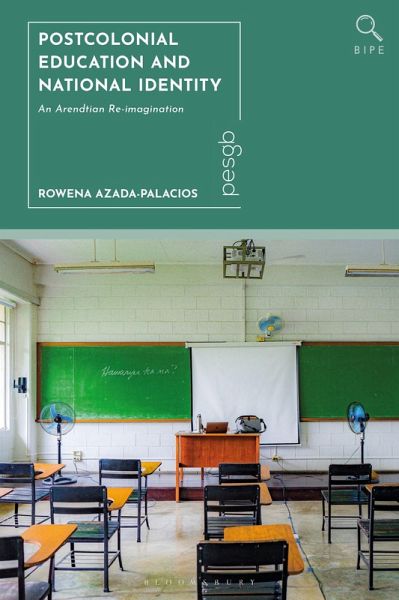
Recognizing the strategic role that national identities play in post-colonial struggles for justice, this book conceptualizes a new approach to teaching national identity that, following Hannah Arendt, emphasizes children's ability to renew culture. The book uses the Philippine colonial experience as a case study, and includes a genealogy of Hannah Arendt's concept of the 'social', including an analysis of how she used this idea to explore the role that schools play within the political community. Azada-Palacios problematizes the way that national identity is valued as an educational goal in Philippine schools and the way that Philippine citizenship education continues to aspire towards a homogeneity of culture. Through an examination of colonial-era documents, she traces this characteristic of colonial history, and identifies this aspiration as an unreflective perpetuation of American colonial educational policy that has not been sufficiently criticized.
Recognizing the strategic role that national identities play in post-colonial struggles for justice, this book conceptualizes a new approach to teaching national identity that, following Hannah Arendt, emphasizes children's ability to renew culture. The book uses the Philippine colonial experience as a case study, and includes a genealogy of Hannah Arendt's concept of the 'social', including an analysis of how she used this idea to explore the role that schools play within the political community. Azada-Palacios problematizes the way that national identity is valued as an educational goal in Philippine schools and the way that Philippine citizenship education continues to aspire towards a homogeneity of culture. Through an examination of colonial-era documents, she traces this characteristic of colonial history, and identifies this aspiration as an unreflective perpetuation of American colonial educational policy that has not been sufficiently criticized.