32,95 €
inkl. MwSt.
Sofort per Download lieferbar
16 °P sammeln

Andere Kunden interessierten sich auch für
") Artificial Intelligence (eBook, PDF)36,95 €
Artificial Intelligence (eBook, PDF)36,95 €") The Ethics of Artificial Intelligence in Healthcare: From Hands-on Practice to Policy-making (eBook, PDF)88,95 €
The Ethics of Artificial Intelligence in Healthcare: From Hands-on Practice to Policy-making (eBook, PDF)88,95 €") Reflections on Roadkill between Mobility Studies and Animal Studies (eBook, PDF)40,95 €
Reflections on Roadkill between Mobility Studies and Animal Studies (eBook, PDF)40,95 €") Italian Philosophy of Technology (eBook, PDF)88,95 €
Italian Philosophy of Technology (eBook, PDF)88,95 €") Challenges of the Technological Mind (eBook, PDF)44,95 €
Challenges of the Technological Mind (eBook, PDF)44,95 €") Chinese Philosophy of Technology (eBook, PDF)72,95 €
Chinese Philosophy of Technology (eBook, PDF)72,95 €") Computer Ethics Across Disciplines (eBook, PDF)88,95 €
Computer Ethics Across Disciplines (eBook, PDF)88,95 €



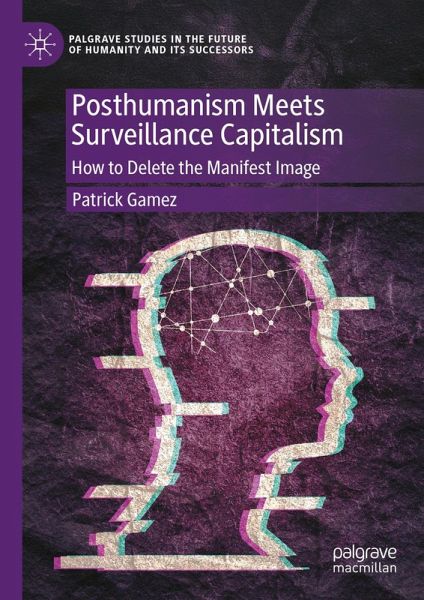
The core contention of this book is that, when viewed through the lens of contemporary posthuman theory, contemporary uses of AI under platform capitalism not only undermine our sense of the "human" but also our frameworks for conceptualizing ourselves as "subjects" or "selves" at all. This radical conclusion raises issues forces us to reckon with a new, disorienting horizon for critical thought at the intersection of technology and politics.
This book demonstrates that two major streams of posthuman thought-namely, accelerationism and Prometheanism-can be interpreted as attempts to liberate our desires from our reason or our rationality from our all-too-human desire, each through the offloading of various tasks to emerging technologies. But, Patrick Gamez argues, the rise of opaque, unexplainable machine learning algorithms to predict and shape our behaviour undermines the common-sense models of mind through which we ultimately make sense of both the human and the posthuman.
This book demonstrates that two major streams of posthuman thought-namely, accelerationism and Prometheanism-can be interpreted as attempts to liberate our desires from our reason or our rationality from our all-too-human desire, each through the offloading of various tasks to emerging technologies. But, Patrick Gamez argues, the rise of opaque, unexplainable machine learning algorithms to predict and shape our behaviour undermines the common-sense models of mind through which we ultimately make sense of both the human and the posthuman.
Dieser Download kann aus rechtlichen Gründen nur mit Rechnungsadresse in A, B, BG, CY, CZ, D, DK, EW, E, FIN, F, GR, HR, H, IRL, I, LT, L, LR, M, NL, PL, P, R, S, SLO, SK ausgeliefert werden.