82,95 €
inkl. MwSt.
Sofort per Download lieferbar
41 °P sammeln

Andere Kunden interessierten sich auch für
") Active Above-Knee Prosthesis (eBook, ePUB)102,95 €
Active Above-Knee Prosthesis (eBook, ePUB)102,95 €") Stiffness and Damping in Mechanical Design (eBook, ePUB)65,95 €
Stiffness and Damping in Mechanical Design (eBook, ePUB)65,95 €") Bone Repair Biomaterials (eBook, ePUB)182,95 €
Bone Repair Biomaterials (eBook, ePUB)182,95 €") Explosion Blast Response of Composites (eBook, ePUB)200,95 €
Explosion Blast Response of Composites (eBook, ePUB)200,95 €") 3D Printing in Medicine and Surgery (eBook, ePUB)135,95 €
3D Printing in Medicine and Surgery (eBook, ePUB)135,95 €") Rotating Machinery, Hybrid Test Methods, Vibro-Acoustics & Laser Vibrometry, Volume 8 (eBook, ePUB)129,95 €
Rotating Machinery, Hybrid Test Methods, Vibro-Acoustics & Laser Vibrometry, Volume 8 (eBook, ePUB)129,95 €") Additive Manufacturing for Biomedical Implants and Prosthetics (eBook, ePUB)55,95 €
Additive Manufacturing for Biomedical Implants and Prosthetics (eBook, ePUB)55,95 €

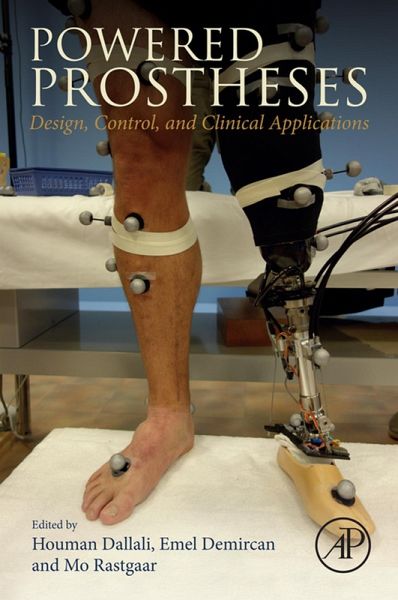
Powered Prostheses: Design, Control, and Clinical Applications presents the state-of-the-art in design, control and application of assistive technologies used in rehabilitation, including powered prostheses used in lower and upper extremity amputees and orthosis used in the rehabilitation of various joint disorders. The progress made in this field over the last decade is so vast that any new researcher in this field will have to spend years digesting the main achievements and challenges that remain. This book provides a comprehensive vision of advances, along with the challenges that remain on the path to the development of true bionic technology. - Describes the latest assistive technologies that can help individuals deal with joint pain or limb loss - Presents a tangible and intuitive description of scientific achievements made - Highlights the existing technologies and devices that are available and used by amputees or patients with mobility limitations - Suggests solutions and new results that can further enhance assistive technologies
Dieser Download kann aus rechtlichen Gründen nur mit Rechnungsadresse in A, B, BG, CY, CZ, D, DK, EW, E, FIN, F, GR, HR, H, IRL, I, LT, L, LR, M, NL, PL, P, R, S, SLO, SK ausgeliefert werden.