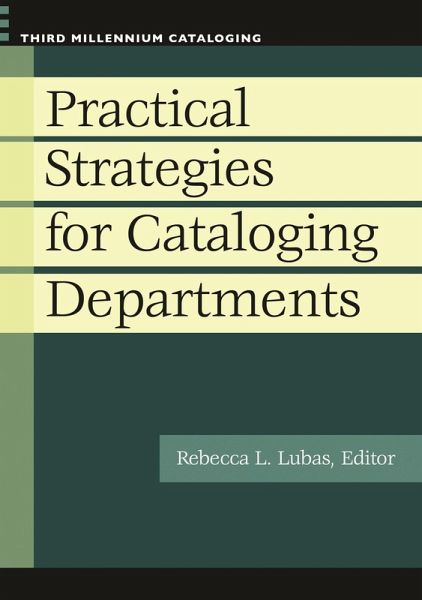
Practical Strategies for Cataloging Departments (eBook, PDF)
Redaktion: Lubas, Rebecca L.
31,95 €
31,95 €
inkl. MwSt.
Sofort per Download lieferbar

16 °P sammeln
31,95 €
Als Download kaufen
31,95 €
inkl. MwSt.
Sofort per Download lieferbar
16 °P sammeln
Jetzt verschenken
Alle Infos zum eBook verschenken
31,95 €
inkl. MwSt.
Sofort per Download lieferbar
Alle Infos zum eBook verschenken
16 °P sammeln

Practical Strategies for Cataloging Departments (eBook, PDF)
Redaktion: Lubas, Rebecca L.
- Format: PDF
- Merkliste
- Auf die Merkliste
- Bewerten Bewerten
- Teilen
- Produkt teilen
- Produkterinnerung
- Produkterinnerung

Bitte loggen Sie sich zunächst in Ihr Kundenkonto ein oder registrieren Sie sich bei
bücher.de, um das eBook-Abo tolino select nutzen zu können.
Hier können Sie sich einloggen
Sie sind bereits eingeloggt. Klicken Sie auf 2. tolino select Abo, um fortzufahren.

Bitte loggen Sie sich zunächst in Ihr Kundenkonto ein oder registrieren Sie sich bei bücher.de, um das eBook-Abo tolino select nutzen zu können.
Cataloging managers will find this book a valuable road map for navigating the metadata needs of the 21st-century library.
Demand for instant access, 24/7. Outsourcing issues. Constantly evolving standards. How can catalogers create a flexible, Web 2.0-compliant, flexible, multi-metalingual cataloging department? A daunting challenge, definitely; but with the right guidance, any cataloger can get up to speed and handle these common and confusing problems.
Each chapter of Practical Strategies for Cataloging Departments is authored or coauthored by a leader in cataloging, metadata…mehr
- Geräte: PC
- ohne Kopierschutz
- eBook Hilfe
Andere Kunden interessierten sich auch für
Notes for Serials Cataloging (eBook, PDF)40,95 €
Martha M. YeeMoving Image Cataloging (eBook, PDF)34,95 €
Fang Huang GaoDemystifying Serials Cataloging (eBook, PDF)43,95 €
Gretchen L. HoffmanOrganizing Library Collections (eBook, PDF)40,95 €
Daniel N. JoudreyIntroduction to Cataloging and Classification (eBook, PDF)52,95 €
Conversations with Catalogers in the 21st Century (eBook, PDF)37,95 €
Fang Huang GaoDemystifying Serials Cataloging (eBook, ePUB)43,95 €-
-
-
Cataloging managers will find this book a valuable road map for navigating the metadata needs of the 21st-century library.
Demand for instant access, 24/7. Outsourcing issues. Constantly evolving standards. How can catalogers create a flexible, Web 2.0-compliant, flexible, multi-metalingual cataloging department? A daunting challenge, definitely; but with the right guidance, any cataloger can get up to speed and handle these common and confusing problems.
Each chapter of Practical Strategies for Cataloging Departments is authored or coauthored by a leader in cataloging, metadata practice, or education in these specialties. This book offers practical advice-based on direct experience-for facing the challenges of organizing information today. Topics include training, collaborating across the library, coping with changes in standards, making strategic selections of vendor cataloging products, developing cooperative organizations, and more. The specific techniques that will help catalogers meet the needs of 21st century patrons are emphasized.
Demand for instant access, 24/7. Outsourcing issues. Constantly evolving standards. How can catalogers create a flexible, Web 2.0-compliant, flexible, multi-metalingual cataloging department? A daunting challenge, definitely; but with the right guidance, any cataloger can get up to speed and handle these common and confusing problems.
Each chapter of Practical Strategies for Cataloging Departments is authored or coauthored by a leader in cataloging, metadata practice, or education in these specialties. This book offers practical advice-based on direct experience-for facing the challenges of organizing information today. Topics include training, collaborating across the library, coping with changes in standards, making strategic selections of vendor cataloging products, developing cooperative organizations, and more. The specific techniques that will help catalogers meet the needs of 21st century patrons are emphasized.
Produktdetails
- Produktdetails
- Verlag: Bloomsbury eBooks US
- Seitenzahl: 136
- Altersempfehlung: ab 7 Jahre
- Erscheinungstermin: 22. Februar 2011
- Englisch
- ISBN-13: 9781598844931
- Artikelnr.: 37939439
- Verlag: Bloomsbury eBooks US
- Seitenzahl: 136
- Altersempfehlung: ab 7 Jahre
- Erscheinungstermin: 22. Februar 2011
- Englisch
- ISBN-13: 9781598844931
- Artikelnr.: 37939439
- Herstellerkennzeichnung Die Herstellerinformationen sind derzeit nicht verfügbar.
Rebecca L. Lubas is director of Cataloging & Discovery Services at the University of New Mexico Libraries, Albuquerque, NM, where she coordinates a group of catalogers working in many formats.
Acknowledgments
Introduction: Managing the Challenge of the Twenty-First-Century Cataloging
Department
Rebecca L. Lubas
Chapter 1Evolving Standards: Making the Jump to RDA in Historical Context
Robert L. Bothmann
The Fossil Record (or Historical Review)
Principles
Implementation of AACR2
AACR2 Transition to RDA
Making the Leap
Conclusion
Note
Bibliography
Chapter 2Impact of Changes in Library of Congress Cataloging Policy on
Working Catalogers
Bonnie Parks
Series Authority Records
Current LC Practice
Current PCC Practice
New MARC Series Coding
Current Practice (http://www.loc.gov/catdir/pcc/Field440.pdf)
Practical Solutions
CONSER Standard Record
Highlights and General Principles (from CSR Documentation July 22, 2009)
Documentation and Training
Practical Solutions
BIBCO Standard Record
Highlights and General Principles
Documentation and Training
Practical Solutions
Provider-Neutral Record for E-Monographs
Highlights and General Principles
Documentation and Training
Practical Solutions
Bibliography
Chapter 3Managing a Multiplicity of Standards: Hybrid Approaches to
Traditional and Digital Cataloging
Kevin Clair and Robert Freeborn
Traditional Cataloging Strategies
Digital Library Metadata: A Short History
New Approaches
New Roles
New Work Flows
New Technologies
Prospective Solutions
Bibliography
Chapter 4Training Workshops: How One Trainer Works
Jay Weitz
Chapter 5The Janus Effect: On-the-Job Training of Twenty-First-Century
Catalogers
Deborah Lee
The "What": What Should Be Included in the Training?
The "How": The Order and Organization of Training
The "How": Training Delivery Methods, Assessment, and Documentation
The "Where" and the "When": The Practicalities of Training
The "Why": Reasons to Catalog and the Rationale Behind Cataloging Rules
Conclusion
Notes
References
Chapter 6Managing Vendor Cataloging to Maximize Access
Rebecca L. Lubas
Getting Started
But What about Those Crisis Situations?
What Is Available?
Investigate
Pilot Projects and Scaling Up
Assess and Reassess
What Not to Outsource
So, What Do You Do with All This Spare Time? Is It Worth It?
Conclusion
References
Chapter 7Collaborating with Other Library Departments
Sever Bordeianu and Rebecca L. Lubas
Collaborating Behind the Scenes
Acquisitions
Information Technology/Systems Departments
Collection Development
Colleagues on the Front Lines
Reference
User-Created Tags
Circulation, Interlibrary Loan, and Document Delivery
Instruction
Breaking Boundaries
Administration
Digital Libraries
Building the Skill Set
References
Chapter 8MARC: A New Life through Reusing and Remixing
Glen Wiley
Survey of MARC Reused Outside the ILS
Large-Scale Digitization Materials
Electronic Resources and Digital Portals
The Semantic Web and Linked Data
Specialized Digital Library Projects
Project Management for Repurposing MARC
Consulting
Design
Mapping
Production
Access and Management
Conclusion
References
Chapter 9Moving Ahead with Metadata: Adding Value through Grant-Funded
Projects
Amy S. Jackson
Metadata Fundamentals
Descriptive Metadata
What Else Do I Need to Know about Metadata to Help My Grant Application?
How to Create Metadata for Your Project
Conclusion
References
Conclusion: Creating Collaborative Cataloging Communities in the
Twenty-First Century
Rebecca L. Lubas
Index
About the Editor and Contributors
Introduction: Managing the Challenge of the Twenty-First-Century Cataloging
Department
Rebecca L. Lubas
Chapter 1Evolving Standards: Making the Jump to RDA in Historical Context
Robert L. Bothmann
The Fossil Record (or Historical Review)
Principles
Implementation of AACR2
AACR2 Transition to RDA
Making the Leap
Conclusion
Note
Bibliography
Chapter 2Impact of Changes in Library of Congress Cataloging Policy on
Working Catalogers
Bonnie Parks
Series Authority Records
Current LC Practice
Current PCC Practice
New MARC Series Coding
Current Practice (http://www.loc.gov/catdir/pcc/Field440.pdf)
Practical Solutions
CONSER Standard Record
Highlights and General Principles (from CSR Documentation July 22, 2009)
Documentation and Training
Practical Solutions
BIBCO Standard Record
Highlights and General Principles
Documentation and Training
Practical Solutions
Provider-Neutral Record for E-Monographs
Highlights and General Principles
Documentation and Training
Practical Solutions
Bibliography
Chapter 3Managing a Multiplicity of Standards: Hybrid Approaches to
Traditional and Digital Cataloging
Kevin Clair and Robert Freeborn
Traditional Cataloging Strategies
Digital Library Metadata: A Short History
New Approaches
New Roles
New Work Flows
New Technologies
Prospective Solutions
Bibliography
Chapter 4Training Workshops: How One Trainer Works
Jay Weitz
Chapter 5The Janus Effect: On-the-Job Training of Twenty-First-Century
Catalogers
Deborah Lee
The "What": What Should Be Included in the Training?
The "How": The Order and Organization of Training
The "How": Training Delivery Methods, Assessment, and Documentation
The "Where" and the "When": The Practicalities of Training
The "Why": Reasons to Catalog and the Rationale Behind Cataloging Rules
Conclusion
Notes
References
Chapter 6Managing Vendor Cataloging to Maximize Access
Rebecca L. Lubas
Getting Started
But What about Those Crisis Situations?
What Is Available?
Investigate
Pilot Projects and Scaling Up
Assess and Reassess
What Not to Outsource
So, What Do You Do with All This Spare Time? Is It Worth It?
Conclusion
References
Chapter 7Collaborating with Other Library Departments
Sever Bordeianu and Rebecca L. Lubas
Collaborating Behind the Scenes
Acquisitions
Information Technology/Systems Departments
Collection Development
Colleagues on the Front Lines
Reference
User-Created Tags
Circulation, Interlibrary Loan, and Document Delivery
Instruction
Breaking Boundaries
Administration
Digital Libraries
Building the Skill Set
References
Chapter 8MARC: A New Life through Reusing and Remixing
Glen Wiley
Survey of MARC Reused Outside the ILS
Large-Scale Digitization Materials
Electronic Resources and Digital Portals
The Semantic Web and Linked Data
Specialized Digital Library Projects
Project Management for Repurposing MARC
Consulting
Design
Mapping
Production
Access and Management
Conclusion
References
Chapter 9Moving Ahead with Metadata: Adding Value through Grant-Funded
Projects
Amy S. Jackson
Metadata Fundamentals
Descriptive Metadata
What Else Do I Need to Know about Metadata to Help My Grant Application?
How to Create Metadata for Your Project
Conclusion
References
Conclusion: Creating Collaborative Cataloging Communities in the
Twenty-First Century
Rebecca L. Lubas
Index
About the Editor and Contributors
Acknowledgments
Introduction: Managing the Challenge of the Twenty-First-Century Cataloging
Department
Rebecca L. Lubas
Chapter 1Evolving Standards: Making the Jump to RDA in Historical Context
Robert L. Bothmann
The Fossil Record (or Historical Review)
Principles
Implementation of AACR2
AACR2 Transition to RDA
Making the Leap
Conclusion
Note
Bibliography
Chapter 2Impact of Changes in Library of Congress Cataloging Policy on
Working Catalogers
Bonnie Parks
Series Authority Records
Current LC Practice
Current PCC Practice
New MARC Series Coding
Current Practice (http://www.loc.gov/catdir/pcc/Field440.pdf)
Practical Solutions
CONSER Standard Record
Highlights and General Principles (from CSR Documentation July 22, 2009)
Documentation and Training
Practical Solutions
BIBCO Standard Record
Highlights and General Principles
Documentation and Training
Practical Solutions
Provider-Neutral Record for E-Monographs
Highlights and General Principles
Documentation and Training
Practical Solutions
Bibliography
Chapter 3Managing a Multiplicity of Standards: Hybrid Approaches to
Traditional and Digital Cataloging
Kevin Clair and Robert Freeborn
Traditional Cataloging Strategies
Digital Library Metadata: A Short History
New Approaches
New Roles
New Work Flows
New Technologies
Prospective Solutions
Bibliography
Chapter 4Training Workshops: How One Trainer Works
Jay Weitz
Chapter 5The Janus Effect: On-the-Job Training of Twenty-First-Century
Catalogers
Deborah Lee
The "What": What Should Be Included in the Training?
The "How": The Order and Organization of Training
The "How": Training Delivery Methods, Assessment, and Documentation
The "Where" and the "When": The Practicalities of Training
The "Why": Reasons to Catalog and the Rationale Behind Cataloging Rules
Conclusion
Notes
References
Chapter 6Managing Vendor Cataloging to Maximize Access
Rebecca L. Lubas
Getting Started
But What about Those Crisis Situations?
What Is Available?
Investigate
Pilot Projects and Scaling Up
Assess and Reassess
What Not to Outsource
So, What Do You Do with All This Spare Time? Is It Worth It?
Conclusion
References
Chapter 7Collaborating with Other Library Departments
Sever Bordeianu and Rebecca L. Lubas
Collaborating Behind the Scenes
Acquisitions
Information Technology/Systems Departments
Collection Development
Colleagues on the Front Lines
Reference
User-Created Tags
Circulation, Interlibrary Loan, and Document Delivery
Instruction
Breaking Boundaries
Administration
Digital Libraries
Building the Skill Set
References
Chapter 8MARC: A New Life through Reusing and Remixing
Glen Wiley
Survey of MARC Reused Outside the ILS
Large-Scale Digitization Materials
Electronic Resources and Digital Portals
The Semantic Web and Linked Data
Specialized Digital Library Projects
Project Management for Repurposing MARC
Consulting
Design
Mapping
Production
Access and Management
Conclusion
References
Chapter 9Moving Ahead with Metadata: Adding Value through Grant-Funded
Projects
Amy S. Jackson
Metadata Fundamentals
Descriptive Metadata
What Else Do I Need to Know about Metadata to Help My Grant Application?
How to Create Metadata for Your Project
Conclusion
References
Conclusion: Creating Collaborative Cataloging Communities in the
Twenty-First Century
Rebecca L. Lubas
Index
About the Editor and Contributors
Introduction: Managing the Challenge of the Twenty-First-Century Cataloging
Department
Rebecca L. Lubas
Chapter 1Evolving Standards: Making the Jump to RDA in Historical Context
Robert L. Bothmann
The Fossil Record (or Historical Review)
Principles
Implementation of AACR2
AACR2 Transition to RDA
Making the Leap
Conclusion
Note
Bibliography
Chapter 2Impact of Changes in Library of Congress Cataloging Policy on
Working Catalogers
Bonnie Parks
Series Authority Records
Current LC Practice
Current PCC Practice
New MARC Series Coding
Current Practice (http://www.loc.gov/catdir/pcc/Field440.pdf)
Practical Solutions
CONSER Standard Record
Highlights and General Principles (from CSR Documentation July 22, 2009)
Documentation and Training
Practical Solutions
BIBCO Standard Record
Highlights and General Principles
Documentation and Training
Practical Solutions
Provider-Neutral Record for E-Monographs
Highlights and General Principles
Documentation and Training
Practical Solutions
Bibliography
Chapter 3Managing a Multiplicity of Standards: Hybrid Approaches to
Traditional and Digital Cataloging
Kevin Clair and Robert Freeborn
Traditional Cataloging Strategies
Digital Library Metadata: A Short History
New Approaches
New Roles
New Work Flows
New Technologies
Prospective Solutions
Bibliography
Chapter 4Training Workshops: How One Trainer Works
Jay Weitz
Chapter 5The Janus Effect: On-the-Job Training of Twenty-First-Century
Catalogers
Deborah Lee
The "What": What Should Be Included in the Training?
The "How": The Order and Organization of Training
The "How": Training Delivery Methods, Assessment, and Documentation
The "Where" and the "When": The Practicalities of Training
The "Why": Reasons to Catalog and the Rationale Behind Cataloging Rules
Conclusion
Notes
References
Chapter 6Managing Vendor Cataloging to Maximize Access
Rebecca L. Lubas
Getting Started
But What about Those Crisis Situations?
What Is Available?
Investigate
Pilot Projects and Scaling Up
Assess and Reassess
What Not to Outsource
So, What Do You Do with All This Spare Time? Is It Worth It?
Conclusion
References
Chapter 7Collaborating with Other Library Departments
Sever Bordeianu and Rebecca L. Lubas
Collaborating Behind the Scenes
Acquisitions
Information Technology/Systems Departments
Collection Development
Colleagues on the Front Lines
Reference
User-Created Tags
Circulation, Interlibrary Loan, and Document Delivery
Instruction
Breaking Boundaries
Administration
Digital Libraries
Building the Skill Set
References
Chapter 8MARC: A New Life through Reusing and Remixing
Glen Wiley
Survey of MARC Reused Outside the ILS
Large-Scale Digitization Materials
Electronic Resources and Digital Portals
The Semantic Web and Linked Data
Specialized Digital Library Projects
Project Management for Repurposing MARC
Consulting
Design
Mapping
Production
Access and Management
Conclusion
References
Chapter 9Moving Ahead with Metadata: Adding Value through Grant-Funded
Projects
Amy S. Jackson
Metadata Fundamentals
Descriptive Metadata
What Else Do I Need to Know about Metadata to Help My Grant Application?
How to Create Metadata for Your Project
Conclusion
References
Conclusion: Creating Collaborative Cataloging Communities in the
Twenty-First Century
Rebecca L. Lubas
Index
About the Editor and Contributors