38,95 €
inkl. MwSt.
Sofort per Download lieferbar
19 °P sammeln

Andere Kunden interessierten sich auch für
") Assessing Computational Thinking (eBook, PDF)40,95 €
Assessing Computational Thinking (eBook, PDF)40,95 €") The Art of Teaching (eBook, PDF)33,95 €
The Art of Teaching (eBook, PDF)33,95 €") Teaching and Learning through Reflective Practice (eBook, PDF)41,95 €
Teaching and Learning through Reflective Practice (eBook, PDF)41,95 €") Helping Kids Achieve Their Best (eBook, PDF)30,95 €
Helping Kids Achieve Their Best (eBook, PDF)30,95 €") Developing Emotional Intelligence in the Primary School (eBook, PDF)36,95 €
Developing Emotional Intelligence in the Primary School (eBook, PDF)36,95 €") Learning to Teach in the Primary School (eBook, PDF)41,95 €
Learning to Teach in the Primary School (eBook, PDF)41,95 €") Teaching Science to Every Child (eBook, PDF)58,95 €
Teaching Science to Every Child (eBook, PDF)58,95 €

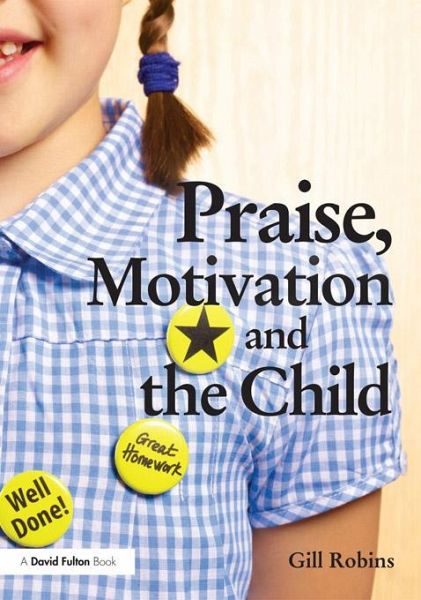
Anyone who spends time with children knows that praise works. It is a powerful motivator - praising children for good behaviour or good work builds self- esteem and self-confidence. Children love to collect stickers, certificates and rewards - so what better way is there to shape behaviour, encourage good work habits and produce confident learners? Teachers and parents alike know that praise is effective - we use it every day and we see the positive effect that it has on our children.
However, constructivist practitioners would argue that praise in any form creates hierarchies and competition in the classroom, has little effect on genuine learning and is invasively judgemental rather than supportive. Constructivists would further argue that self-esteem cannot be built by external agency - teachers and parents can only create an appropriate environment in which a robust sense of 'self' can grow and develop.
This book challenges traditional, embedded thinking about the role of praise. It questions the assumptions we make about developing self-esteem, about the ability of children to form their own independent judgements and the choices that children make regardless, rather than because of, contingent praise.
What happens when children are praised? Read this book, listen to what children really think and challenge your own assumptions.
Features include:
This book is aimed at practising and training Primary school teachers. It would also be suitable for NQTs who are starting to shape their own practice, experienced teachers who want to develop and question their own practice and students on BA Hons and PGCE courses.
However, constructivist practitioners would argue that praise in any form creates hierarchies and competition in the classroom, has little effect on genuine learning and is invasively judgemental rather than supportive. Constructivists would further argue that self-esteem cannot be built by external agency - teachers and parents can only create an appropriate environment in which a robust sense of 'self' can grow and develop.
This book challenges traditional, embedded thinking about the role of praise. It questions the assumptions we make about developing self-esteem, about the ability of children to form their own independent judgements and the choices that children make regardless, rather than because of, contingent praise.
What happens when children are praised? Read this book, listen to what children really think and challenge your own assumptions.
Features include:
- Case studies and children's work samples;
- Points for reflection which could be used for CPD sessions;
- Appendices containing behaviour policy samples;
- Pupil, teacher and parental perspectives.
This book is aimed at practising and training Primary school teachers. It would also be suitable for NQTs who are starting to shape their own practice, experienced teachers who want to develop and question their own practice and students on BA Hons and PGCE courses.
Dieser Download kann aus rechtlichen Gründen nur mit Rechnungsadresse in A, B, BG, CY, CZ, D, DK, EW, E, FIN, F, GR, HR, H, IRL, I, LT, L, LR, M, NL, PL, P, R, S, SLO, SK ausgeliefert werden.