39,95 €
inkl. MwSt.
Sofort per Download lieferbar
20 °P sammeln

Andere Kunden interessierten sich auch für
") Presidential Power and Accountability (eBook, ePUB)39,95 €
Presidential Power and Accountability (eBook, ePUB)39,95 €") Presidential Power in Latin America (eBook, ePUB)44,95 €
Presidential Power in Latin America (eBook, ePUB)44,95 €") The British Labour Party in Opposition and Power 1979-2019 (eBook, ePUB)30,95 €
The British Labour Party in Opposition and Power 1979-2019 (eBook, ePUB)30,95 €") Presidential Communication and Character (eBook, ePUB)40,95 €
Presidential Communication and Character (eBook, ePUB)40,95 €") Presidential Polls And The News Media (eBook, ePUB)39,95 €
Presidential Polls And The News Media (eBook, ePUB)39,95 €") Perspectives on Presidential Leadership (eBook, ePUB)39,95 €
Perspectives on Presidential Leadership (eBook, ePUB)39,95 €") Literacies of Power (eBook, ePUB)45,95 €
Literacies of Power (eBook, ePUB)45,95 €



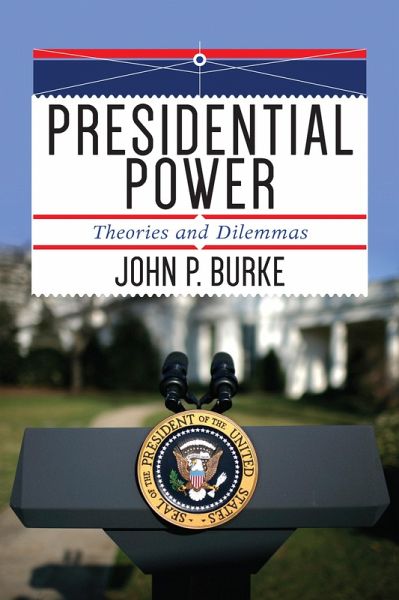
Presidential power is perhaps one of the most central issues in the study of the American presidency. Since Richard E. Neustadt's classic study, first published in 1960, there has not been a book that thoroughly examines the issue of presidential power. Presidential Power: Theories and Dilemmas by noted scholar John P. Burke provides an updated and comprehensive look at the issues, constraints, and exercise of presidential power.
This book considers the enduring question of how presidents can effectively exercise power within our system of shared powers by examining major tools and theories of presidential power, including Neustadt's theory of persuasion and bargaining as power, constitutional and inherent powers, Samuel Kernell's theory of going public, models of historical time, and the notion of internal time. Using illustrative examples from historical and contemporary presidencies, Burke helps students and scholars better understand how presidents can manage the public's expectations, navigate presidential-congressional relations, and exercise influence in order to achieve their policy goals.
This book considers the enduring question of how presidents can effectively exercise power within our system of shared powers by examining major tools and theories of presidential power, including Neustadt's theory of persuasion and bargaining as power, constitutional and inherent powers, Samuel Kernell's theory of going public, models of historical time, and the notion of internal time. Using illustrative examples from historical and contemporary presidencies, Burke helps students and scholars better understand how presidents can manage the public's expectations, navigate presidential-congressional relations, and exercise influence in order to achieve their policy goals.
Dieser Download kann aus rechtlichen Gründen nur mit Rechnungsadresse in A, B, BG, CY, CZ, D, DK, EW, E, FIN, F, GR, HR, H, IRL, I, LT, L, LR, M, NL, PL, P, R, S, SLO, SK ausgeliefert werden.