0,00 €
0,00 €
inkl. MwSt.
Sofort per Download lieferbar

0 °P sammeln
0,00 €
Als Download kaufen
0,00 €
inkl. MwSt.
Sofort per Download lieferbar
0 °P sammeln
Jetzt verschenken
Alle Infos zum eBook verschenken
0,00 €
inkl. MwSt.
Sofort per Download lieferbar
Alle Infos zum eBook verschenken
0 °P sammeln

Andere Kunden interessierten sich auch für
") Ottoman/Turkish Visions of the Nation, 1860-1950 (eBook, PDF)40,95 €
Ottoman/Turkish Visions of the Nation, 1860-1950 (eBook, PDF)40,95 €") Kurdish Nobility and the Ottoman State in the Long Nineteenth Century (eBook, PDF)88,95 €
Kurdish Nobility and the Ottoman State in the Long Nineteenth Century (eBook, PDF)88,95 €") Learning to Read in the Late Ottoman Empire and the Early Turkish Republic (eBook, PDF)40,95 €
Learning to Read in the Late Ottoman Empire and the Early Turkish Republic (eBook, PDF)40,95 €") The Struggle against Imperialism (eBook, PDF)27,95 €
The Struggle against Imperialism (eBook, PDF)27,95 €") Death and Life in the Ottoman Palace (eBook, PDF)88,95 €
Death and Life in the Ottoman Palace (eBook, PDF)88,95 €") Rise of the Western Armenian Diaspora in the Early Modern Ottoman Empire (eBook, PDF)84,95 €
Rise of the Western Armenian Diaspora in the Early Modern Ottoman Empire (eBook, PDF)84,95 €") Life and Society in Byzantine Cappadocia (eBook, PDF)80,95 €
Life and Society in Byzantine Cappadocia (eBook, PDF)80,95 €





Revises Western images of Ottoman prisons as sites of Oriental brutality
Read an interview with Kent F. Schull about the book (pdf)
Listen to Kent Schull explore the lives of Ottoman prisoners on The Ottoman History Podcast
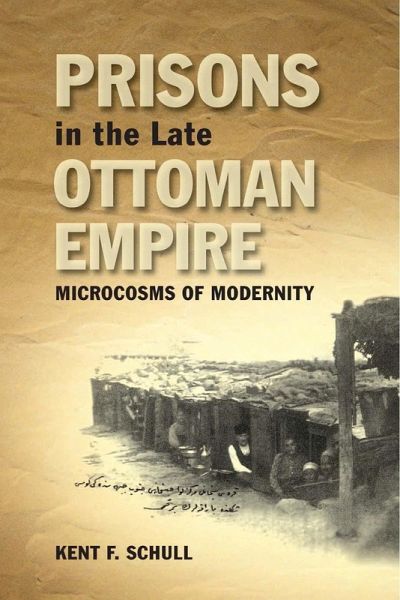
The Western world stereotypically associates Ottoman or ''Turkish'' prisons with images of torture, narcotics and brutal sexual behaviour. Now, Kent F. Schull argues that these prisons were actually a site of immense reform and contestation during the 19th century.
Schull shows that prisons were key components for Ottoman nation-state construction and acted as ''microcosms of modernity'' for broader imperial transformation. It was within the walls of these prisons that many of the pressing questions of Ottoman modernity were worked out.
By juxtaposing them with the reality of prison life, Schull investigates how state-mandated reforms affected the lives of local prison officials and inmates. He shows how these individuals actively conformed to, contested and manipulated new penal policies and practices for their own benefit.
Key Features
- Shows how prisons were key to resolving questions of administrative centralisation, Islamic criminal law and punishment, gender and childhood, prisoner rehabilitation, bureaucratic professionalisation, identity and social engineering
- Heavily critiques Michel Foucault''s approach to punishment, state power, and society by applying it to a non-Western context
- Presents penal institutions in this period as complex social institutions that act as windows to broader cultural, ideological and social issues
- Covers key issues including juvenile delinquents, corruption, prisoner abuse, female prisoners and Islamic criminal law reform
Dieser Download kann aus rechtlichen Gründen nur mit Rechnungsadresse in A, B, BG, CY, CZ, D, DK, EW, E, FIN, F, GR, HR, H, IRL, I, LT, L, LR, M, NL, PL, P, R, S, SLO, SK ausgeliefert werden.