Sie sind bereits eingeloggt. Klicken Sie auf 2. tolino select Abo, um fortzufahren.
Bitte loggen Sie sich zunächst in Ihr Kundenkonto ein oder registrieren Sie sich bei bücher.de, um das eBook-Abo tolino select nutzen zu können.
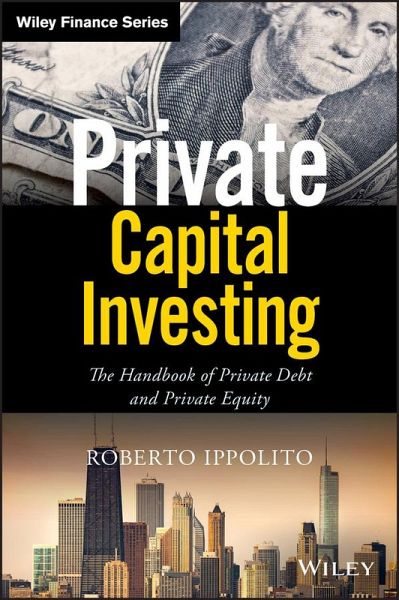
A step-by-step, comprehensive approach to private equity and private debt Private Capital Investing: The Handbook of Private Debt and Private Equity is a practical manual on investing in the two of the most common alternative asset classes (private equity and private debt) and provides a unique insight on how principal investors analyze investment opportunities. Unlike other textbooks available in the market, Private Capital Investing covers the various phases that principal investors follow when analyzing a private investment opportunity. The book combines academic rigor with the practical…mehr
A step-by-step, comprehensive approach to private equity and private debt Private Capital Investing: The Handbook of Private Debt and Private Equity is a practical manual on investing in the two of the most common alternative asset classes (private equity and private debt) and provides a unique insight on how principal investors analyze investment opportunities. Unlike other textbooks available in the market, Private Capital Investing covers the various phases that principal investors follow when analyzing a private investment opportunity. The book combines academic rigor with the practical approach used by leading institutional investors. Chapters are filled with practical examples, Excel workbooks (downloadable from the book website), examples of legal clauses and contracts, and Q&A. Cases are referred at the end of every chapter to test the learning of the reader. Instructors will find referrals to both third-party cases or cases written by the author. * Covers analytical tools * Includes the most common methods used to structure a debt facility and a private equity transaction * Looks at the main legal aspects of a transaction * Walks readers through the different phases of a transaction from origination to closing Bridging the gap between academic study and practical application, Private Capital Investing enables the reader to be able to start working in private equity or private debt without the need for any further training. It is intended for undergraduates and MBA students, practitioners in the investment banking, consulting and private equity business with prior academic background in corporate finance and accounting.
Dieser Download kann aus rechtlichen Gründen nur mit Rechnungsadresse in D ausgeliefert werden.
Die Herstellerinformationen sind derzeit nicht verfügbar.
Autorenporträt
ROBERTO IPPOLITO is Managing Partner of a leading Italian Hybrid Capital (private equity and private debt) fund and Professor of Principal Investing at Università degli Studi Guglielmo Marconi. He has 20 years' private capital experience in sourcing, structuring and investing in all parts of the capital structure (senior debt, junior debt and private equity) of Italian SMEs across several industries and three years' management consulting experience (with a focus on business due diligence and performance improvement).
Former Head of Leverage Finance at General Electric Capital Italy, Roberto has held managerial roles at European Bank for Reconstruction and Development, DAM Capital (Anschutz Group), Bain & Co. and junior positions at Goldman Sachs (Merchant and Investment Banking) and Istituto Mobiliare Italiano (Merchant Banking). He is a Fulbright scholar and a British Chevening scholar.
Roberto received a MBA from the University of Chicago, a MSc in Economics from the University of Warwick and a Summa Cum Laude BSc in Business from LUISS University. He is a CFA and CPA in Italy and FSA registered in the UK.
Inhaltsangabe
About the Author xi
Acknowledgements xiii
About the Companion Site xv
Introduction 1
The Rise of Private Markets (Alternative Assets) in the Investors' Allocation 2
The Rise of Private Markets as a Favoured Alternative Source of Company Financing 4
Private Equity 6
Private Debt 8
Deal Phases and Book Organisation 10
Chapter 1 Closed End Funds 13
A Close Up on Private Equity and Private Debt Partnerships 13
Cash Flows, J Curve, and Returns 16
Financial Returns 19
References and Further Reading 22
Suggested Cases 22
Chapter 2 Debt Products 23
Introduction 23
Definition and Some Useful Classifications 24
Pure Debt Instruments 29
High-yield Bonds 37
Mezzanine 39
Unitranche 43
A Close Up on Syndicated Lending 50
References and Further Reading 52
Suggested Cases 52
Chapter 3 Equity Products 53
Introduction 53
Ordinary Shares 54
Preference Shares 55
Convertibles 57
Other Equity Instruments 64
References and Further Reading 70
Suggested Cases 70
Chapter 4 Business Due Diligence 71
Introduction 71
Macro Factors 71
Industry Risk Analysis 73
Company Analysis 83
Summary Steps for a Strategic Analysis of a Business Plan 90
References and Further Reading 91
Suggested Cases 91
Chapter 5 Accounting Due Diligence 93
Introduction 93
Quality of Earnings 93
Ratio Analysis 101
Cash Flow Analysis 106
Creative Accounting 115
References and Further Reading 123
Suggested Cases 123
Chapter 6 Business Plan 125
Introduction 125
Pro-forma Financials 125
Profit and Loss Projections 126
Balance Sheet Projections 127
Putting it all Together: Modelling Cash, Short-term Debt, Net Income, and Shareholders' Equity 128
Sensitivity Analysis 128
Consistency Checks 129
References and Further Reading 133
Suggested Cases 133
Chapter 7 Valuation 135
Introduction 135
Fundamentals #1: Price and Value 135
Fundamentals #2: Enterprise Value and Equity Value 136
Fundamentals #3: Market Values vs. Book Values 140
Discounted Cash Valuation Method 140
Discounted Cash Valuation: WACC Approach 140
Discounted Cash Flow Valuation: Adjuster Present Value Method 144
Comparables Valuation Method 147
References and Further Reading 156
Suggested Cases 156
Chapter 8 Growth Equity 157
Introduction 157
Differences between Venture Capital, Growth Equity, and LBO 157
Instruments 159
Fundamentals #1: Pre-money and Post-money Valuation 160
Fundamentals #2: Capitalisation Table 165
Fundamentals #3: Dilution and Equity Stake Calculation 165
Fundamentals #4: Anti-dilution Provisions 167
Fundamentals #5: Structuring for Exit (Ordinary Shares vs. Other Instruments) 169
Fundamentals #6: Redemption 172
Fundamentals #7: The Growth Capital Method (Adapted from the Venture Capital Method) 173
Fundamentals #8: Calculation of the Price per Share 176