46,95 €
46,95 €
inkl. MwSt.
Sofort per Download lieferbar

23 °P sammeln
46,95 €
Als Download kaufen
46,95 €
inkl. MwSt.
Sofort per Download lieferbar
23 °P sammeln
Jetzt verschenken
Alle Infos zum eBook verschenken
46,95 €
inkl. MwSt.
Sofort per Download lieferbar
Alle Infos zum eBook verschenken
23 °P sammeln

Andere Kunden interessierten sich auch für
") Privilege (eBook, ePUB)46,95 €
Privilege (eBook, ePUB)46,95 €") Men and Masculinities (eBook, PDF)38,95 €
Men and Masculinities (eBook, PDF)38,95 €") Homo Economics (eBook, PDF)39,95 €
Homo Economics (eBook, PDF)39,95 €") Threshold Concepts in Women's and Gender Studies (eBook, PDF)42,95 €
Threshold Concepts in Women's and Gender Studies (eBook, PDF)42,95 €") The Color of COVID-19 (eBook, PDF)38,95 €
The Color of COVID-19 (eBook, PDF)38,95 €") Pop Culture Freaks (eBook, PDF)42,95 €
Pop Culture Freaks (eBook, PDF)42,95 €") Inequality in the 21st Century (eBook, PDF)84,95 €
Inequality in the 21st Century (eBook, PDF)84,95 €

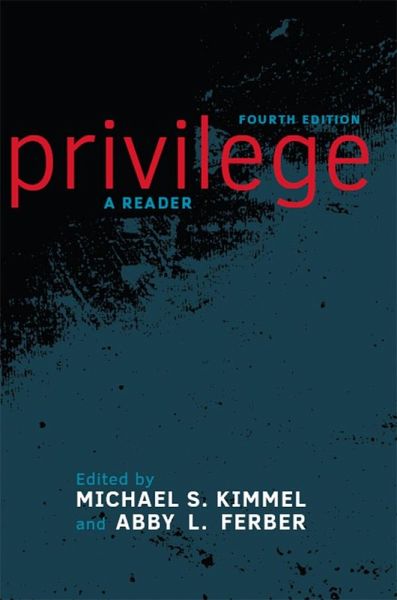
Privilege is about more than being white, wealthy, and male, as Michael Kimmel, Abby Ferber, and a range of contributors make clear in this timely anthology. In an era when 'diversity' is too often shorthand for 'of color' and/or 'female' the personal and analytical essays in this collection explore the multifaceted nature of social location and consider how gender, class, race, sexual orientation, (dis)ability, and religion interact to create nuanced layers of privilege and oppression. The individual essays (taken together) guide students to a deep understanding of the dynamics of diversity and stratification, advantage, and power.
The fourth edition features thirteen new essays that help students understand the intersectional nature of privilege and oppression and has new introductory essays to contextualize the readings. These enhancements, plus the updated pedagogical features of discussion questions and activities at the end of each section, encourage students to examine their own beliefs, practices, and social location.
The fourth edition features thirteen new essays that help students understand the intersectional nature of privilege and oppression and has new introductory essays to contextualize the readings. These enhancements, plus the updated pedagogical features of discussion questions and activities at the end of each section, encourage students to examine their own beliefs, practices, and social location.
Dieser Download kann aus rechtlichen Gründen nur mit Rechnungsadresse in A, B, BG, CY, CZ, D, DK, EW, E, FIN, F, GR, HR, H, IRL, I, LT, L, LR, M, NL, PL, P, R, S, SLO, SK ausgeliefert werden.
Praise for the last edition:
This is a superb collection of work at the vanguard of a resurgent interest in how privilege works across a wide range of human experience. Kimmel and Ferber have skillfully knit together a coherent picture of otherwise unexamined and under-theorized connections in a dauntingly vast and fragmented literature. Troy Duster, New York University
This excellent anthology forcefully illustrates how bigotry based on ethnic, racial, gender, and sexual stereotyping confines and blights the lives of those deemed inferior. I'd like to see this book assigned in every college campus in the country. Marti Duberman, City University of New York
Finally a book on how the other half (or less) lives, and how their status, power and way of life is related to the debasing and suffering of others. This volume will start to bring some semblance of balance to the study of inequality and injustice in the United States. Pedro Noguera, Harvard University
This is a superb collection of work at the vanguard of a resurgent interest in how privilege works across a wide range of human experience. Kimmel and Ferber have skillfully knit together a coherent picture of otherwise unexamined and under-theorized connections in a dauntingly vast and fragmented literature. Troy Duster, New York University
This excellent anthology forcefully illustrates how bigotry based on ethnic, racial, gender, and sexual stereotyping confines and blights the lives of those deemed inferior. I'd like to see this book assigned in every college campus in the country. Marti Duberman, City University of New York
Finally a book on how the other half (or less) lives, and how their status, power and way of life is related to the debasing and suffering of others. This volume will start to bring some semblance of balance to the study of inequality and injustice in the United States. Pedro Noguera, Harvard University
Praise for the last edition:
This is a superb collection of work at the vanguard of a resurgent interest in how privilege works across a wide range of human experience. Kimmel and Ferber have skillfully knit together a coherent picture of otherwise unexamined and under-theorized connections in a dauntingly vast and fragmented literature. Troy Duster, New York University
This excellent anthology forcefully illustrates how bigotry based on ethnic, racial, gender, and sexual stereotyping confines and blights the lives of those deemed inferior. I'd like to see this book assigned in every college campus in the country. Marti Duberman, City University of New York
Finally a book on how the other half (or less) lives, and how their status, power and way of life is related to the debasing and suffering of others. This volume will start to bring some semblance of balance to the study of inequality and injustice in the United States. Pedro Noguera, Harvard University
This is a superb collection of work at the vanguard of a resurgent interest in how privilege works across a wide range of human experience. Kimmel and Ferber have skillfully knit together a coherent picture of otherwise unexamined and under-theorized connections in a dauntingly vast and fragmented literature. Troy Duster, New York University
This excellent anthology forcefully illustrates how bigotry based on ethnic, racial, gender, and sexual stereotyping confines and blights the lives of those deemed inferior. I'd like to see this book assigned in every college campus in the country. Marti Duberman, City University of New York
Finally a book on how the other half (or less) lives, and how their status, power and way of life is related to the debasing and suffering of others. This volume will start to bring some semblance of balance to the study of inequality and injustice in the United States. Pedro Noguera, Harvard University