52,95 €
52,95 €
inkl. MwSt.
Sofort per Download lieferbar

26 °P sammeln
52,95 €
Als Download kaufen
52,95 €
inkl. MwSt.
Sofort per Download lieferbar
26 °P sammeln
Jetzt verschenken
Alle Infos zum eBook verschenken
52,95 €
inkl. MwSt.
Sofort per Download lieferbar
Alle Infos zum eBook verschenken
26 °P sammeln

Andere Kunden interessierten sich auch für
") Problem-based Behavioral Science and Psychiatry (eBook, PDF)80,95 €
Problem-based Behavioral Science and Psychiatry (eBook, PDF)80,95 €") Suicide Science (eBook, PDF)112,95 €
Suicide Science (eBook, PDF)112,95 €") Depression, Burnout and Suicide in Physicians (eBook, PDF)64,95 €
Depression, Burnout and Suicide in Physicians (eBook, PDF)64,95 €") Collaborative Problem Solving (eBook, PDF)44,95 €
Collaborative Problem Solving (eBook, PDF)44,95 €") Physician Mental Health and Well-Being (eBook, PDF)52,95 €
Physician Mental Health and Well-Being (eBook, PDF)52,95 €") Panic Disorder (eBook, PDF)68,95 €
Panic Disorder (eBook, PDF)68,95 €") Revision Guide for MRCPsych Paper A (eBook, PDF)28,95 €
Revision Guide for MRCPsych Paper A (eBook, PDF)28,95 €







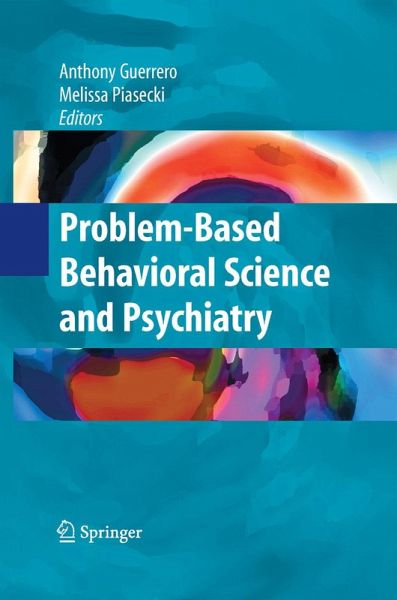
Students of behavioral science, whether residents in psychiatry, graduate students in psychology or clinical social work, or third- and fourth-year medical students preparing for the USMLE Step 1 and 2 examinations, need to understand patients' behavior, how to communicate effectively, and how to recognize and deal with psychiatric disorders. Problem-based learning involves the detailed, systematic study of real and fictitious patient cases. Although more than sixty medical schools incorporate problem-based learning in their curricula, there are no current textbooks to support and guide this aspect of courses in behavioral sciences, behavioral medicine, or psychiatry.
This book presents simulated patient cases in psychiatry and behavioral science, providing a real-world context for students and graduates in these areas. It introduces the topics described below through detailed case vignettes using a model of problem-based learning called progressive disclosure. Sample diagrams known as mechanistic case diagrams illustrate the neurobiological mechanisms underlying behavioral symptoms and show how behavioral and psychosocial factors impact on patient care.
This book presents simulated patient cases in psychiatry and behavioral science, providing a real-world context for students and graduates in these areas. It introduces the topics described below through detailed case vignettes using a model of problem-based learning called progressive disclosure. Sample diagrams known as mechanistic case diagrams illustrate the neurobiological mechanisms underlying behavioral symptoms and show how behavioral and psychosocial factors impact on patient care.
Dieser Download kann aus rechtlichen Gründen nur mit Rechnungsadresse in A, B, BG, CY, CZ, D, DK, EW, E, FIN, F, GR, HR, H, IRL, I, LT, L, LR, M, NL, PL, P, R, S, SLO, SK ausgeliefert werden.