167,95 €
167,95 €
inkl. MwSt.
Sofort per Download lieferbar

84 °P sammeln
167,95 €
Als Download kaufen
167,95 €
inkl. MwSt.
Sofort per Download lieferbar
84 °P sammeln
Jetzt verschenken
Alle Infos zum eBook verschenken
167,95 €
inkl. MwSt.
Sofort per Download lieferbar
Alle Infos zum eBook verschenken
84 °P sammeln

Andere Kunden interessierten sich auch für
") Proceedings of the 3rd International Conference on Opportunities and Challenges for a Resilient Future (eBook, PDF)167,95 €
Proceedings of the 3rd International Conference on Opportunities and Challenges for a Resilient Future (eBook, PDF)167,95 €") Proceedings of the International Conference on Resource Efficiency Towards Sustainability (eBook, PDF)175,95 €
Proceedings of the International Conference on Resource Efficiency Towards Sustainability (eBook, PDF)175,95 €") Proceedings of the 11th International Conference on Energy Engineering and Environmental Engineering (eBook, PDF)272,95 €
Proceedings of the 11th International Conference on Energy Engineering and Environmental Engineering (eBook, PDF)272,95 €") Proceedings of the 3rd International Conference on BioGeoSciences (eBook, PDF)128,95 €
Proceedings of the 3rd International Conference on BioGeoSciences (eBook, PDF)128,95 €") Proceedings of 2022 4th International Conference on Environment Sciences and Renewable Energy (eBook, PDF)136,95 €
Proceedings of 2022 4th International Conference on Environment Sciences and Renewable Energy (eBook, PDF)136,95 €") Proceedings of The First International Conference on Green Sciences (eBook, PDF)240,95 €
Proceedings of The First International Conference on Green Sciences (eBook, PDF)240,95 €") Proceedings of the 3rd International Conference on Green Environmental Engineering and Technology (eBook, PDF)128,95 €
Proceedings of the 3rd International Conference on Green Environmental Engineering and Technology (eBook, PDF)128,95 €




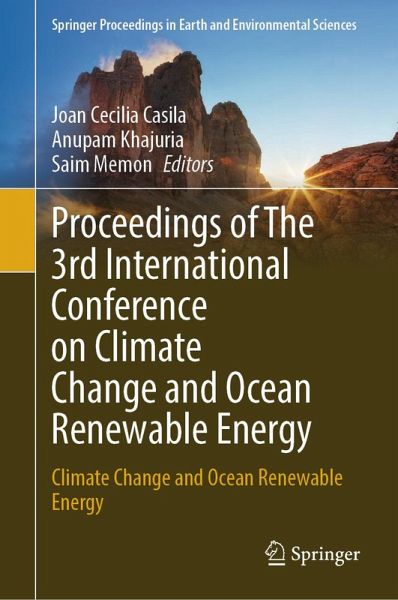
This book promotes policy frameworks and economic models facilitating large-scale ocean renewable energy deployment. Renewable energy refers to power generated from naturally replenished resources like sunlight, wind, rain, tides, waves, and geothermal heat. These sources are abundant and sustainable on a human timescale, making them crucial in addressing global energy needs. According to BP's 2018 Energy Outlook, renewable energy is set to grow fivefold by 2040, contributing about 14% of global primary energy. This growth is pivotal as climate change, driven by rising global temperatures, poses severe risks to humans and ecosystems. The transition to renewable energy, including biofuels, offers a critical solution to mitigate these impacts. By reducing reliance on fossil fuels, we can help slow the progression of climate change. In the past, renewables were seen as costly, but advancements in clean energy technology are making them more affordable. This cost reduction is accelerating the global shift toward renewable energy, promoting sustainable economic growth, and reducing environmental harm caused by fossil fuel dependency. The future of energy lies in harnessing these renewable resources.
Dieser Download kann aus rechtlichen Gründen nur mit Rechnungsadresse in A, B, BG, CY, CZ, D, DK, EW, E, FIN, F, GR, HR, H, IRL, I, LT, L, LR, M, NL, PL, P, R, S, SLO, SK ausgeliefert werden.