39,95 €
inkl. MwSt.
Sofort per Download lieferbar
20 °P sammeln

Andere Kunden interessierten sich auch für
") Obscene Traffic (eBook, PDF)39,95 €
Obscene Traffic (eBook, PDF)39,95 €") New Perspectives on European Women's Legal History (eBook, PDF)44,95 €
New Perspectives on European Women's Legal History (eBook, PDF)44,95 €") Sexualities in History (eBook, PDF)49,95 €
Sexualities in History (eBook, PDF)49,95 €") Domestic Disturbances, Patriarchal Values (eBook, PDF)49,95 €
Domestic Disturbances, Patriarchal Values (eBook, PDF)49,95 €") The Official History of Criminal Justice in England and Wales (eBook, PDF)41,95 €
The Official History of Criminal Justice in England and Wales (eBook, PDF)41,95 €") The Little Republic (eBook, PDF)0,00 €
The Little Republic (eBook, PDF)0,00 €") Masculinity and Male Codes of Honor in Modern France (eBook, PDF)23,95 €
Masculinity and Male Codes of Honor in Modern France (eBook, PDF)23,95 €






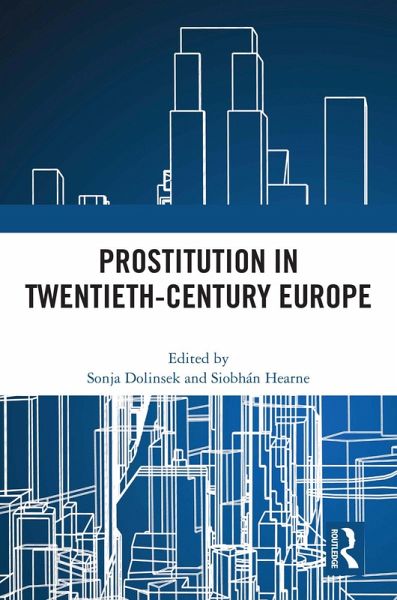
This book places prostitution at the very centre of European history in the twentieth century. With its wide geographical focus from Italy to the USSR via Sweden, Germany, occupied Czechoslovakia and Yugoslavia, as well as the international stage of the United Nations, this book encourages comparative perspectives, which have the potential to question, deconstruct and re-adjust distinctions between western, eastern, northern and southern European historical experiences.
This book moves beyond exploring state-regulated prostitution, which was the dominant approach to managing commercial sex across Europe in the nineteenth and early twentieth centuries. State regulation combined police surveillance, the registration of women selling sex (or suspected of doing so), and compulsory medical examinations for registered women, as well as various restrictions on personal movement and freedom. The nine chapters shift focus onto the decades after the abolition of state-regulated prostitution well into the second half of the twentieth century to examine the ruptures and continuities in state, administrative and policing practices following the end of widespread legal toleration. The varied chronology extends the parameters of existing historiography and explores how states grappled to understand, or impose control over, the commercial sex industry following the far-reaching social, economic and political upheaval of the Second World War.
The chapters in this book were originally published as a special issue of European Review of History.
This book moves beyond exploring state-regulated prostitution, which was the dominant approach to managing commercial sex across Europe in the nineteenth and early twentieth centuries. State regulation combined police surveillance, the registration of women selling sex (or suspected of doing so), and compulsory medical examinations for registered women, as well as various restrictions on personal movement and freedom. The nine chapters shift focus onto the decades after the abolition of state-regulated prostitution well into the second half of the twentieth century to examine the ruptures and continuities in state, administrative and policing practices following the end of widespread legal toleration. The varied chronology extends the parameters of existing historiography and explores how states grappled to understand, or impose control over, the commercial sex industry following the far-reaching social, economic and political upheaval of the Second World War.
The chapters in this book were originally published as a special issue of European Review of History.
Dieser Download kann aus rechtlichen Gründen nur mit Rechnungsadresse in A, B, BG, CY, CZ, D, DK, EW, E, FIN, F, GR, HR, H, IRL, I, LT, L, LR, M, NL, PL, P, R, S, SLO, SK ausgeliefert werden.