2,99 €
inkl. MwSt.
Sofort per Download lieferbar
0 °P sammeln

Andere Kunden interessierten sich auch für
") Sophist (eBook, ePUB)2,99 €
Sophist (eBook, ePUB)2,99 €") Euthydemus, Crito, Euthyphro (eBook, ePUB)2,99 €
Euthydemus, Crito, Euthyphro (eBook, ePUB)2,99 €") Apology, Crito, Phaedo (eBook, ePUB)2,99 €
Apology, Crito, Phaedo (eBook, ePUB)2,99 €") Parmenides (eBook, ePUB)2,99 €
Parmenides (eBook, ePUB)2,99 €") The Republic (eBook, ePUB)2,99 €
The Republic (eBook, ePUB)2,99 €") Laws (eBook, ePUB)2,99 €
Laws (eBook, ePUB)2,99 €") Theaetetus (eBook, ePUB)2,99 €
Theaetetus (eBook, ePUB)2,99 €
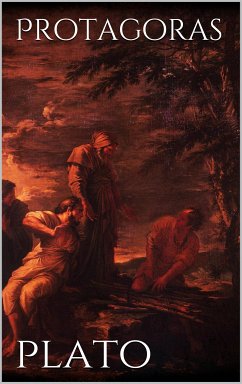
The Protagoras, like several of the Dialogues of Plato, is put into the mouth of Socrates, who describes a conversation which had taken place between himself and the great Sophist at the house of Callias-'the man who had spent more upon the Sophists than all the rest of the world'-and in which the learned Hippias and the grammarian Prodicus had also shared, as well as Alcibiades and Critias, both of whom said a few words-in the presence of a distinguished company consisting of disciples of Protagoras and of leading Athenians belonging to the Socratic circle.
Dieser Download kann aus rechtlichen Gründen nur mit Rechnungsadresse in A, B, BG, CY, CZ, D, DK, EW, E, FIN, F, GR, H, IRL, I, LT, L, LR, M, NL, PL, P, R, S, SLO, SK ausgeliefert werden.