Sie sind bereits eingeloggt. Klicken Sie auf 2. tolino select Abo, um fortzufahren.
Bitte loggen Sie sich zunächst in Ihr Kundenkonto ein oder registrieren Sie sich bei bücher.de, um das eBook-Abo tolino select nutzen zu können.
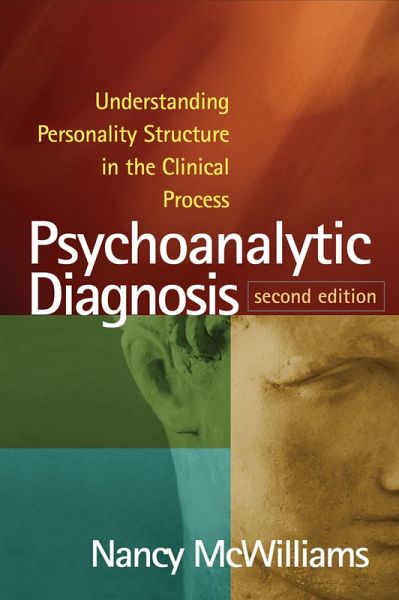
This acclaimed clinical guide and widely adopted text has filled a key need in the field since its original publication. Nancy McWilliams makes psychoanalytic personality theory and its implications for practice accessible to practitioners of all levels of experience. She explains major character types and demonstrates specific ways that understanding the patient's individual personality structure can influence the therapist's focus and style of intervention. Guidelines are provided for developing a systematic yet flexible diagnostic formulation and using it to inform treatment. Highly…mehr
This acclaimed clinical guide and widely adopted text has filled a key need in the field since its original publication. Nancy McWilliams makes psychoanalytic personality theory and its implications for practice accessible to practitioners of all levels of experience. She explains major character types and demonstrates specific ways that understanding the patient's individual personality structure can influence the therapist's focus and style of intervention. Guidelines are provided for developing a systematic yet flexible diagnostic formulation and using it to inform treatment. Highly readable, the book features a wealth of illustrative clinical examples.
New to This Edition
Reflects the ongoing development of the author's approach over nearly two decades.
Incorporates important advances in attachment theory, neuroscience, and the study of trauma.
Coverage of the contemporary relational movement in psychoanalysis.
Winner--Canadian Psychological Association's Goethe Award for Psychoanalytic and Psychodynamic Scholarship
Dieser Download kann aus rechtlichen Gründen nur mit Rechnungsadresse in A, D ausgeliefert werden.
Die Herstellerinformationen sind derzeit nicht verfügbar.
Autorenporträt
Nancy McWilliams, PhD, ABPP, is Visiting Professor Emerita at the Graduate School of Applied and Professional Psychology at Rutgers, The State University of New Jersey, and has a private practice in Lambertville, New Jersey. She is author or editor of acclaimed books, including Psychoanalytic Diagnosis, Second Edition, and has published widely in professional journals. Dr. McWilliams is a past president of the Society for Psychoanalysis and Psychoanalytic Psychology, Division 39 of the American Psychological Association (APA). She is the recipient of honors including the Gradiva Award from the National Association for the Advancement of Psychoanalysis, the Erikson Scholar Award from the Austen Riggs Center, the Goethe Scholarship Award from the Section on Psychoanalytic and Psychodynamic Psychology of the Canadian Psychological Association, the Rosalee Weiss Award from the Division of Independent Practitioners of the APA, the Laughlin Distinguished Teacher Award from the American Society of Psychoanalytic Physicians, the Hans H. Strupp Award from the Appalachian Psychoanalytic Society, and the International, Leadership, and Scholarship Awards from APA Division 39. She is an honorary member of the American Psychoanalytic Association, the Institute for Psychoanalytic Psychotherapy of Turin, Italy, and the Warsaw Scientific Association for Psychodynamic Psychotherapy. Dr. McWilliams's writings have been translated into more than 20 languages.
Inhaltsangabe
Introduction I. Conceptual Issues 1. Why Diagnose? 2. Psychoanalytic Character Diagnosis 3. Developmental Levels of Personality Organization 4. Implications of Developmental Levels of Organization 5. Primary Defensive Processes 6. Secondary Defensive Processes II. Types of Character Organization 7. Psychopathic (Antisocial) Personalities 8. Narcissistic Personalities 9. Schizoid Personalities 10. Paranoid Personalities 11. Depressive and Manic Personalities 12. Masochistic (Self-Defeating) Personalities 13. Obsessive and Compulsive Personalities 14. Hysterical (Histrionic) Personalities 15. Dissociative Psychologies Appendix. Suggested Diagnostic Interview Format