25,95 €
25,95 €
inkl. MwSt.
Sofort per Download lieferbar

13 °P sammeln
25,95 €
Als Download kaufen
25,95 €
inkl. MwSt.
Sofort per Download lieferbar
13 °P sammeln
Jetzt verschenken
Alle Infos zum eBook verschenken
25,95 €
inkl. MwSt.
Sofort per Download lieferbar
Alle Infos zum eBook verschenken
13 °P sammeln

Andere Kunden interessierten sich auch für
") Public Feminism in Times of Crisis (eBook, PDF)25,95 €
Public Feminism in Times of Crisis (eBook, PDF)25,95 €") Gender Violence, Social Media, and Online Environments (eBook, ePUB)36,95 €
Gender Violence, Social Media, and Online Environments (eBook, ePUB)36,95 €") Feminism, Digital Culture and the Politics of Transmission (eBook, ePUB)33,95 €
Feminism, Digital Culture and the Politics of Transmission (eBook, ePUB)33,95 €") Networked Feminisms (eBook, ePUB)25,95 €
Networked Feminisms (eBook, ePUB)25,95 €") Celebrity and New Media (eBook, ePUB)39,95 €
Celebrity and New Media (eBook, ePUB)39,95 €") Feminism at the Movies (eBook, ePUB)47,95 €
Feminism at the Movies (eBook, ePUB)47,95 €") Caught in the Crosshairs (eBook, ePUB)16,95 €
Caught in the Crosshairs (eBook, ePUB)16,95 €







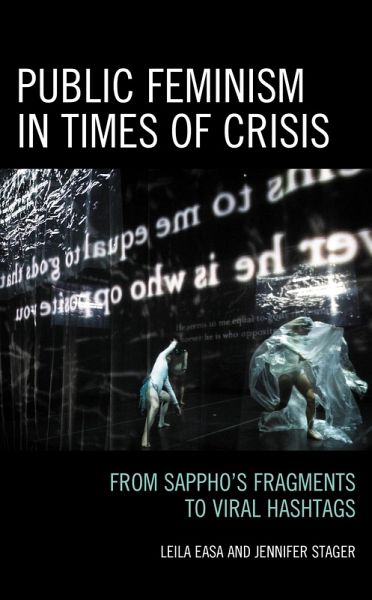
Public Feminism in Times of Crisis examines the public practice of feminism in the age of social media. While their concept of public feminism emerges from a moment of acute crisis (the Trump years and the Covid-19 pandemic), Leila Easa and Jennifer Stager locate its foundations in history, journeying through broad swatches of time looking for connections between the centuries through art and literature and culture. Each chapter focuses on what public feminists do in the world: Public feminists gain control over an archive that otherwise contains or excludes them; they recover their own stories and subjective experiences, sometimes for activist use; they examine images and language that construct women in patriarchal texts; they situate the individual within a collective and the collective within an individual; they confront the limitations of such situating due to the containment of patriarchy and reclaim new systems of power in response; and they resurface a deep history for the alternative strategies of memorializing they employ. In navigating these practices, the authors also attend to the material conditions of writing histories as well as those shaping and enabling public feminist acts and protests more broadly.