57,95 €
57,95 €
inkl. MwSt.
Sofort per Download lieferbar

29 °P sammeln
57,95 €
Als Download kaufen
57,95 €
inkl. MwSt.
Sofort per Download lieferbar
29 °P sammeln
Jetzt verschenken
Alle Infos zum eBook verschenken
57,95 €
inkl. MwSt.
Sofort per Download lieferbar
Alle Infos zum eBook verschenken
29 °P sammeln

Andere Kunden interessierten sich auch für
") Qualitative Research Methods for Media Studies (eBook, PDF)57,95 €
Qualitative Research Methods for Media Studies (eBook, PDF)57,95 €") UX Research Methods for Media and Communication Studies (eBook, ePUB)36,95 €
UX Research Methods for Media and Communication Studies (eBook, ePUB)36,95 €") Software, Infrastructure, Labor (eBook, ePUB)38,95 €
Software, Infrastructure, Labor (eBook, ePUB)38,95 €") Survey of Media (eBook, ePUB)37,95 €
Survey of Media (eBook, ePUB)37,95 €") The Routledge Companion to Media & Gender (eBook, ePUB)54,95 €
The Routledge Companion to Media & Gender (eBook, ePUB)54,95 €") Social Media Law and Ethics (eBook, ePUB)43,95 €
Social Media Law and Ethics (eBook, ePUB)43,95 €") Production Studies (eBook, ePUB)42,95 €
Production Studies (eBook, ePUB)42,95 €

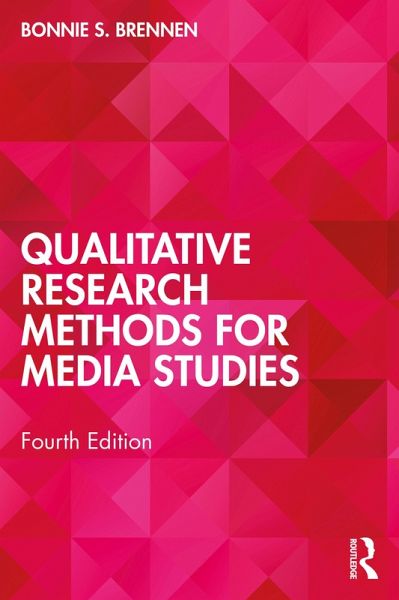
This fully updated fourth edition provides students and researchers with the tools they need to perform critically engaged, theoretically informed research using methods that include interviewing, focus groups, historical research, oral histories, textual analysis, ethnography and participant observation, and digital ethnography and netnography.
Each chapter features step-by-step instructions that integrate theory with practice, as well as a case study drawn from published research demonstrating best practices for media scholars. Readers will also find in-depth discussions of the challenges and ethical issues that may confront researchers using a qualitative approach. With new case studies and examples throughout, this fourth edition also includes updated and expanded material on performing data analysis, how to analyze and understand research findings, performing social media research, and the use of big data and Artificial Intelligence (A.I.). This includes a brand-new chapter on generative A.I., which examines recent advancements and technological developments, and considers ways qualitative researchers can use it for their research.
A comprehensive and accessible guide for those hoping to explore this rich vein of research methodology, this book provides students and scholars with all the tools they need to be able to work with in today's convergent media environment.
Each chapter features step-by-step instructions that integrate theory with practice, as well as a case study drawn from published research demonstrating best practices for media scholars. Readers will also find in-depth discussions of the challenges and ethical issues that may confront researchers using a qualitative approach. With new case studies and examples throughout, this fourth edition also includes updated and expanded material on performing data analysis, how to analyze and understand research findings, performing social media research, and the use of big data and Artificial Intelligence (A.I.). This includes a brand-new chapter on generative A.I., which examines recent advancements and technological developments, and considers ways qualitative researchers can use it for their research.
A comprehensive and accessible guide for those hoping to explore this rich vein of research methodology, this book provides students and scholars with all the tools they need to be able to work with in today's convergent media environment.
Dieser Download kann aus rechtlichen Gründen nur mit Rechnungsadresse in A, B, BG, CY, CZ, D, DK, EW, E, FIN, F, GR, HR, H, IRL, I, LT, L, LR, M, NL, PL, P, R, S, SLO, SK ausgeliefert werden.
PRAISE FOR THE SECOND EDITION
"Written in clear, jargon-free language, this remarkable and engaging textbook is extraordinarily valuable for beginners and experienced qualitative researchers. Brennen deftly makes complex concepts accessible and understandable, giving students the skills and the courage to undertake challenging research studies."
Margaret Duffy, Professor of Strategic Communication, Missouri School of Journalism, and Executive Director of the Novak Leadership Institute, USA
"Brennen covers the breadth of qualitative research in media studies thoroughly and accessibly, drawing on numerous examples to knit together the conceptual concerns of method with the practical experiences of research in action. This is a valuable text for both students new to research to learn the craft of qualitative research and for prompting even the most experienced researchers with helpful conceptual and practical reminders towards its best practices."
Jason Pridmore, Associate Professor of Media and Communication and Vice Dean of Education for the School of History, Culture and Communication, Erasmus University Rotterdam, Netherlands
"Written in clear, jargon-free language, this remarkable and engaging textbook is extraordinarily valuable for beginners and experienced qualitative researchers. Brennen deftly makes complex concepts accessible and understandable, giving students the skills and the courage to undertake challenging research studies."
Margaret Duffy, Professor of Strategic Communication, Missouri School of Journalism, and Executive Director of the Novak Leadership Institute, USA
"Brennen covers the breadth of qualitative research in media studies thoroughly and accessibly, drawing on numerous examples to knit together the conceptual concerns of method with the practical experiences of research in action. This is a valuable text for both students new to research to learn the craft of qualitative research and for prompting even the most experienced researchers with helpful conceptual and practical reminders towards its best practices."
Jason Pridmore, Associate Professor of Media and Communication and Vice Dean of Education for the School of History, Culture and Communication, Erasmus University Rotterdam, Netherlands