72,95 €
72,95 €
inkl. MwSt.
Sofort per Download lieferbar

36 °P sammeln
72,95 €
Als Download kaufen
72,95 €
inkl. MwSt.
Sofort per Download lieferbar
36 °P sammeln
Jetzt verschenken
Alle Infos zum eBook verschenken
72,95 €
inkl. MwSt.
Sofort per Download lieferbar
Alle Infos zum eBook verschenken
36 °P sammeln

Andere Kunden interessierten sich auch für
") Barometers of Quality of Life Around the Globe (eBook, PDF)72,95 €
Barometers of Quality of Life Around the Globe (eBook, PDF)72,95 €") Enhancing the Quality of Life of People with Intellectual Disabilities (eBook, PDF)112,95 €
Enhancing the Quality of Life of People with Intellectual Disabilities (eBook, PDF)112,95 €") Advances in Quality of Life Research 2001 (eBook, PDF)112,95 €
Advances in Quality of Life Research 2001 (eBook, PDF)112,95 €") Community Quality-of-Life Indicators: Best Cases V (eBook, PDF)72,95 €
Community Quality-of-Life Indicators: Best Cases V (eBook, PDF)72,95 €") Approaches to Improving the Quality of Life (eBook, PDF)72,95 €
Approaches to Improving the Quality of Life (eBook, PDF)72,95 €") Community Quality-of-Life Indicators: Best Cases IV (eBook, PDF)72,95 €
Community Quality-of-Life Indicators: Best Cases IV (eBook, PDF)72,95 €") Community Quality-of-Life Indicators: Best Cases III (eBook, PDF)72,95 €
Community Quality-of-Life Indicators: Best Cases III (eBook, PDF)72,95 €
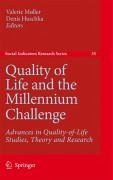
The new millennium is widely considered to be the age of globalisation, democratisation, and human rights. We live in a knowledge society and in a time of risk and uncertainty. It is the interplay of these key trends of the era that call for a fresh approach to quality of life studies to inform policy makers and development practitioners. This book addresses the key challenges life research that relate to the characteristics of the new millennium such as increased risks, rapid worldwide democratisation of societies, loss of bio- and cultural diversity, rapid erosion of natural resources and climate change, and global connectivity that accelerates the transmission of disease as well as knowledge.
Quality of life (QOL) research has made great strides since the social indicator movement started as a scientific enterprise in the 1960s. Researchers from many different scientific disciplines are now engaged in describing and evaluating the human condition in many different parts of the world. Although QOL researchers are better equipped both theoretically and practically than in the past, the new era poses new challenges for them. One such challenge relates to the very definition of the subject under study. The notion of the good life that has intrigued classical Greek is fluid and popular conceptions of the good life have shifted over time. The speed with which societies worldwide are changing in the new millennium is breathtaking. It is possible that the vision of the good life has shifted dramatically over the forty years since the social indicator movement began.
Democracy is currently the political system of choice in the new millennium or is at least considered the best possible system of governance invented to date. The emergent democracies in the Second and Third World have joined the ranks of the older democracies of the First World. One of the important roles of QOL researchers is to engage citizens in assessing their life circumstances relative to their own conception of the good life.
Quality of life studies play an important role in guiding social policy. In democracies citizens are able to hold their governments accountable for pursuing the policies and making the interventions that will make the greatest improvements for the greatest number. There are moral and political issues related to the proper role of governments in providing the good life and public goods. This volume addresses the issue of how governments should intervene to shape the good life for their citizens. This is a pertinent question for quality-of-life scholars in all corners of the earth in the new millennium.
Quality of life (QOL) research has made great strides since the social indicator movement started as a scientific enterprise in the 1960s. Researchers from many different scientific disciplines are now engaged in describing and evaluating the human condition in many different parts of the world. Although QOL researchers are better equipped both theoretically and practically than in the past, the new era poses new challenges for them. One such challenge relates to the very definition of the subject under study. The notion of the good life that has intrigued classical Greek is fluid and popular conceptions of the good life have shifted over time. The speed with which societies worldwide are changing in the new millennium is breathtaking. It is possible that the vision of the good life has shifted dramatically over the forty years since the social indicator movement began.
Democracy is currently the political system of choice in the new millennium or is at least considered the best possible system of governance invented to date. The emergent democracies in the Second and Third World have joined the ranks of the older democracies of the First World. One of the important roles of QOL researchers is to engage citizens in assessing their life circumstances relative to their own conception of the good life.
Quality of life studies play an important role in guiding social policy. In democracies citizens are able to hold their governments accountable for pursuing the policies and making the interventions that will make the greatest improvements for the greatest number. There are moral and political issues related to the proper role of governments in providing the good life and public goods. This volume addresses the issue of how governments should intervene to shape the good life for their citizens. This is a pertinent question for quality-of-life scholars in all corners of the earth in the new millennium.
Dieser Download kann aus rechtlichen Gründen nur mit Rechnungsadresse in A, B, BG, CY, CZ, D, DK, EW, E, FIN, F, GR, HR, H, IRL, I, LT, L, LR, M, NL, PL, P, R, S, SLO, SK ausgeliefert werden.