98,95 €
98,95 €
inkl. MwSt.
Erscheint vor. 29.12.25

49 °P sammeln
98,95 €
Als Download kaufen
98,95 €
inkl. MwSt.
Erscheint vor. 29.12.25
49 °P sammeln
Jetzt verschenken
Alle Infos zum eBook verschenken
98,95 €
inkl. MwSt.
Erscheint vor. 29.12.25
Alle Infos zum eBook verschenken
49 °P sammeln

Andere Kunden interessierten sich auch für
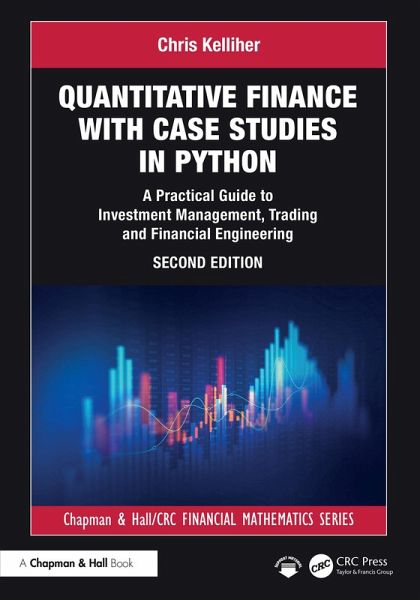
") Quantitative Finance with Case Studies in Python (eBook, PDF)98,95 €
Quantitative Finance with Case Studies in Python (eBook, PDF)98,95 €") Applied Mathematics with Open-Source Software (eBook, ePUB)48,95 €
Applied Mathematics with Open-Source Software (eBook, ePUB)48,95 €") A Simple Introduction to Python (eBook, ePUB)24,95 €
A Simple Introduction to Python (eBook, ePUB)24,95 €") API Design for C++ (eBook, ePUB)62,95 €
API Design for C++ (eBook, ePUB)62,95 €") Advances in Computers (eBook, ePUB)111,95 €
Advances in Computers (eBook, ePUB)111,95 €") Advances in Computers (eBook, ePUB)111,95 €
Advances in Computers (eBook, ePUB)111,95 €") Advances in Computers (eBook, ePUB)111,95 €
Advances in Computers (eBook, ePUB)111,95 €

Quantitative Finance with Case Studies in Python: A Practical Guide to Investment Management, Trading and Financial Engineering bridges the gap between the theory of mathematical finance and the practical applications of these concepts for derivative pricing and portfolio management. The book provides students with a very hands-on, rigorous introduction to foundational topics in quant finance, such as options pricing, portfolio optimization and machine learning. Simultaneously, the reader benefits from a strong emphasis on the practical applications of these concepts for institutional investors.
This new edition includes brand new material on data science and AI concepts, including large language models, as well as updated content to reflect the transition from Libor to SOFR to bring the text right up to date. It also includes expanded material on inflation and mortgage-backed securitie, more trade ideas embedded in each chapter and also via a dedicated chapter analyzing a set of derivatives trades. There are additional examples throughout based on recent market dynamics, including the post-Covid inflation shock and its impact on risk parity strategies.
Overall, the new edition is designed to be even more of a practical tool than the first edition, and more firmly rooted in real-world data, applications, and examples.
Features
· Useful as both a teaching resource and as a practical tool for professional investors
· Ideal textbook for first year graduate students in quantitative finance programs, such as those in master's programs in Mathematical Finance, Quant Finance or Financial Engineering
· Includes a perspective on the future of quant finance techniques, and in particular covers concepts of Machine Learning and Artificial Intelligence
· Free-to-access repository with Python codes available at www.routledge.com/ 9781032014432 and on https://github.com/lingyixu/Quant-Finance-With-Python-Code.[CK1]
This new edition includes brand new material on data science and AI concepts, including large language models, as well as updated content to reflect the transition from Libor to SOFR to bring the text right up to date. It also includes expanded material on inflation and mortgage-backed securitie, more trade ideas embedded in each chapter and also via a dedicated chapter analyzing a set of derivatives trades. There are additional examples throughout based on recent market dynamics, including the post-Covid inflation shock and its impact on risk parity strategies.
Overall, the new edition is designed to be even more of a practical tool than the first edition, and more firmly rooted in real-world data, applications, and examples.
Features
· Useful as both a teaching resource and as a practical tool for professional investors
· Ideal textbook for first year graduate students in quantitative finance programs, such as those in master's programs in Mathematical Finance, Quant Finance or Financial Engineering
· Includes a perspective on the future of quant finance techniques, and in particular covers concepts of Machine Learning and Artificial Intelligence
· Free-to-access repository with Python codes available at www.routledge.com/ 9781032014432 and on https://github.com/lingyixu/Quant-Finance-With-Python-Code.[CK1]
Dieser Download kann aus rechtlichen Gründen nur mit Rechnungsadresse in A, B, BG, CY, CZ, D, DK, EW, E, FIN, F, GR, HR, H, IRL, I, LT, L, LR, M, NL, PL, P, R, S, SLO, SK ausgeliefert werden.