66,95 €
inkl. MwSt.
Sofort per Download lieferbar
33 °P sammeln

Andere Kunden interessierten sich auch für
") The Market for Mesoamerica (eBook, ePUB)22,95 €
The Market for Mesoamerica (eBook, ePUB)22,95 €") Archaeology, Heritage, and Reactionary Populism (eBook, ePUB)25,95 €
Archaeology, Heritage, and Reactionary Populism (eBook, ePUB)25,95 €") The Timucuan Chiefdoms of Spanish Florida (eBook, ePUB)21,95 €
The Timucuan Chiefdoms of Spanish Florida (eBook, ePUB)21,95 €") Archaeology in a Living Landscape (eBook, ePUB)73,95 €
Archaeology in a Living Landscape (eBook, ePUB)73,95 €") Fort St. Joseph Revealed (eBook, ePUB)19,95 €
Fort St. Joseph Revealed (eBook, ePUB)19,95 €") Eating in the Side Room (eBook, ePUB)21,95 €
Eating in the Side Room (eBook, ePUB)21,95 €") The Archaeology of American Medicine and Healthcare (eBook, ePUB)66,95 €
The Archaeology of American Medicine and Healthcare (eBook, ePUB)66,95 €

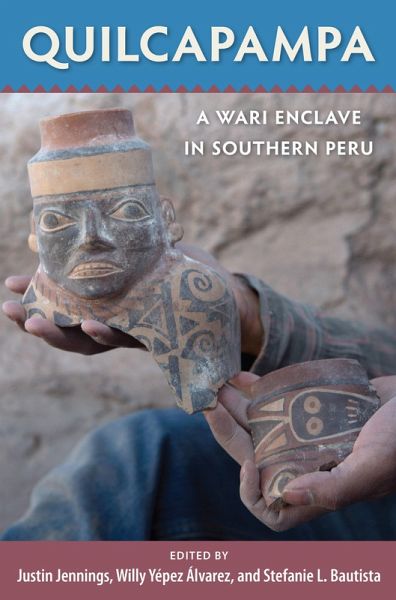
In the ninth century AD, settlers from the heartland of the Wari Empire founded Quilcapampa, a short-lived site overlooking the Sihuas River in southern Peru. The contributors to this volume present excavation and survey data from in and around Quilcapampa that challenge long-held models of both Wari statecraft and the mechanisms that engendered the widespread societal changes of the era.
Quilcapampa and other peripheral Wari settlements have generally been seen as local administrative centers that siphoned resources from conquered regions to the Wari capital. This volume demonstrates that Quilcapampa was likely founded not by Wari officials but by families looking for a new home amid the turmoil caused by increasing Wari political centralization. Botanical, faunal, ceramic, lithic, and other data sets are used to reconstruct lifeways at the site and show how the settlers interacted with others locally and across greater distances.
Featuring extensive illustrations in the print edition and multimedia components in the digital edition, Quilcapampa offers an abundance of archaeological data on the site as well as new theoretical considerations of Wari expansion, laying the foundation for a better understanding of how Andean political economy and social complexity changed over time.
Contributors: Aleksa Alaica Stefanie Bautista Stephen Berquist Matthew E. Biwer Luis Manuel González La Rosa Felipe Gonzalez-Macqueen Oscar Huamán López Justin Jennings Mallory A. Melton Patricia Quiñonez Cuzcano David Reid Branden Rizzuto Giles Spence-Morrow Willy Yépez Álvarez
Quilcapampa and other peripheral Wari settlements have generally been seen as local administrative centers that siphoned resources from conquered regions to the Wari capital. This volume demonstrates that Quilcapampa was likely founded not by Wari officials but by families looking for a new home amid the turmoil caused by increasing Wari political centralization. Botanical, faunal, ceramic, lithic, and other data sets are used to reconstruct lifeways at the site and show how the settlers interacted with others locally and across greater distances.
Featuring extensive illustrations in the print edition and multimedia components in the digital edition, Quilcapampa offers an abundance of archaeological data on the site as well as new theoretical considerations of Wari expansion, laying the foundation for a better understanding of how Andean political economy and social complexity changed over time.
Contributors: Aleksa Alaica Stefanie Bautista Stephen Berquist Matthew E. Biwer Luis Manuel González La Rosa Felipe Gonzalez-Macqueen Oscar Huamán López Justin Jennings Mallory A. Melton Patricia Quiñonez Cuzcano David Reid Branden Rizzuto Giles Spence-Morrow Willy Yépez Álvarez
Dieser Download kann aus rechtlichen Gründen nur mit Rechnungsadresse in A, D ausgeliefert werden.