Sie sind bereits eingeloggt. Klicken Sie auf 2. tolino select Abo, um fortzufahren.
Bitte loggen Sie sich zunächst in Ihr Kundenkonto ein oder registrieren Sie sich bei bücher.de, um das eBook-Abo tolino select nutzen zu können.
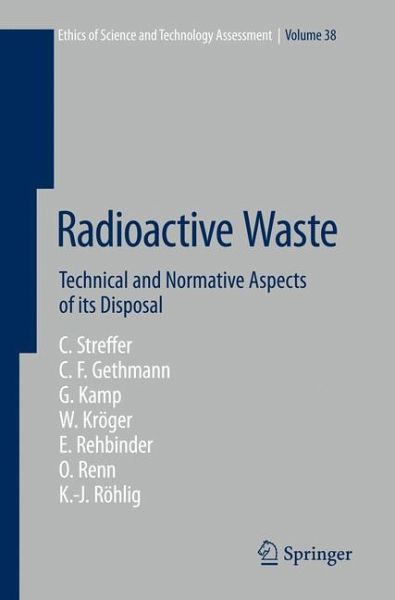
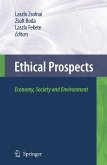
Radioactive waste (above all highly radioactive wastes from nuclear installations) caused by research, medicine and technology must be disposed of safely. However both the strategies disputed for the disposal of radioactive waste as well as concrete proposals for choosing a location for final waste disposal are highly debatable. An appropriate disposal must conform to both complex, technical requirements and fulfill the radio-biological conditions to appropriately protect man and nature. Ethical, legal and social conditions must also be considered. An interdisciplinary team from various,…mehr
Radioactive waste (above all highly radioactive wastes from nuclear installations) caused by research, medicine and technology must be disposed of safely. However both the strategies disputed for the disposal of radioactive waste as well as concrete proposals for choosing a location for final waste disposal are highly debatable. An appropriate disposal must conform to both complex, technical requirements and fulfill the radio-biological conditions to appropriately protect man and nature. Ethical, legal and social conditions must also be considered. An interdisciplinary team from various, relevant fields compiled the current status-quo and developed criteria and strategies, which on the one hand meet the requirements of optimal warning and prevention of risk for present and future generations, and additionally on the other hand meet the needs of what current society agrees what is expected to be allowed. This study can be understood as an advanced and continuing contribution to the corresponding scientific specialized debates, due to its interdisciplinary treatment. At the same time it serves as a fundamentally informing contribution to public and political debates, offering an easily comprehensible executive summary and precise content recommendations.
Dieser Download kann aus rechtlichen Gründen nur mit Rechnungsadresse in A, B, BG, CY, CZ, D, DK, EW, E, FIN, F, GR, HR, H, IRL, I, LT, L, LR, M, NL, PL, P, R, S, SLO, SK ausgeliefert werden.
Die Herstellerinformationen sind derzeit nicht verfügbar.
Autorenporträt
Carl Friedrich Gethmann, Professor Dr. phil. habil., studied philosophy at Bonn, Innsbruck and Bochum and obtained a lic. phil. in1968 from Institutum Philosophicum Oenipontanum - Universität Innsbruck. He obtained his Dr. phil. from the Ruhr-Universität Bochum in 1971. In 1978 he completed the habilitation in philosophy at the University of Konstanz. In 2003, he received the honorary degree of doctor of philosophy (Dr. phil. h.c.) from the Humboldt-Universität Berlin. In 2009 he was appointed as an Honorary Professor at the University of Cologne. During his career, he has served as a scientific assistant (1968), Professor of Philosophy at the University of Essen (1972), private lecturer at the University of Konstanz (1978) and as a Professor for philosophy at the University of Essen (1979). Since March 2013, Gethmann has served as a Professor the Institute for Advanced Study at the University of Siegen. Between 1996 and 2012, he was the Director of the Europäische Akademie zur Erforschung von Folgen wissenschaftlich-technischer Entwicklungen GmbH, Bad Neuenahr-Ahrweiler, Germany. He has also been a Member of the Academia Europaea (London), of the Berlin-Brandenburgische Akademie der Wissenschaften, and of the German National Academy of Sciences Leopoldina (Deutsche Akademie der Naturforscher). Between 2000 and 2013, Professor Gethmann has served as a member of the Bioethics Commission of Rhineland-Palatinate, Germany. 2006-2008 he was President of the German Association for Philosophy "Deutsche Gesellschaft für Philosophie e.V.". Since 2008, he has been a member of the German Academy of Science and Engineering (German: Deutsche Akademie der Technikwissenschaften) "Acatech". He is currently a member of the German Ethics Council (2013-2021). His main fields of research include: linguistic philosophy and philosophy of logic; phenomenology and practical philosophy, ethics of medicine, ethics of environment and technology assessment. Georg Kamp, Dr. phil., carried out an apprenticeship and worked as a retail salesman between 1979-1984. In 1987-1993, he was studying Philosophy, German Literature and Linguistics in Bochum, Duisburg and Essen. From 1993 to1998, he served as a scientific assistant at the Institut für Philosophie at the Universität Duisburg-Essen. In 1998, he completed his Ph.D. studies at the University of Essen with a thesis about logics in normative contexts. From 1999 to 2002 he served as a member of the scientific staff of the Europäische Akademie zur Erforschung von Folgen wissenschaftlich-technischer Entwicklungen GmbH, in Bad Neuenahr-Ahrweiler, Germany. In 2002-2005, he worked as a freelance consultant, lecturer and editor. Since 2005, he has been active as a scientific coordinator, participant and manager of numerous interdisciplinary projects on sustainability and energy topics. He was a staff member of the Niederrhein University of Applied Sciences (2005-2006), and of the Europäische Akademie in Bad Neuenahr-Ahrweiler (2006-2015). Since 2015, he has been a staff member of the Jülich Research Centre. Michèle Knodt, Prof. Dr. phil. habil., studied political sciences at Technische Universität Darmstadt (TU Darmstadt) and completed there her Master in political science in 1992. She received her Dr. phil. from the University of Mannheim in 1997, and worked as a research assistant at the Mannheim Center for European Social Research (MZES) (1997-2000). Shecompleted her Habilitation in political sciences in 2005 at the University of Mannheim. In 2000, she was appointed Assistant Professor at the University of Mannheim. In 2005 she obtained a Full Professorship from TU Darmstadt, where she has been serving as a Professor for Comparative Politics and European Integration to date.
Inhaltsangabe
Executive Summary and Recommendations.- Technical and Normative Foundations.- Annex and Apparatus.-