41,95 €
41,95 €
inkl. MwSt.
Sofort per Download lieferbar

21 °P sammeln
41,95 €
Als Download kaufen
41,95 €
inkl. MwSt.
Sofort per Download lieferbar
21 °P sammeln
Jetzt verschenken
Alle Infos zum eBook verschenken
41,95 €
inkl. MwSt.
Sofort per Download lieferbar
Alle Infos zum eBook verschenken
21 °P sammeln

Andere Kunden interessierten sich auch für
") The Rationality of Rural Life (eBook, PDF)46,95 €
The Rationality of Rural Life (eBook, PDF)46,95 €") The Social Sciences and Rationality (eBook, PDF)45,95 €
The Social Sciences and Rationality (eBook, PDF)45,95 €") Technology and Rationality (eBook, PDF)33,95 €
Technology and Rationality (eBook, PDF)33,95 €") Rationality and Relativism (eBook, PDF)39,95 €
Rationality and Relativism (eBook, PDF)39,95 €") Max Weber, Rationality and Modernity (eBook, PDF)45,95 €
Max Weber, Rationality and Modernity (eBook, PDF)45,95 €") Transcendence (eBook, PDF)45,95 €
Transcendence (eBook, PDF)45,95 €") The Limits of Rationality (eBook, PDF)45,95 €
The Limits of Rationality (eBook, PDF)45,95 €




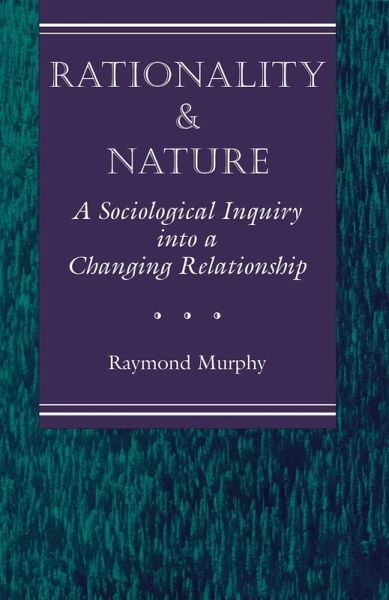
Divergent beliefs about humanity's relationship to nature collide as the second millenium ends. One belief emphasizes that a distinctive characteristic of humans-reason-enables them to reshape and master nature. Another insists that nature is not so plastic, hence humans must adapt to nature and render development sustainable, or even limit growth. "Social ecology" asserts that environmental problems result from institutional hierarchies and suggests decentralized institutions and egalitarian ethics. According to "deep ecology" such problems originate in cultures assuming only humans are worthwhile, thus it stresses the intrinsic value of nature. Feminists are torn between values based on the equality of men and women and ecofeminist values postulating that women are inherently closer to nature than men. Rationality and Nature critically assesses these conflicting cultural tendencies. Waste has been the forgotten element of political economy. Western society has sophisticated methods of financial accounting but does little to account for the losses-financial and human-of waste. Raymond Murphy proposes in this book a theory of environmental debt as a source of capital accumulation. He develops a model of "environmental classes" that helps us to understand the political and economic basis of conflict over the environment. Environmental degradation did not occur on a vast scale until science and applied science were developed. Are they responsible for it and can they be reoriented toward a more symbiotic relationship with nature? Other ways of bringing about a symbiotic relationship are also explored in this book: compulsion, ecological values, ecological experience, and ecological knowledge.
Dieser Download kann aus rechtlichen Gründen nur mit Rechnungsadresse in A, B, BG, CY, CZ, D, DK, EW, E, FIN, F, GR, HR, H, IRL, I, LT, L, LR, M, NL, PL, P, R, S, SLO, SK ausgeliefert werden.