42,95 €
42,95 €
inkl. MwSt.
Sofort per Download lieferbar

21 °P sammeln
42,95 €
Als Download kaufen
42,95 €
inkl. MwSt.
Sofort per Download lieferbar
21 °P sammeln
Jetzt verschenken
Alle Infos zum eBook verschenken
42,95 €
inkl. MwSt.
Sofort per Download lieferbar
Alle Infos zum eBook verschenken
21 °P sammeln

Andere Kunden interessierten sich auch für
") Ecoflourishing and Virtue (eBook, PDF)42,95 €
Ecoflourishing and Virtue (eBook, PDF)42,95 €") Exemplars, Imitation, and Character Formation (eBook, PDF)42,95 €
Exemplars, Imitation, and Character Formation (eBook, PDF)42,95 €") Virtue Ecclesiology (eBook, PDF)42,95 €
Virtue Ecclesiology (eBook, PDF)42,95 €") Christian Mysticism and Incarnational Theology (eBook, PDF)42,95 €
Christian Mysticism and Incarnational Theology (eBook, PDF)42,95 €") Seditious Theology (eBook, PDF)52,95 €
Seditious Theology (eBook, PDF)52,95 €") Orthodox Identities in Western Europe (eBook, PDF)49,95 €
Orthodox Identities in Western Europe (eBook, PDF)49,95 €") Divine Providence and Human Agency (eBook, PDF)49,95 €
Divine Providence and Human Agency (eBook, PDF)49,95 €





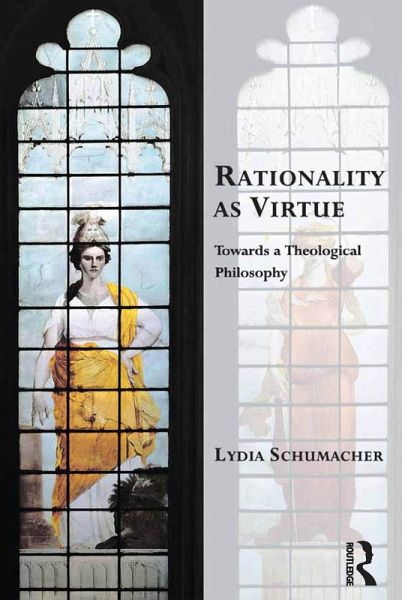
For much of the modern period, theologians and philosophers of religion have struggled with the problem of proving that it is rational to believe in God. Drawing on the thought of Thomas Aquinas, this book lays the foundation for an innovative effort to overturn the longstanding problem of proving faith's rationality, and to establish instead that rationality requires to be explained by appeals to faith. To this end, Schumacher advances the constructive argument that rationality is not only an epistemological question concerning the soundness of human thoughts, which she defines in terms of 'intellectual virtue'. Ultimately, it is an ethical question whether knowledge is used in ways that promote an individual's own flourishing and that of others. That is to say, rationality in its paradigmatic form is a matter of moral virtue, which should nonetheless entail intellectual virtue. This conclusion sets the stage for Schumacher's argument in a companion book, Theological Philosophy, which explains how Christian faith provides an exceptionally robust rationale for rationality, so construed, and is intrinsically rational in that sense.
Dieser Download kann aus rechtlichen Gründen nur mit Rechnungsadresse in A, B, BG, CY, CZ, D, DK, EW, E, FIN, F, GR, HR, H, IRL, I, LT, L, LR, M, NL, PL, P, R, S, SLO, SK ausgeliefert werden.