73,95 €
73,95 €
inkl. MwSt.
Sofort per Download lieferbar

37 °P sammeln
73,95 €
Als Download kaufen
73,95 €
inkl. MwSt.
Sofort per Download lieferbar
37 °P sammeln
Jetzt verschenken
Alle Infos zum eBook verschenken
73,95 €
inkl. MwSt.
Sofort per Download lieferbar
Alle Infos zum eBook verschenken
37 °P sammeln

Andere Kunden interessierten sich auch für
") Reading the Islamic City (eBook, ePUB)73,95 €
Reading the Islamic City (eBook, ePUB)73,95 €") Kenosis Creativity Architecture (eBook, PDF)39,95 €
Kenosis Creativity Architecture (eBook, PDF)39,95 € (eBook, PDF)") The Syncretic Traditions of Islamic Religious Architecture of Kashmir (Early 14th -18th Century) (eBook, PDF)41,95 €
The Syncretic Traditions of Islamic Religious Architecture of Kashmir (Early 14th -18th Century) (eBook, PDF)41,95 €") The Place of the Mosque (eBook, PDF)24,95 €
The Place of the Mosque (eBook, PDF)24,95 €") Thin Place Design (eBook, PDF)32,95 €
Thin Place Design (eBook, PDF)32,95 €") Inside/Outside Islamic Art and Architecture (eBook, PDF)21,95 €
Inside/Outside Islamic Art and Architecture (eBook, PDF)21,95 €") DELUS. The Journal of the Institute of Landscape and Urban Studies (eBook, PDF)0,00 €
DELUS. The Journal of the Institute of Landscape and Urban Studies (eBook, PDF)0,00 €


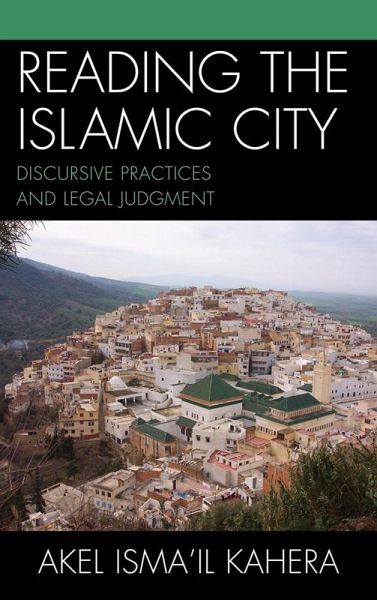
Reading the Islamic City offers insights into the implications the practices of the Maliki school of Islamic law have for the inhabitants of the Islamic city, the madinah. The problematic term madinah fundamentally indicates a phenomenon of building, dwelling, and urban settlement patterns that evolved after the 7th century CE in the Maghrib (North Africa) and al-Andalusia (Spain). Madinah involves multiple contexts that have socio-religious functions and symbolic connotations related to the faith and practice of Islam, and can be viewed in terms of a number of critiques such as everyday lives, boundaries, utopias, and dystopias. The book considers Foucault's power/knowledge matrix as it applies to an erudite cadre of scholars and legal judgments in the realm of architecture and urbanism. It acknowledges the specificity of power/knowledge insofar as it provides a dominant framework to tackle property rights, custom, noise, privacy, and a host of other subjects. Scholars of urban studies, religion, history, and geography will greatly benefit from this vivid analysis of the relevance of the juridico-discursive practice of Maliki Law in a set of productive or formative discourses in the Islamic city.