Sie sind bereits eingeloggt. Klicken Sie auf 2. tolino select Abo, um fortzufahren.
Bitte loggen Sie sich zunächst in Ihr Kundenkonto ein oder registrieren Sie sich bei bücher.de, um das eBook-Abo tolino select nutzen zu können.
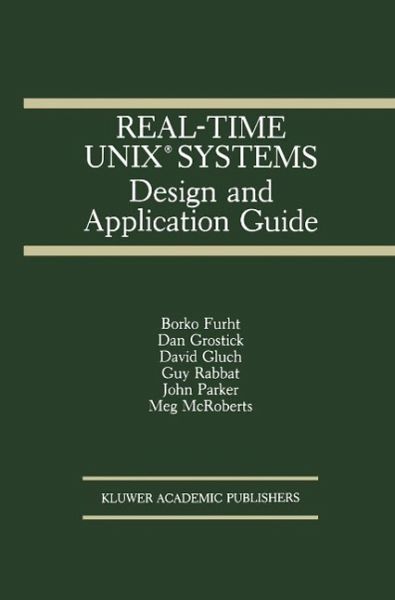
A growing concern of mine has been the unrealistic expectations for new computer-related technologies introduced into all kinds of organizations. Unrealistic expectations lead to disappointment, and a schizophrenic approach to the introduction of new technologies. The UNIX and real-time UNIX operating system technologies are major examples of emerging technologies with great potential benefits but unrealistic expectations. Users want to use UNIX as a common operating system throughout large segments of their organizations. A common operating system would decrease software costs by helping to…mehr
A growing concern of mine has been the unrealistic expectations for new computer-related technologies introduced into all kinds of organizations. Unrealistic expectations lead to disappointment, and a schizophrenic approach to the introduction of new technologies. The UNIX and real-time UNIX operating system technologies are major examples of emerging technologies with great potential benefits but unrealistic expectations. Users want to use UNIX as a common operating system throughout large segments of their organizations. A common operating system would decrease software costs by helping to provide portability and interoperability between computer systems in today's multivendor environments. Users would be able to more easily purchase new equipment and technologies and cost-effectively reuse their applications. And they could more easily connect heterogeneous equipment in different departments without having to constantly write and rewrite interfaces. On the other hand, many users in various organizations do not understand the ramifications of general-purpose versus real-time UNIX. Users tend to think of "real-time" as a way to handle exotic heart-monitoring or robotics systems. Then these users use UNIX for transaction processing and office applications and complain about its performance, robustness, and reliability. Unfortunately, the users don't realize that real-time capabilities added to UNIX can provide better performance, robustness and reliability for these non-real-time applications. Many other vendors and users do realize this, however. There are indications even now that general-purpose UNIX will go away as a separate entity. It will be replaced by a real-time UNIX. General-purpose UNIX will exist only as a subset of real-time UNIX.
Dieser Download kann aus rechtlichen Gründen nur mit Rechnungsadresse in A, B, BG, CY, CZ, D, DK, EW, E, FIN, F, GR, HR, H, IRL, I, LT, L, LR, M, NL, PL, P, R, S, SLO, SK ausgeliefert werden.
Die Herstellerinformationen sind derzeit nicht verfügbar.
Autorenporträt
Nataliia Neshenko, Ph.D., FCCA, PMP, PMI-ACP is Visiting Instructor at the Department of Information Technology and Operations Management (ITOM) at the College of Business, Florida Atlantic University. Her research focus is operational cybersecurity, including attack detection and characterization, risk management methodologies, the Internet of Things, and visual data mining and analysis. Her research findings are published in leading refereed security and data science journals and conferences. Dr. Neshenko is a recipient of the Best Paper Award at the 2017 IEEE International Symposium on Personal Indoor and Mobile Radio Communications. She also has over 16 years of project management experience in the field of business optimization in finance and IT. Bou-Harb, Ph.D., CISSP received a Ph.D. degree in computer science from Concordia University, Montreal, Canada. He was a visiting research scientist at Carnegie Mellon University (CMU), Pittsburgh, PA, USA, in 2015-2016. He is currently the Director of The Cyber Center For Security and Analytics at the University of Texas at San Antonio (UTSA) and an Associate Professor at the Department of Information Systems and Cyber Security. Dr. Bou-Harb specializes in operational cyber security and data science as applicable to the national security challenge. He is also a research scientist at the National Cyber Forensic and Training Alliance (NCFTA) of Canada. His current research interests are operational cyber security, attack detection and characterization, Internet measurements, and cyber security for critical infrastructure. Dr. Bou-Harb has authored more than 120 refereed publications in leading security and data science venues; he is the recipient of 5 best research paper awards, including the prestigious ACM's best digital forensics research paper. His research is funded by state and federal cyber security research grants valued at more than $8M. Borko Furht, Ph.D. is Professor of Computer Science and Engineering at Florida Atlantic University and Director of the NSF Industry/University Cooperative Research Center for Advanced Knowledge Enablement. His areas of research include video and image processing and coding, Internet computing, and video applications in medicine, surveillance, and various industries. He published more than 300 referred papers, 45 books, and has about 60 patents and patent applications. He assured funding of about $25 million from government agencies such as NSF, Department of Navy, NASA, and NIH, and high-tech companies including Google, Motorola, Apple, IBM, LexisNexis, and others. He was Researcher of the Year at FAU in 2013 and 2019. He is a member of European Academy of Science. He has been an expert witness and consultant for a number of high-tech companies.
Inhaltsangabe
1 Introduction to Real-Time Computing.- 1.1 Definition and Classification of Real-Time Computer Systems.- 1.2 Computer Requirements for Real-Time Applications.- 1.3 Systems Issues.- 1.4 Real-Time Measures.- 1.5 Model of an Open Real-Time System.- 2 Real-Time Operating Systems.- 2.1 Requirements for Real-Time Operating Systems.- 2.2 Real-Time UNIX Operating Systems.- 3 Concept of a Fully Preemptive UNIX Operating System.- 3.1 System Concept.- 3.2 Process Subsystem.- 3.3 Memory Management.- 3.4 Process Scheduling.- 3.5 Interprocess Communication.- 3.6 File Subsystem.- 3.7 I/O Subsystem.- 4 Designing Real-Time Applications.- 4.1 Programming Guidelines.- 4.2 Scheduling Processes.- 4.3 Real-Time Memory Allocation.- 4.4 Interprocess Communications: Pipes, Signals and Events.- 4.5 Interprocess Communications Using Shared Memory.- 4.6 Interprocess Communications Using Semaphores.- 4.7 Interprocess Communications Using Messages.- 4.8 Using Files.- 4.9 Interfacing Devices.- 4.10 Writing System Calls.- 4.11 Porting Applications.- 4.12 Performance Management.- 5 Case Studies.- 5.1 The Data Acquisition and Space Shuttle Launch Control System at NASA Kennedy Space Center.- 5.2 The Communication Processor at Jet Propulsion Laboratory.
1 Introduction to Real-Time Computing.- 1.1 Definition and Classification of Real-Time Computer Systems.- 1.2 Computer Requirements for Real-Time Applications.- 1.3 Systems Issues.- 1.4 Real-Time Measures.- 1.5 Model of an Open Real-Time System.- 2 Real-Time Operating Systems.- 2.1 Requirements for Real-Time Operating Systems.- 2.2 Real-Time UNIX Operating Systems.- 3 Concept of a Fully Preemptive UNIX Operating System.- 3.1 System Concept.- 3.2 Process Subsystem.- 3.3 Memory Management.- 3.4 Process Scheduling.- 3.5 Interprocess Communication.- 3.6 File Subsystem.- 3.7 I/O Subsystem.- 4 Designing Real-Time Applications.- 4.1 Programming Guidelines.- 4.2 Scheduling Processes.- 4.3 Real-Time Memory Allocation.- 4.4 Interprocess Communications: Pipes, Signals and Events.- 4.5 Interprocess Communications Using Shared Memory.- 4.6 Interprocess Communications Using Semaphores.- 4.7 Interprocess Communications Using Messages.- 4.8 Using Files.- 4.9 Interfacing Devices.- 4.10 Writing System Calls.- 4.11 Porting Applications.- 4.12 Performance Management.- 5 Case Studies.- 5.1 The Data Acquisition and Space Shuttle Launch Control System at NASA Kennedy Space Center.- 5.2 The Communication Processor at Jet Propulsion Laboratory.
Es gelten unsere Allgemeinen Geschäftsbedingungen: www.buecher.de/agb
Impressum
www.buecher.de ist ein Internetauftritt der buecher.de internetstores GmbH
Geschäftsführung: Monica Sawhney | Roland Kölbl | Günter Hilger
Sitz der Gesellschaft: Batheyer Straße 115 - 117, 58099 Hagen
Postanschrift: Bürgermeister-Wegele-Str. 12, 86167 Augsburg
Amtsgericht Hagen HRB 13257
Steuernummer: 321/5800/1497
USt-IdNr: DE450055826