Sie sind bereits eingeloggt. Klicken Sie auf 2. tolino select Abo, um fortzufahren.
Bitte loggen Sie sich zunächst in Ihr Kundenkonto ein oder registrieren Sie sich bei bücher.de, um das eBook-Abo tolino select nutzen zu können.
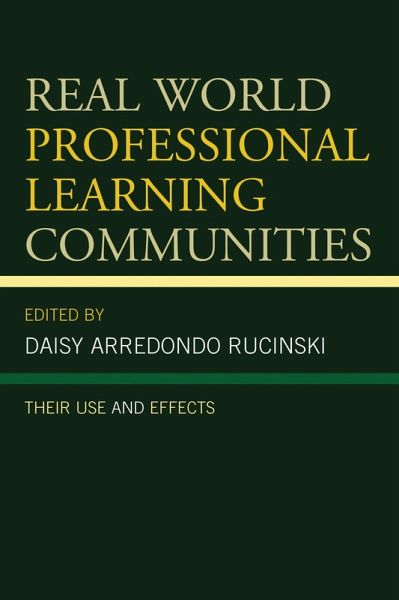
In a professional learning community (PLC), teachers are organized into teams, committed to meeting on a regular basis to study their teaching strategies and the effects of those strategies on the students in their classrooms. The teacher teams can be of varied form and composition. Whatever the organizational structure, the teams have one goal - that is to improve teaching so that student learning is improved. Policy developers, legislators, and educational leaders have encouraged the adoption of collaborative professional learning teams as a school reform model for improving schools. In this…mehr
In a professional learning community (PLC), teachers are organized into teams, committed to meeting on a regular basis to study their teaching strategies and the effects of those strategies on the students in their classrooms. The teacher teams can be of varied form and composition. Whatever the organizational structure, the teams have one goal - that is to improve teaching so that student learning is improved. Policy developers, legislators, and educational leaders have encouraged the adoption of collaborative professional learning teams as a school reform model for improving schools. In this book we describe the results of studies of professional learning communities in real schools and the effects of the teams on student learning. Much of the time school innovations are not examined in depth. Instead authors and developers simply advocate that they be used. In this book, school principals and administrators describe how their teachers used the PLC teams to improve student learning in their schools. In other words, this book presents actual research on the effects of the use of PLCs rather than testimonials.
Die Herstellerinformationen sind derzeit nicht verfügbar.
Autorenporträt
Daisy Arredondo Rucinski is professor of educational leadership and policy studies at The University of Alabama, Tuscaloosa, AL. She holds a Ph.D. degree from the University of Washington. She has been a biology, Spanish, and algebra teacher, a high school assistant principal, an assistant superintendent for curriculum and instruction, a deputy superintendent, and a Senior Fulbright Scholar in Santiago, Chile. Her research interests are instructional leadership and supervision, professional development, school effectiveness, and reflective learning. She writes about these topics and related policy issues.
Inhaltsangabe
Foreword-Terri Croft Boman Part I -Overview of book Chapter 1: Introduction Chapter 2: The Conceptual framework for Professional Learning Communities as Reform Initiatives Daisy Arredondo Rucinski (Example of use by Kyra L. Rhyne) Part II - Use of PLCs in Elementary Schools Chapter 3: Teacher reflection and teacher development in elementary schools using Alabama's Instructional Partners Program (IPN) Bradley A. Scott, Principal, Chaffee Elementary School, Huntsville, AL Chapter 4: Elementary teacher reflection in professional learning communities and teacher learning Rachel Real Poovey - Supervisor of Elementary Education, Decatur, AL City Schools Chapter 5: Using PLC collaboration as a foundation for trust and teacher efficacy in elementary schools Datie I. Priest - Principal, West Decatur Elementary School, Decatur, AL Part III - Use of PLCs in middle and high schools Chapter 6: Relationships among professional learning communities, trust, and student achievement in elementary and middle school mathematics. Herbert A. Betts III - Madras Middle School, Assistant Principal, Coweta School System, Newnan, GA Chapter 7: School Culture, Professional Learning Community and Student Achievement in Middle and High Schools Amanda Hitson Cassity - District curriculum director, Northern Region, Tuscaloosa County Schools, Tuscaloosa, AL Chapter 8: Common Planning in High School Departments: A Structure for Implementing Professional Learning Communities Kyra L. Rhyne - District coordinator for virtual learning, Catoosa County Schools, Ringold, GA Part IV - School, District, and State contexts in using PLCs as a school reform and accountability strategy: Chapter 9: Using a professional learning community framework to support response to intervention (RTI) in middle and high schools Nicole Spiller - District Director of Student and Intervention Services, Atlanta School System, Atlanta, GA Chapter 10: Developing schools as professional learning communities: Does district level leadership matter? Terri Croft Boman - University - K-12 Professional Development Director Chapter 11: Professional development in the states: How statutes and regulations target teacher quality to improve student learning Helen M. Hazi, Professor, West Virginia University and Daisy Arredondo Rucinski - Professor, The University of Alabama Part V - What the research says about the effects of using PLCs in schools and student or teacher learning: Chapter 12: Meta analyses of the research Part 1: A meta-analytic review of dissertation research on Use of PLCs and student achievement Part 2: A Meta-analytic Review of the Published Research on Use of PLCs and Student and Teacher Learning. Susan McClendon Patrick, Secondary Curriculum Supervisor, Cullman County Schools, Cullman, AL; Daisy Arredondo Rucinski, Professor; and Sara Elizabeth Tomek, Associate Professor, UA. Chapter 13: Conclusions, limitations, and implications for future research Daisy Arredondo Rucinski Index
Foreword-Terri Croft Boman Part I -Overview of book Chapter 1: Introduction Chapter 2: The Conceptual framework for Professional Learning Communities as Reform Initiatives Daisy Arredondo Rucinski (Example of use by Kyra L. Rhyne) Part II - Use of PLCs in Elementary Schools Chapter 3: Teacher reflection and teacher development in elementary schools using Alabama's Instructional Partners Program (IPN) Bradley A. Scott, Principal, Chaffee Elementary School, Huntsville, AL Chapter 4: Elementary teacher reflection in professional learning communities and teacher learning Rachel Real Poovey - Supervisor of Elementary Education, Decatur, AL City Schools Chapter 5: Using PLC collaboration as a foundation for trust and teacher efficacy in elementary schools Datie I. Priest - Principal, West Decatur Elementary School, Decatur, AL Part III - Use of PLCs in middle and high schools Chapter 6: Relationships among professional learning communities, trust, and student achievement in elementary and middle school mathematics. Herbert A. Betts III - Madras Middle School, Assistant Principal, Coweta School System, Newnan, GA Chapter 7: School Culture, Professional Learning Community and Student Achievement in Middle and High Schools Amanda Hitson Cassity - District curriculum director, Northern Region, Tuscaloosa County Schools, Tuscaloosa, AL Chapter 8: Common Planning in High School Departments: A Structure for Implementing Professional Learning Communities Kyra L. Rhyne - District coordinator for virtual learning, Catoosa County Schools, Ringold, GA Part IV - School, District, and State contexts in using PLCs as a school reform and accountability strategy: Chapter 9: Using a professional learning community framework to support response to intervention (RTI) in middle and high schools Nicole Spiller - District Director of Student and Intervention Services, Atlanta School System, Atlanta, GA Chapter 10: Developing schools as professional learning communities: Does district level leadership matter? Terri Croft Boman - University - K-12 Professional Development Director Chapter 11: Professional development in the states: How statutes and regulations target teacher quality to improve student learning Helen M. Hazi, Professor, West Virginia University and Daisy Arredondo Rucinski - Professor, The University of Alabama Part V - What the research says about the effects of using PLCs in schools and student or teacher learning: Chapter 12: Meta analyses of the research Part 1: A meta-analytic review of dissertation research on Use of PLCs and student achievement Part 2: A Meta-analytic Review of the Published Research on Use of PLCs and Student and Teacher Learning. Susan McClendon Patrick, Secondary Curriculum Supervisor, Cullman County Schools, Cullman, AL; Daisy Arredondo Rucinski, Professor; and Sara Elizabeth Tomek, Associate Professor, UA. Chapter 13: Conclusions, limitations, and implications for future research Daisy Arredondo Rucinski Index
Es gelten unsere Allgemeinen Geschäftsbedingungen: www.buecher.de/agb
Impressum
www.buecher.de ist ein Internetauftritt der buecher.de internetstores GmbH
Geschäftsführung: Monica Sawhney | Roland Kölbl | Günter Hilger
Sitz der Gesellschaft: Batheyer Straße 115 - 117, 58099 Hagen
Postanschrift: Bürgermeister-Wegele-Str. 12, 86167 Augsburg
Amtsgericht Hagen HRB 13257
Steuernummer: 321/5800/1497
USt-IdNr: DE450055826