Sie sind bereits eingeloggt. Klicken Sie auf 2. tolino select Abo, um fortzufahren.
Bitte loggen Sie sich zunächst in Ihr Kundenkonto ein oder registrieren Sie sich bei bücher.de, um das eBook-Abo tolino select nutzen zu können.
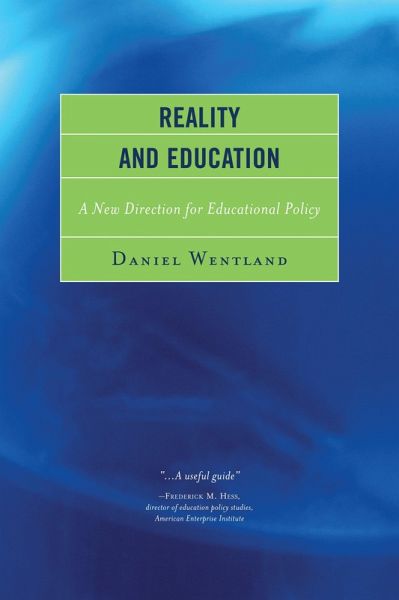
A poorly designed system produces poor results. Problems with the public education system are reported every day in periodicals and books. Improving student achievement is too important a societal issue to continue stumbling along the same unending path of let's try this educational fad and then move to the next proposed solution. The uniqueness of this book is that the myths surrounding education and learning are exposed; it's like cleaning the lenses of your glasses so you can get a clear view of the world. Once myths are moved aside, reality can settle in, and a practical model for improving education can be developed.…mehr
A poorly designed system produces poor results. Problems with the public education system are reported every day in periodicals and books. Improving student achievement is too important a societal issue to continue stumbling along the same unending path of let's try this educational fad and then move to the next proposed solution. The uniqueness of this book is that the myths surrounding education and learning are exposed; it's like cleaning the lenses of your glasses so you can get a clear view of the world. Once myths are moved aside, reality can settle in, and a practical model for improving education can be developed.
Die Herstellerinformationen sind derzeit nicht verfügbar.
Autorenporträt
Daniel Wentland is the author of the following books: Identity Crisis: Teaching Imaginary Economics versus Real Economics, Energizing Your Organization: The Ultimate School Work Environment, Reality and Education: A New Direction for Educational Policy, Knowing the Truth about Education, and Strategic Training: Putting Employees First. His articles have been published in the Ivey Business Journal, Chief Learning Officer, Compensation and Benefits Review, and Education-the oldest education journal in the United States.
Inhaltsangabe
Acknowledgements Preface Introduction Part I - Reality and education Chapter 1: Focusing on Reality and Education Chapter 2: Not all students will learn at a high level Chapter 3: The role of education Chapter 4: Look for teachers who love to learn Chapter 5: Students have a role to play Chapter 6: Look for an administrator who is the right type of leader Chapter 7: The finance issue Chapter 8: Not everyone needs to go to college Chapter 9: Streamlining the P-16 academic pipeline Chapter 10: Is it hopeless? Part II - Given reality how can education be improved? Chapter 11: The first step Chapter 12: Educational environment characteristics Chapter 13: Societal and Community Characteristics Chapter 14: What about maximizing student learning? Chapter 15: The final message
Acknowledgements Preface Introduction Part I - Reality and education Chapter 1: Focusing on Reality and Education Chapter 2: Not all students will learn at a high level Chapter 3: The role of education Chapter 4: Look for teachers who love to learn Chapter 5: Students have a role to play Chapter 6: Look for an administrator who is the right type of leader Chapter 7: The finance issue Chapter 8: Not everyone needs to go to college Chapter 9: Streamlining the P-16 academic pipeline Chapter 10: Is it hopeless? Part II - Given reality how can education be improved? Chapter 11: The first step Chapter 12: Educational environment characteristics Chapter 13: Societal and Community Characteristics Chapter 14: What about maximizing student learning? Chapter 15: The final message
Es gelten unsere Allgemeinen Geschäftsbedingungen: www.buecher.de/agb
Impressum
www.buecher.de ist ein Internetauftritt der buecher.de internetstores GmbH
Geschäftsführung: Monica Sawhney | Roland Kölbl | Günter Hilger
Sitz der Gesellschaft: Batheyer Straße 115 - 117, 58099 Hagen
Postanschrift: Bürgermeister-Wegele-Str. 12, 86167 Augsburg
Amtsgericht Hagen HRB 13257
Steuernummer: 321/5800/1497
USt-IdNr: DE450055826