37,95 €
37,95 €
inkl. MwSt.
Sofort per Download lieferbar

19 °P sammeln
37,95 €
Als Download kaufen
37,95 €
inkl. MwSt.
Sofort per Download lieferbar
19 °P sammeln
Jetzt verschenken
Alle Infos zum eBook verschenken
37,95 €
inkl. MwSt.
Sofort per Download lieferbar
Alle Infos zum eBook verschenken
19 °P sammeln

Andere Kunden interessierten sich auch für
") Rationality and Explanation in Economics (eBook, ePUB)45,95 €
Rationality and Explanation in Economics (eBook, ePUB)45,95 €") The End of Value-Free Economics (eBook, ePUB)61,95 €
The End of Value-Free Economics (eBook, ePUB)61,95 €") Full-Spectrum Economics (eBook, ePUB)45,95 €
Full-Spectrum Economics (eBook, ePUB)45,95 €") Mind, Society, and Human Action (eBook, ePUB)55,95 €
Mind, Society, and Human Action (eBook, ePUB)55,95 €") F. A. Hayek and the Epistemology of Politics (eBook, ePUB)41,95 €
F. A. Hayek and the Epistemology of Politics (eBook, ePUB)41,95 €") The Ethics of Economic Responsibility (eBook, ePUB)21,95 €
The Ethics of Economic Responsibility (eBook, ePUB)21,95 €") French Liberalism in the 19th Century (eBook, ePUB)55,95 €
French Liberalism in the 19th Century (eBook, ePUB)55,95 €


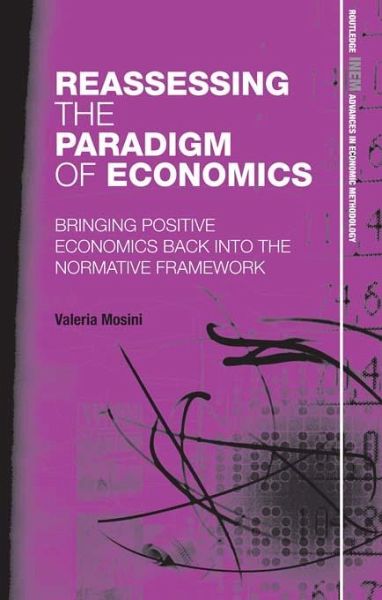
When President Reagan and Prime Minister Thatcher adopted the neoliberal doctrine as the paradigm of economics, there was no evidence that the move would have been successful, but thirty years on, the recurrent crises that culminated in 2008 suggest a serious mis-match between expectations and outcomes: a re-examination of the paradigm is in order. This book focuses on Milton Friedman's formulation of the neoliberal doctrine, and analyses two aspects that were essential to turning it into a fully-fledged paradigm: the attribution of scientific status to positive economics, which led to informing public policies on the requirements of the market; and the characterisation of economic freedom as capable of promoting political freedom, which led to identifying free market with democracy.
The book exposes Friedman's methodological argument for attributing positive economics scientific status as a failure, and his characterisation of economic freedom as a delusion; it identifies in the emergence as the mainstream in economics of the neoclassical synthesis, which borrowed from Walras' the mathematical treatment of equilibrium but not the ethical and social framework in which it was inscribed, a development that facilitated the transition from the Keynesian to the neoliberal paradigm.
Dr. Mosini shows that the gigantic bail-outs carried out courtesy of the public purse, which institutionalised the practice of collectivising losses while keeping profits private, were no accident, but the consequence of the rethinking of the function of lender of last resort according to Friedman's conception of rationality in relation to risk, combined with his interpretation of the 1930s recession. The book concludes that the neoliberal paradigm has served the interests of the economically powerful social strata it was designed to benefit extremely well, but that the deep, and deepening, injustice it has brought about calls for a complete rethinking of the paradigm of economics according to ethical principles respectful of human values. This book should be of interest to students and researchers of Political Economy, Economic Methodology, History of Economic Thought and Philosophy.
The book exposes Friedman's methodological argument for attributing positive economics scientific status as a failure, and his characterisation of economic freedom as a delusion; it identifies in the emergence as the mainstream in economics of the neoclassical synthesis, which borrowed from Walras' the mathematical treatment of equilibrium but not the ethical and social framework in which it was inscribed, a development that facilitated the transition from the Keynesian to the neoliberal paradigm.
Dr. Mosini shows that the gigantic bail-outs carried out courtesy of the public purse, which institutionalised the practice of collectivising losses while keeping profits private, were no accident, but the consequence of the rethinking of the function of lender of last resort according to Friedman's conception of rationality in relation to risk, combined with his interpretation of the 1930s recession. The book concludes that the neoliberal paradigm has served the interests of the economically powerful social strata it was designed to benefit extremely well, but that the deep, and deepening, injustice it has brought about calls for a complete rethinking of the paradigm of economics according to ethical principles respectful of human values. This book should be of interest to students and researchers of Political Economy, Economic Methodology, History of Economic Thought and Philosophy.
Dieser Download kann aus rechtlichen Gründen nur mit Rechnungsadresse in A, B, BG, CY, CZ, D, DK, EW, E, FIN, F, GR, HR, H, IRL, I, LT, L, LR, M, NL, PL, P, R, S, SLO, SK ausgeliefert werden.