39,95 €
39,95 €
inkl. MwSt.
Sofort per Download lieferbar

20 °P sammeln
39,95 €
Als Download kaufen
39,95 €
inkl. MwSt.
Sofort per Download lieferbar
20 °P sammeln
Jetzt verschenken
Alle Infos zum eBook verschenken
39,95 €
inkl. MwSt.
Sofort per Download lieferbar
Alle Infos zum eBook verschenken
20 °P sammeln

Andere Kunden interessierten sich auch für
") Reconsidering the History of South African Journalism (eBook, PDF)39,95 €
Reconsidering the History of South African Journalism (eBook, PDF)39,95 €") Routledge Handbook of Tourism in Africa (eBook, ePUB)45,95 €
Routledge Handbook of Tourism in Africa (eBook, ePUB)45,95 €") Public Memory, Race, and Heritage Tourism of Early America (eBook, ePUB)41,95 €
Public Memory, Race, and Heritage Tourism of Early America (eBook, ePUB)41,95 €") Reporting on Latino/a/x Communities (eBook, ePUB)38,95 €
Reporting on Latino/a/x Communities (eBook, ePUB)38,95 €") Nigeria at Fifty (eBook, ePUB)29,95 €
Nigeria at Fifty (eBook, ePUB)29,95 €") Real Estate in Central America, Mexico and the Caribbean (eBook, ePUB)47,95 €
Real Estate in Central America, Mexico and the Caribbean (eBook, ePUB)47,95 €") Diasporic Mobilities on Vacation (eBook, ePUB)39,95 €
Diasporic Mobilities on Vacation (eBook, ePUB)39,95 €




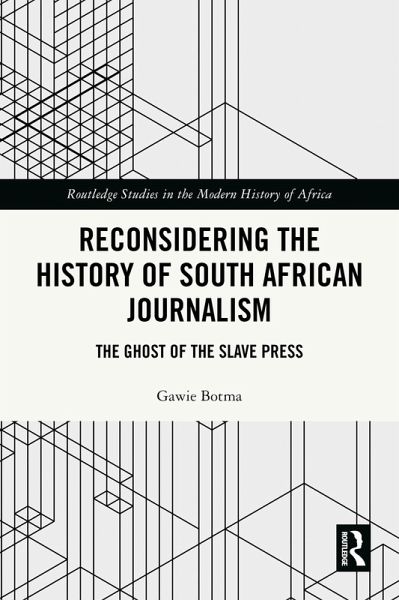
The concept of the "free press" is often celebrated as the vehicle which finally brought freedom of speech and democracy to post-apartheid South Africa, but historically, the position of the press was more complicated.
This book dives into the history of slavery at the Cape between 1800 and 1838, reflecting on the fact that several founding journalists and printers were slave owners themselves and advertised slaves as regular "property" in their publications. The book presents an inclusive history of the founding of colonial newspapers and magazines, driven by the question of how we in the 21st century should make sense of the role that newspapers and journalism played at key points in the history of slavery and its aftermath. The "slave press" was a label originally attached to The Cape Town Gazette and African Advertiser when it was founded by a pair of well-connected private British slave traders.
This book challenges us to confront the ghost of the slave press, and to consider the complicated history of press freedom in South Africa. This important book will be of interest to scholars and students of journalism and media history, in South Africa and beyond.
This book dives into the history of slavery at the Cape between 1800 and 1838, reflecting on the fact that several founding journalists and printers were slave owners themselves and advertised slaves as regular "property" in their publications. The book presents an inclusive history of the founding of colonial newspapers and magazines, driven by the question of how we in the 21st century should make sense of the role that newspapers and journalism played at key points in the history of slavery and its aftermath. The "slave press" was a label originally attached to The Cape Town Gazette and African Advertiser when it was founded by a pair of well-connected private British slave traders.
This book challenges us to confront the ghost of the slave press, and to consider the complicated history of press freedom in South Africa. This important book will be of interest to scholars and students of journalism and media history, in South Africa and beyond.
Dieser Download kann aus rechtlichen Gründen nur mit Rechnungsadresse in A, B, BG, CY, CZ, D, DK, EW, E, FIN, F, GR, HR, H, IRL, I, LT, L, LR, M, NL, PL, P, R, S, SLO, SK ausgeliefert werden.