19,95 €
19,95 €
inkl. MwSt.
Sofort per Download lieferbar

10 °P sammeln
19,95 €
Als Download kaufen
19,95 €
inkl. MwSt.
Sofort per Download lieferbar
10 °P sammeln
Jetzt verschenken
Alle Infos zum eBook verschenken
19,95 €
inkl. MwSt.
Sofort per Download lieferbar
Alle Infos zum eBook verschenken
10 °P sammeln

Andere Kunden interessierten sich auch für
") Urban Decline and the Future of American Cities (eBook, PDF)15,95 €
Urban Decline and the Future of American Cities (eBook, PDF)15,95 €") Economics of Urban Externalities (eBook, PDF)40,95 €
Economics of Urban Externalities (eBook, PDF)40,95 €") Latin American Urban Development into the Twenty First Century (eBook, PDF)40,95 €
Latin American Urban Development into the Twenty First Century (eBook, PDF)40,95 €") Gentrification Trends in the United States (eBook, PDF)38,95 €
Gentrification Trends in the United States (eBook, PDF)38,95 €") Going Circular (eBook, PDF)15,95 €
Going Circular (eBook, PDF)15,95 €") Building Urban Resilience (eBook, PDF)21,95 €
Building Urban Resilience (eBook, PDF)21,95 €") London's Global Office Economy (eBook, PDF)37,95 €
London's Global Office Economy (eBook, PDF)37,95 €

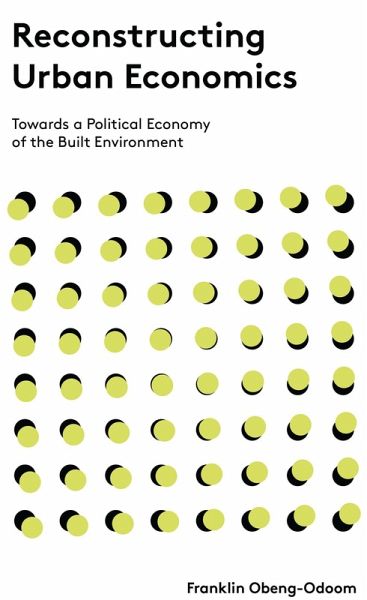
Neoclassical economics, the intellectual bedrock of modern capitalism, faces growing criticisms, as many of its key assumptions and policy prescriptions are systematically challenged. Yet, there remains one field of economics where these limitations continue virtually unchallenged: the study of cities and regions in built-environment economics.
In this book, Franklin Obeng-Odoom draws on institutional, Georgist and Marxist economics to clearly but comprehensively show what the key issues are today in thinking about urban economics. In doing so, he demonstrates the widespread tensions and contradictions in the status quo, showing how to reconstruct urban economics in order to create a more just society and environment.
In this book, Franklin Obeng-Odoom draws on institutional, Georgist and Marxist economics to clearly but comprehensively show what the key issues are today in thinking about urban economics. In doing so, he demonstrates the widespread tensions and contradictions in the status quo, showing how to reconstruct urban economics in order to create a more just society and environment.