40,95 €
40,95 €
inkl. MwSt.
Sofort per Download lieferbar

20 °P sammeln
40,95 €
Als Download kaufen
40,95 €
inkl. MwSt.
Sofort per Download lieferbar
20 °P sammeln
Jetzt verschenken
Alle Infos zum eBook verschenken
40,95 €
inkl. MwSt.
Sofort per Download lieferbar
Alle Infos zum eBook verschenken
20 °P sammeln

Andere Kunden interessierten sich auch für
") Greenhouse Gas Removal Technologies (eBook, PDF)183,95 €
Greenhouse Gas Removal Technologies (eBook, PDF)183,95 €") Renewable Gas (eBook, PDF)96,95 €
Renewable Gas (eBook, PDF)96,95 €") Climate Change Impacts on Plant Biomass Growth (eBook, PDF)72,95 €
Climate Change Impacts on Plant Biomass Growth (eBook, PDF)72,95 €") The Continental-Scale Greenhouse Gas Balance of Europe (eBook, PDF)80,95 €
The Continental-Scale Greenhouse Gas Balance of Europe (eBook, PDF)80,95 €") African Climate and Climate Change (eBook, PDF)112,95 €
African Climate and Climate Change (eBook, PDF)112,95 €") Key Figures for Achieving Global Climate Goals (eBook, PDF)72,95 €
Key Figures for Achieving Global Climate Goals (eBook, PDF)72,95 €") Energy and Environmental Challenges to Security (eBook, PDF)232,95 €
Energy and Environmental Challenges to Security (eBook, PDF)232,95 €
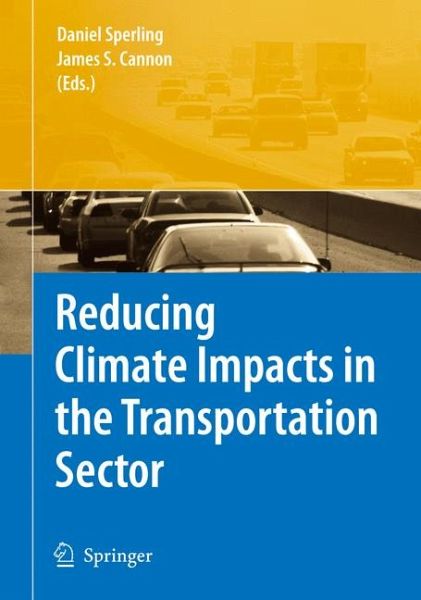
More than 250 experts from around the world gathered at the Asilomar Transportation and Energy Conference in August 2007 to tackle what many agree is the greatest environmental challenge the world faces: climate change. This 11th Biennial Conference, organized under the auspices of the Energy and Alternative Fuels Committees of the U.S. Transportation Research Board, examined key climate change policy issues and strategies to combat climate impacts from the transportation sector, a leading source of greenhouse gas emissions. This book includes chapters by leading presenters at the Asilomar Conference that reflect the most current views of the world's experts about a critical and rapidly evolving energy and environmental problem.
The chapters in this book examine increasing worldwide emissions of greenhouse gases, uncertain oil supply, evolving climate change science, public attitudes toward climate change, and the implications for the U.S. of growth in China, India and elsewhere. They propose methods to reduce growth in vehicle travel through alternative fuel, new technologies, and land use planning. They examine the costs and the potential for greenhouse gas reduction through deployment of advanced technology and alternative fuels and propose strategies to motivate consumers to buy fuel efficient and alternative fuel vehicles, including heavy duty trucks.
The chapters in this book examine increasing worldwide emissions of greenhouse gases, uncertain oil supply, evolving climate change science, public attitudes toward climate change, and the implications for the U.S. of growth in China, India and elsewhere. They propose methods to reduce growth in vehicle travel through alternative fuel, new technologies, and land use planning. They examine the costs and the potential for greenhouse gas reduction through deployment of advanced technology and alternative fuels and propose strategies to motivate consumers to buy fuel efficient and alternative fuel vehicles, including heavy duty trucks.
Dieser Download kann aus rechtlichen Gründen nur mit Rechnungsadresse in A, B, BG, CY, CZ, D, DK, EW, E, FIN, F, GR, HR, H, IRL, I, LT, L, LR, M, NL, PL, P, R, S, SLO, SK ausgeliefert werden.
From the reviews:
"Climate change is a reality. ... Current modes of transportation are unsustainable, wasteful, and deleterious. ... The problems of transportation are complex and perhaps intractable. Solutions that ignore this conundrum suggest that technology alone will not solve the problems so clearly laid down here. Summing Up: Recommended. Professional, general, and academic readers, upper-division undergraduates and above." (S. Hammer, Choice, Vol. 46 (11), July, 2009)
"Climate change is a reality. ... Current modes of transportation are unsustainable, wasteful, and deleterious. ... The problems of transportation are complex and perhaps intractable. Solutions that ignore this conundrum suggest that technology alone will not solve the problems so clearly laid down here. Summing Up: Recommended. Professional, general, and academic readers, upper-division undergraduates and above." (S. Hammer, Choice, Vol. 46 (11), July, 2009)