66,00 €
66,00 €
inkl. MwSt.
Sofort per Download lieferbar

0 °P sammeln
66,00 €
Als Download kaufen
66,00 €
inkl. MwSt.
Sofort per Download lieferbar
0 °P sammeln
Jetzt verschenken
Alle Infos zum eBook verschenken
66,00 €
inkl. MwSt.
Sofort per Download lieferbar
Alle Infos zum eBook verschenken
0 °P sammeln

Andere Kunden interessierten sich auch für
") Forgotten Africa (eBook, PDF)44,95 €
Forgotten Africa (eBook, PDF)44,95 €") Landscapes of Dread in Classical Antiquity (eBook, PDF)42,95 €
Landscapes of Dread in Classical Antiquity (eBook, PDF)42,95 €") Geography of Strabo (eBook, PDF)143,95 €
Geography of Strabo (eBook, PDF)143,95 €") Historical and Topographical Guide to the Geography of Strabo (eBook, PDF)151,95 €
Historical and Topographical Guide to the Geography of Strabo (eBook, PDF)151,95 €") The Global Casino (eBook, PDF)47,95 €
The Global Casino (eBook, PDF)47,95 €") Geographic Perspectives on Urban Sustainability (eBook, PDF)41,95 €
Geographic Perspectives on Urban Sustainability (eBook, PDF)41,95 €") Political Ecology of the Ridge (eBook, PDF)58,00 €
Political Ecology of the Ridge (eBook, PDF)58,00 €



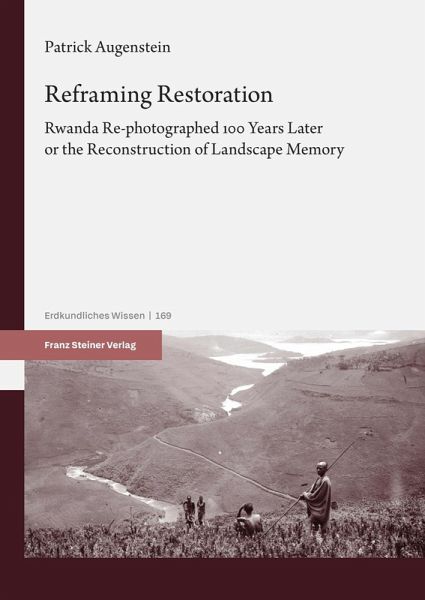
Almost universally, the loss of forest cover in Rwanda, Africa's most densely populated country, has been explained by population growth. Imaginations of vast forest landscapes prior to colonialism shape today's ecological restoration policies, aiming at 30 % forest cover countrywide. Newly re-discovered historical photographs from 1892 to 1916 challenge this conventional account. The course of events over the past 100 years might not be consistent with the narrative of deforestation, where old-growth forests progressively disappeared as human populations increased. As systematically re-photographed viewsheds across Rwanda show, the contrary seems likely: increasing numbers of people in the 20th century appear to coincide with an increase in overall standing biomass. Deforestation has been less drastic than previously thought, primarily because of extensive landscape management by fire for pastoralism and subsistence agriculture by local peoples prior to colonial activity. In fact, the overall standing biomass has increased in all re-photographed viewsheds. Linking repeat photography, ecological restoration, and political ecology allow for a critical engagement with long-standing narratives on landscape change and restoration goals and practices.
Dieser Download kann aus rechtlichen Gründen nur mit Rechnungsadresse in A, B, BG, CY, CZ, D, DK, EW, E, FIN, F, GR, HR, H, IRL, I, LT, L, LR, M, NL, PL, P, R, S, SLO, SK ausgeliefert werden.