40,95 €
inkl. MwSt.
Sofort per Download lieferbar
20 °P sammeln

Andere Kunden interessierten sich auch für
") Reimagining Sample-based Hip Hop (eBook, ePUB)40,95 €
Reimagining Sample-based Hip Hop (eBook, ePUB)40,95 €") Performing Electronic Music Live (eBook, PDF)32,95 €
Performing Electronic Music Live (eBook, PDF)32,95 €") Music Technology Essentials (eBook, PDF)40,95 €
Music Technology Essentials (eBook, PDF)40,95 €") Become a Competent Music Producer in 365 Days (eBook, PDF)34,95 €
Become a Competent Music Producer in 365 Days (eBook, PDF)34,95 €") Distortion in Music Production (eBook, PDF)47,95 €
Distortion in Music Production (eBook, PDF)47,95 €") Analog Synthesizers: Understanding, Performing, Buying (eBook, PDF)51,95 €
Analog Synthesizers: Understanding, Performing, Buying (eBook, PDF)51,95 €") Mixing Audio (eBook, PDF)52,95 €
Mixing Audio (eBook, PDF)52,95 €





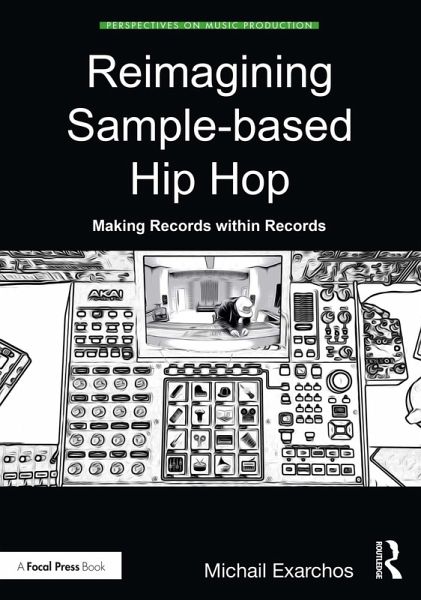
Reimagining Sample-based Hip Hop: Making Records within Records presents the poetics of hip-hop record production and the significance of sample material in record making, providing analysis of key releases in hip-hop discography and interviews with experts from the world of Hip Hop and beyond.
Beginning with the history of hip-hop music making, this book guides the reader through the alternative techniques deployed by beat-makers to avoid the use of copyrighted samples and concludes with a consideration of the future of Hip Hop, alongside a companion album that has been created using findings from this research. Challenging previous theoretical understandings about Hip Hop, the author focuses on deconstructing sonic phenomena using his hands-on engineering expertise and in-depth musicological knowledge about record production.
With a significant emphasis on both practice and theory, Reimagining Sample-based Hip Hop will be of interest to advanced undergraduates, postgraduates, and researchers working in audio engineering, music production, hip-hop studies, and musicology.
Beginning with the history of hip-hop music making, this book guides the reader through the alternative techniques deployed by beat-makers to avoid the use of copyrighted samples and concludes with a consideration of the future of Hip Hop, alongside a companion album that has been created using findings from this research. Challenging previous theoretical understandings about Hip Hop, the author focuses on deconstructing sonic phenomena using his hands-on engineering expertise and in-depth musicological knowledge about record production.
With a significant emphasis on both practice and theory, Reimagining Sample-based Hip Hop will be of interest to advanced undergraduates, postgraduates, and researchers working in audio engineering, music production, hip-hop studies, and musicology.
Dieser Download kann aus rechtlichen Gründen nur mit Rechnungsadresse in A, B, BG, CY, CZ, D, DK, EW, E, FIN, F, GR, HR, H, IRL, I, LT, L, LR, M, NL, PL, P, R, S, SLO, SK ausgeliefert werden.
"This book needed to be written. We're lucky the job was done by such a creative soul, expert engineer, and insightful scholar. The gift we're left with is a penetrating exposition of the poetic fabric of contemporary music recording practice and culture."
Albin Zak, Professor of Music Emeritus, University at Albany
"Reimagining Sample-based Hip Hop is a tour de force and the best example I have seen of theory and practice coming together in hip-hop studies to date. Not only does this book provide a useful template for practice-as-research based methods, but it is rich in theorizing sampling, remix and beatmaking cultures. Exarchos has combined a number of worlds in ways that we were all waiting for someone to do expertly."
Justin A. Williams, Associate Professor of Music, University of Bristol
"Reimagining Sample-based Hip Hop provides deep insight into the rich tapestry of underlying layers that embody sample-based Hip-Hop. Michail Exarchos meticulously and clearly poses alternative practices to Hip-Hop production and to beat-making, using originally constructed source material rather than previously released phonographic content. The reader will benefit from the strong coverage of authenticity and mechanical borrowing as applied to a great breadth of music and production approaches that define the style's unique sonic signature of material 'play' with phonographic objects. This is a must read for anyone interested in the workings of or creation of Hip-Hop."
William Moylan, Professor of Music and Sound Recording Technology, University of Massachusetts Lowell
Albin Zak, Professor of Music Emeritus, University at Albany
"Reimagining Sample-based Hip Hop is a tour de force and the best example I have seen of theory and practice coming together in hip-hop studies to date. Not only does this book provide a useful template for practice-as-research based methods, but it is rich in theorizing sampling, remix and beatmaking cultures. Exarchos has combined a number of worlds in ways that we were all waiting for someone to do expertly."
Justin A. Williams, Associate Professor of Music, University of Bristol
"Reimagining Sample-based Hip Hop provides deep insight into the rich tapestry of underlying layers that embody sample-based Hip-Hop. Michail Exarchos meticulously and clearly poses alternative practices to Hip-Hop production and to beat-making, using originally constructed source material rather than previously released phonographic content. The reader will benefit from the strong coverage of authenticity and mechanical borrowing as applied to a great breadth of music and production approaches that define the style's unique sonic signature of material 'play' with phonographic objects. This is a must read for anyone interested in the workings of or creation of Hip-Hop."
William Moylan, Professor of Music and Sound Recording Technology, University of Massachusetts Lowell