67,95 €
67,95 €
inkl. MwSt.
Sofort per Download lieferbar

34 °P sammeln
67,95 €
Als Download kaufen
67,95 €
inkl. MwSt.
Sofort per Download lieferbar
34 °P sammeln
Jetzt verschenken
Alle Infos zum eBook verschenken
67,95 €
inkl. MwSt.
Sofort per Download lieferbar
Alle Infos zum eBook verschenken
34 °P sammeln

Andere Kunden interessierten sich auch für
") Relational Agency and Environmental Ethics (eBook, ePUB)67,95 €
Relational Agency and Environmental Ethics (eBook, ePUB)67,95 €") Consequentialism and Environmental Ethics (eBook, PDF)46,95 €
Consequentialism and Environmental Ethics (eBook, PDF)46,95 €") Case Studies in Environmental Ethics (eBook, PDF)34,95 €
Case Studies in Environmental Ethics (eBook, PDF)34,95 €") Environmental Ethics (eBook, PDF)3,99 €
Environmental Ethics (eBook, PDF)3,99 €") The Concept of Milieu in Environmental Ethics (eBook, PDF)41,95 €
The Concept of Milieu in Environmental Ethics (eBook, PDF)41,95 €") A New Environmental Ethics (eBook, PDF)35,95 €
A New Environmental Ethics (eBook, PDF)35,95 €") Environmental Ethics for the Long Term (eBook, PDF)49,95 €
Environmental Ethics for the Long Term (eBook, PDF)49,95 €



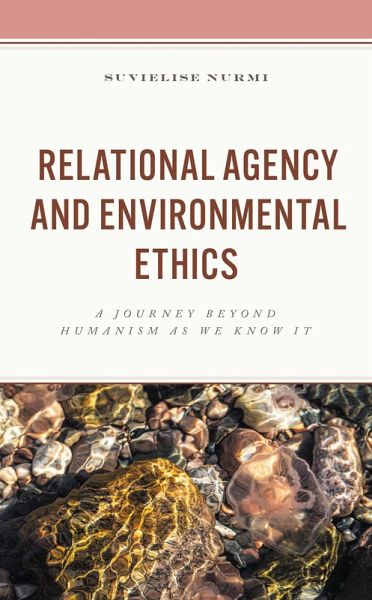
Why does ethics only weakly contribute to the most crucial problems of the current world? Relational Agency and Environmental Ethics: A Journey Beyond Humanism as We Know It explores how the concept of moral agency embedded in modern humanist ethics, in its reliance on environmentally harmful and scientifically implausible presuppositions, prevents ethics from efficiently supporting a sustainability transition. The modernist individualist notion of agency includes conceptual dichotomies between moral agency and human nature, mind and body, reason and emotion, and knowledge and will, yet it should be revised without dismissing responsibility, normativity, and a shared ground for critical assessment. Suvielise Nurmi proposes an agential shift resting on a relational concept of agency, combining ecofeminist and evolutionary criticisms of modernism together with various interdisciplinary discussions involving philosophy of mind, cognitive science, anthropology, social ontology, and developmental biology and psychology. This book argues that the relational shift can resolve the dilemma and bring environmental relationships to the core of ethical discourse: there is no ethics distinct from environmental ethics. Environmental responsibilities can be justified as responsibilities for one's relationally considered agency.